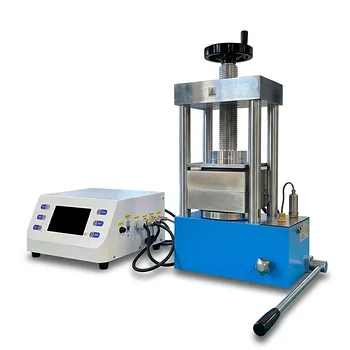
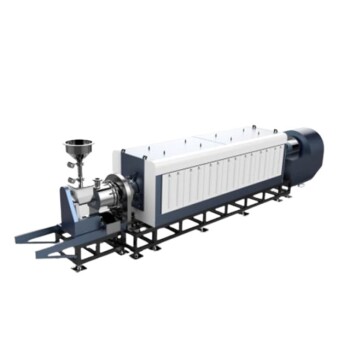
The primary equipment required for performing hydrothermal synthesis as an alternative to ultrasonic spray pyrolysis is a high-pressure reactor, technically referred to as a hydrothermal synthesis autoclave. Unlike the open, flow-through nature of spray pyrolysis, this device operates in a completely sealed environment where external heating generates the high internal pressures and temperatures necessary for the reaction.
Core Takeaway Hydrothermal synthesis shifts the production mechanism from thermal decomposition in a flowing gas stream to recrystallization in a sealed, high-pressure liquid environment. This equipment change fundamentally alters the specific surface area and photocatalytic activity of the resulting Ga0.25Zn4.67S5.08 semiconductor.
The Function of the High-Pressure Reactor
Sealed Environmental Control
The hydrothermal synthesis autoclave is designed to maintain a strictly sealed environment.
This isolation is critical. It allows the system to withstand the pressure buildup that occurs when the contents are heated, preventing the loss of solvents or precursors during the process.
Promoting Solubility and Recrystallization
Inside the reactor, external heating is applied to the sealed vessel.
This generates high temperatures and high pressures simultaneously. Under these specific conditions, substances that are typically insoluble can dissolve and subsequently recrystallize to form the target compound.
Comparing Equipment Methodologies
Synthesis vs. Thermal Decomposition
The alternative method, ultrasonic spray pyrolysis, relies on a tube furnace.
In that setup, aerosol droplets are carried through a quartz tube by a gas, where thermal energy causes rapid solvent evaporation and precursor decomposition.
Batch vs. Flow-Through
Hydrothermal synthesis uses the high-pressure reactor for a batch process where the reaction occurs in a static liquid medium.
Conversely, the tube furnace equipment used in spray pyrolysis facilitates a flow-through reaction, where droplets react while moving through the heated zone.
Understanding the Trade-offs
Impact on Material Properties
The choice of equipment is not merely operational; it dictates material performance.
Using a high-pressure reactor results in significant differences in the specific surface area of the Ga0.25Zn4.67S5.08 compared to the tube furnace method. This directly influences the material's photocatalytic bactericidal activity.
Equipment Terminology
It is vital to distinguish the synthesis reactor from standard laboratory sterilization equipment.
While standard laboratory "autoclaves" (pressure steam sterilizers) use steam to clean glassware and ensure accurate biological testing (such as E. coli survival rates), they are not suitable for chemical synthesis. You must specifically acquire a hydrothermal synthesis autoclave rated for the chemical reaction's pressure requirements.
Making the Right Choice for Your Goal
When selecting between hydrothermal synthesis (high-pressure reactor) and ultrasonic spray pyrolysis (tube furnace), consider your specific material requirements:
- If your primary focus is optimizing surface area: Choose the hydrothermal synthesis autoclave, as the recrystallization process yields distinct surface characteristics that impact photocatalytic efficiency.
- If your primary focus is continuous processing: Consider the tube furnace setup used in ultrasonic spray pyrolysis, which handles rapid thermal decomposition in a carrier gas stream.
Select the equipment that aligns with the specific crystallographic and bactericidal performance metrics required for your application.
Summary Table:
| Feature | Hydrothermal Synthesis | Ultrasonic Spray Pyrolysis |
|---|---|---|
| Primary Equipment | Hydrothermal Synthesis Autoclave | Tube Furnace & Ultrasonic Atomizer |
| Process Type | Sealed Batch Reaction | Continuous Flow-Through |
| Mechanism | Solubility & Recrystallization | Thermal Decomposition |
| Key Advantage | High Specific Surface Area | Rapid Continuous Processing |
| Environment | High-Pressure Liquid Medium | Moving Gas Stream (Aerosol) |
Elevate Your Material Research with KINTEK Precision
Transitioning from spray pyrolysis to hydrothermal synthesis requires specialized equipment that can withstand extreme conditions while ensuring safety and purity. KINTEK specializes in high-performance laboratory solutions, offering a comprehensive range of high-temperature high-pressure reactors and autoclaves specifically designed for advanced chemical synthesis.
Whether you are optimizing the photocatalytic activity of Ga0.25Zn4.67S5.08 or developing new semiconductors, our portfolio includes everything from tube furnaces and vacuum systems to PTFE-lined reactors and crucibles.
Ready to achieve superior material properties? Contact us today to consult with our experts and find the perfect reactor or furnace for your specific research goals.
References
- Tuo Yan, Huimin Huang. Preparation of Ga<sub>0.25</sub>Zn<sub>4.67</sub>S<sub>5.08</sub> Microsphere by Ultrasonic Spray Pyrolysis and Its Photocatalytic Disinfection Performance under Visible Light. DOI: 10.1155/2019/9151979
This article is also based on technical information from Kintek Solution Knowledge Base .
Related Products
- High Pressure Laboratory Autoclave Reactor for Hydrothermal Synthesis
- Customizable Laboratory High Temperature High Pressure Reactors for Diverse Scientific Applications
- Stainless High Pressure Autoclave Reactor Laboratory Pressure Reactor
- Customizable High Pressure Reactors for Advanced Scientific and Industrial Applications
- Mini SS High Pressure Autoclave Reactor for Laboratory Use
People Also Ask
- What role does a high-pressure reactor (autoclave) play in the synthesis of NiCuFe-LDH? Master Hydrothermal Growth
- What Role Does a High-Pressure Reactor or Autoclave Play in HA Catalyst Synthesis? Achieve High Surface Area Materials
- What is the function of a high-pressure reactor in the hydrothermal synthesis of boehmite? Expert Process Insights
- What role does an autoclave play in the synthesis of MnO2 nanofibers? Mastering Hydrothermal Growth
- Why is a 24-hour hydrothermal treatment in an autoclave necessary for BMO nanosheets? Unlock Superior Photocatalysis