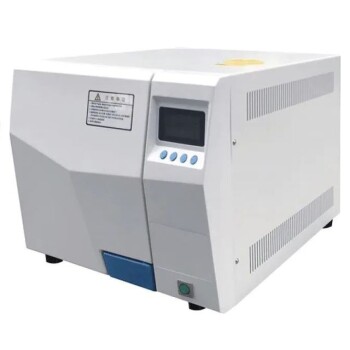
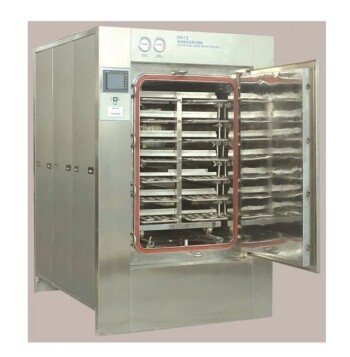
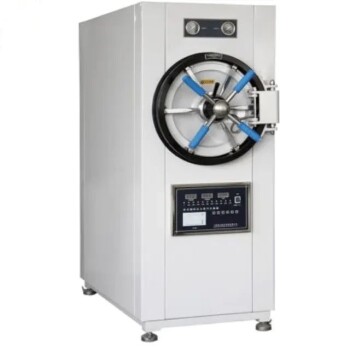
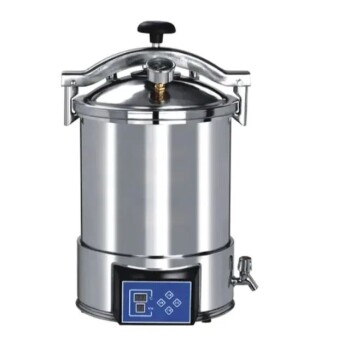
The autoclave functions as the central reaction vessel that creates the sealed, high-pressure, and high-temperature environment required for hydrothermal synthesis. Specifically, by maintaining a temperature of 140°C, the autoclave generates internal pressure that drives controlled redox reactions between manganese sulfate and ammonium persulfate, resulting in the formation of manganese dioxide (MnO2) nanofibers.
Core Takeaway: The autoclave is not merely a container; it is an active processing tool that manipulates pressure and temperature to control crystal nucleation. This precise environment is what forces MnO2 to grow into nanofibers with high surface areas, rather than bulk particles, thereby maximizing their catalytic efficiency.
The Hydrothermal Mechanism
Creating a High-Pressure Environment
The primary function of the autoclave is to provide a sealed system. This allows the aqueous solution to be heated to 140°C, a temperature significantly above the standard boiling point of water.
Facilitating Redox Reactions
Under these elevated thermal and pressure conditions, specific chemical changes occur that would not happen at ambient pressure.
The environment facilitates a controlled redox reaction between the precursors: manganese sulfate and ammonium persulfate.
Controlling Material Properties
Precision Nucleation and Growth
The autoclave allows for the precise control of nucleation and growth kinetics. By regulating the internal pressure and temperature, the system dictates how the manganese dioxide crystals form and propagate.
Forming High Aspect Ratio Nanofibers
Instead of forming random clusters, the crystals grow into nanowire or nanofiber structures. These structures possess a high aspect ratio, meaning they are long and thin, which is a direct result of the controlled hydrothermal environment.
Achieving Specific Crystalline Phases
The process enables the preparation of specific crystalline phases, such as alpha-MnO2. This structural specificity is critical for the material's final electrochemical performance.
Enhancing Catalytic Performance
Maximizing Specific Surface Area
The transition from bulk material to nanofibers significantly increases the specific surface area. A larger surface area means more of the material is exposed to the surrounding medium.
Increasing Active Sites
With a higher surface area comes an increase in active sites available for chemical reactions.
This is particularly beneficial for applications like Microbial Fuel Cell cathodes, where the material improves the oxygen reduction reaction (ORR) catalytic efficiency.
Understanding the Process Sensitivities
The Necessity of Sealed Integrity
The success of this synthesis is entirely dependent on the autoclave maintaining a perfectly sealed environment. Any loss of pressure disrupts the growth kinetics, likely resulting in malformed crystals rather than the desired nanofibers.
Temperature Specificity
The process relies on maintaining specific temperatures (e.g., 140°C) to achieve the correct internal pressure. Deviating from these parameters can alter the crystalline phase, potentially failing to produce the alpha-MnO2 structure required for high catalytic activity.
Making the Right Choice for Your Goal
To leverage autoclave synthesis effectively, align your parameters with your desired material outcome:
- If your primary focus is Catalytic Efficiency: Ensure the autoclave conditions maximize the specific surface area, as this exposes more active sites for reactions like oxygen reduction.
- If your primary focus is Structural Integrity: Prioritize the precise control of temperature and pressure to ensure the formation of alpha-MnO2 nanowires with high aspect ratios.
By strictly controlling the autoclave environment, you transform basic chemical precursors into highly efficient, distinct nanostructures.
Summary Table:
| Parameter/Feature | Role in MnO2 Nanofiber Synthesis |
|---|---|
| Environment | Sealed system enabling temperatures above boiling point (140°C) |
| Internal Pressure | Drives redox reactions between MnSO4 and ammonium persulfate |
| Crystal Control | Regulates nucleation and growth kinetics for high aspect ratio structures |
| Phase Selection | Enables precise formation of the alpha-MnO2 crystalline phase |
| Performance Impact | Maximizes specific surface area and active sites for ORR efficiency |
Elevate Your Material Research with KINTEK
Are you looking to synthesize high-performance MnO2 nanofibers or advanced nanomaterials? KINTEK specializes in precision laboratory equipment, offering a robust selection of high-temperature high-pressure reactors and autoclaves designed to maintain the rigorous sealed environments required for hydrothermal success.
From high-temperature furnaces and crushing systems to essential consumables like PTFE products and crucibles, we provide the tools needed for cutting-edge battery research and electrochemical applications. Contact us today to optimize your lab's synthesis capabilities and achieve superior catalytic efficiency.
References
- Hui Su, Qinghua Liu. Tensile straining of iridium sites in manganese oxides for proton-exchange membrane water electrolysers. DOI: 10.1038/s41467-023-44483-6
This article is also based on technical information from Kintek Solution Knowledge Base .
Related Products
- High Pressure Laboratory Autoclave Reactor for Hydrothermal Synthesis
- Mini SS High Pressure Autoclave Reactor for Laboratory Use
- Stainless High Pressure Autoclave Reactor Laboratory Pressure Reactor
- Portable High Pressure Laboratory Autoclave Steam Sterilizer for Lab Use
- Customizable Laboratory High Temperature High Pressure Reactors for Diverse Scientific Applications
People Also Ask
- What role does a high-pressure reactor (autoclave) play in the synthesis of NiCuFe-LDH? Master Hydrothermal Growth
- What Role Does a High-Pressure Reactor or Autoclave Play in HA Catalyst Synthesis? Achieve High Surface Area Materials
- What equipment is required for hydrothermal synthesis of Ga0.25Zn4.67S5.08? Optimize Your Semiconductor Production
- What is the function of a high-pressure reactor in the hydrothermal synthesis of boehmite? Expert Process Insights
- Why is a 24-hour hydrothermal treatment in an autoclave necessary for BMO nanosheets? Unlock Superior Photocatalysis