High-precision battery testing systems evaluate zinc-ion hybrid capacitors (ZIHSCs) by monitoring specific capacity, Coulombic efficiency, and charge-discharge voltage profiles. These systems record real-time data at various current densities—typically ranging from 0.1 A g⁻¹ to 20 A g⁻¹—to quantify rate performance and capacity retention. By capturing millivolt-level voltage changes over thousands of cycles, these testers provide the empirical foundation for assessing energy density, power density, and long-term electrochemical stability.
High-precision testing systems transform raw electrical signals into a comprehensive performance map of a capacitor's life cycle. The central takeaway is that these indicators do not just measure storage capacity; they diagnose the efficiency of charge storage mechanisms and the structural integrity of the electrode materials over time.
Core Performance Indicators
The evaluation of ZIHSCs begins with fundamental metrics that define how much energy the device can hold and how efficiently it moves that energy.
Specific Capacity and Charge Storage
Specific capacity is the primary indicator of a material's ability to store zinc ions. High-precision systems record the amount of charge transferred during galvanostatic charge-discharge (GCD) cycles to determine if the electrode meets its theoretical potential.
Coulombic Efficiency (CE)
Coulombic efficiency measures the ratio of discharge capacity to charge capacity. A high CE indicates excellent reversibility and minimal side reactions, which is essential for ensuring that the energy put into the system can be recovered reliably.
Voltage Profiles and Plateaus
The system records charge-discharge curve profiles to reveal the underlying kinetics of the device. Monitoring the voltage plateau and any sudden voltage drops helps researchers identify the onset of internal short circuits, often caused by zinc dendrite penetration through the separator.
Kinetic and Stability Indicators
Beyond basic storage, testing systems must evaluate how a capacitor performs under stress and over extended periods of operation.
Rate Performance and Current Density
By varying the current density (from low rates like 0.1 A g⁻¹ to high rates like 20 A g⁻¹), testing systems determine how well the capacitor handles rapid charging and discharging. This data is used to calculate power density and energy density, defining the device's suitability for high-power applications.
Long-Term Capacity Retention
High-precision testers are designed for long-term cycle life tests, often exceeding 4,000 to 10,000 cycles. Capacity retention tracks the percentage of initial capacity remaining over these thousands of cycles, serving as the definitive metric for the device's commercial viability.
Overpotentials and Polarization
Systems monitor charge-discharge overpotentials and polarization voltage to assess the resistance within the cell. An increase in polarization over time typically signals the degradation of the electrolyte or the formation of an insulating layer on the hierarchical porous carbon electrodes.
Understanding the Trade-offs
While high-precision testing provides vital data, there are technical challenges and trade-offs to consider when interpreting the results.
Precision vs. Data Management
Increasing sampling accuracy to the millivolt or microampere level generates massive datasets over thousands of cycles. Engineers must balance the need for granular data with the computational resources required to process and store "big data" from multi-channel systems.
Accelerated Testing Pitfalls
Researchers often use high current densities to speed up cycle testing, but this can mask slow degradation mechanisms that only appear at low rates. Relying solely on high-rate data may lead to an overestimation of the device's actual service life in real-world, low-power scenarios.
Environmental Sensitivity
High-precision systems are extremely sensitive to ambient temperature fluctuations. Without strict environmental controls, external temperature changes can be misinterpreted as performance decay or capacity fluctuations, leading to inaccurate stability assessments.
Applying Indicators to Your Evaluation Goal
Choosing which indicators to prioritize depends on the specific requirements of your research or application.
- If your primary focus is material discovery: Prioritize specific capacity and voltage-capacity curves to understand how the porous structure of the electrode enhances charge-discharge kinetics.
- If your primary focus is commercial durability: Focus on capacity retention and Coulombic efficiency over at least 5,000 cycles to verify long-term serviceability.
- If your primary focus is safety and reliability: Monitor for sudden voltage drops and polarization increases to detect dendrite growth and internal resistance shifts before device failure.
By integrating these high-precision metrics, you can transform raw electrochemical data into a definitive roadmap for zinc-ion hybrid capacitor development.
Summary Table:
| Key Indicator | Description | Research Value |
|---|---|---|
| Specific Capacity | Charge stored per unit mass (Ah/g) | Validates electrode material potential |
| Coulombic Efficiency | Ratio of discharge capacity to charge capacity | Measures reversibility and side reactions |
| Voltage Profiles | Real-time charge-discharge curve data | Identifies kinetics and internal short circuits |
| Rate Performance | Performance across various current densities | Determines power and energy density limits |
| Capacity Retention | Percentage of initial capacity after 4,000+ cycles | Defines long-term stability and viability |
| Overpotential | Difference between equilibrium and operating voltage | Assesses internal resistance and degradation |
Accelerate Your Battery Research with KINTEK Precision
Reliable data is the backbone of electrochemical innovation. KINTEK specializes in providing top-tier laboratory equipment designed for the rigorous demands of battery and capacitor testing. Whether you are evaluating the specific capacity of zinc-ion hybrid capacitors or testing long-term stability, our comprehensive portfolio has you covered.
- Advanced Research Tools: From high-precision battery testers and electrolytic cells to specialized shakers and homogenizers.
- Thermal Processing: High-temperature furnaces (muffle, tube, and vacuum) for electrode material synthesis.
- Sample Preparation: Hydraulic presses, crushing systems, and high-purity ceramic crucibles.
- Reliable Consumables: Premium PTFE products and laboratory-grade consumables to ensure contamination-free results.
Ready to enhance your lab's efficiency and data accuracy? Contact our technical experts today to discuss how KINTEK can support your next breakthrough in energy storage.
References
- Yanzhen Li, Gongyuan Zhao. Boosting the Capacitance of Aqueous Zinc-Ion Hybrid Capacitors by Engineering Hierarchical Porous Carbon Architecture. DOI: 10.3390/batteries9080429
This article is also based on technical information from Kintek Solution Knowledge Base .
Related Products
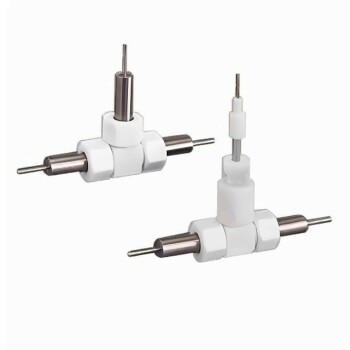
- Customizable Swagelok Type Test Cells for Advanced Battery Research Electrochemical Analysis
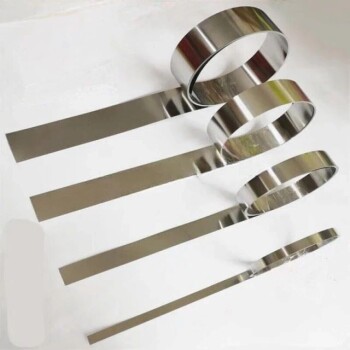
- Battery Lab Equipment 304 Stainless Steel Strip Foil 20um Thick for Battery Test
- Manual button battery sealing machine
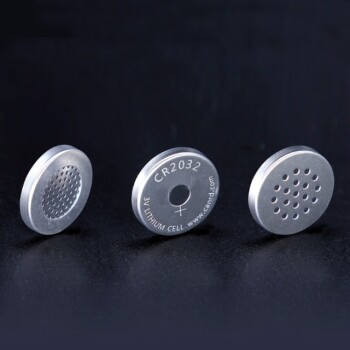
- Laboratory Hydraulic Press Lab Pellet Press for Button Battery
- Electric button battery sealing machine
People Also Ask
- How does a standardized electrochemical test cell assist in MOx/CNTf electrode screening? Optimize Material Ratios
- Why is a dedicated electrochemical test cell necessary for carbon steel? Ensure Precise Geothermal Corrosion Data
- What is the difference between a voltaic cell and an electrochemical cell? Understand the Two Types of Energy Conversion
- How do the electrochemical cell and three-electrode testing system collaborate? Optimize Zinc Anode Deposition Control
- Why must the electrochemical cell be continuously purged with nitrogen? Ensure Precision in Ni-Cr Corrosion Tests