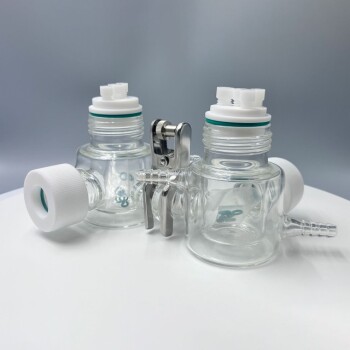
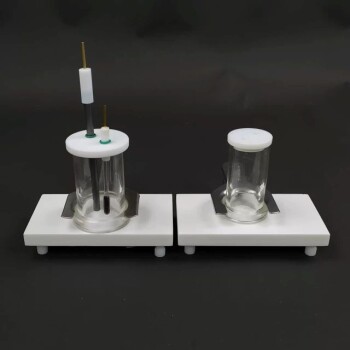
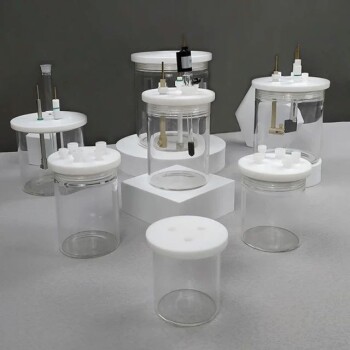
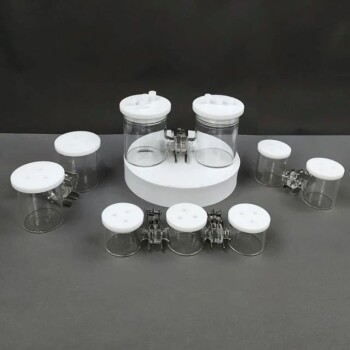
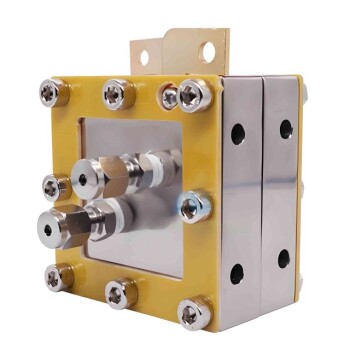
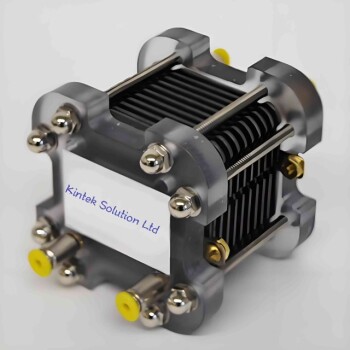
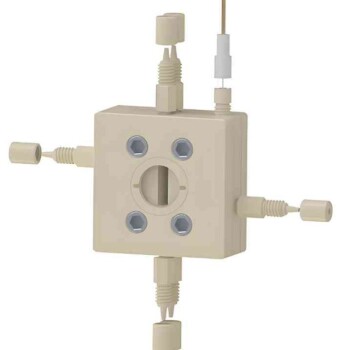
In the synthesis of high-oxidation-state Ruddlesden–Popper perovskite oxide (RPPO) materials, the electrochemical cell serves as a specialized reaction vessel that facilitates electrochemical oxidation synthesis. By employing a three-electrode setup submerged in an alkaline electrolyte, the cell utilizes applied voltage to drive the precise insertion or extraction of ions within the material's layered structure.
The Core Insight: The electrochemical cell acts as a mechanism to bypass the thermodynamic constraints of traditional heating, enabling the low-temperature formation of rare, high-oxidation-state phases that would otherwise destabilize or degrade in high-temperature environments.
The Mechanics of Electrochemical Oxidation
The application of an electrochemical cell in this context is not about storing energy, but rather about manipulating the atomic structure of the material through controlled chemical potential.
The Reaction Environment
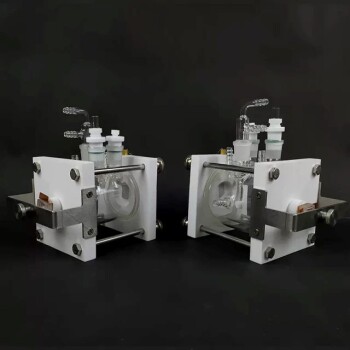
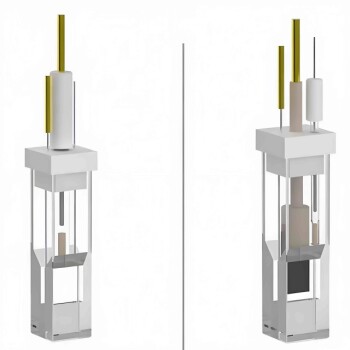
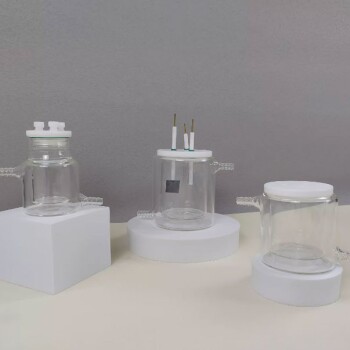
The process utilizes a three-electrode system acting as the reaction vessel.
This system is typically immersed in an alkaline electrolyte, such as potassium hydroxide (KOH), which provides the necessary ionic medium to facilitate the reaction.
Voltage-Driven Ion Manipulation
A potentiostat is used to apply a specific voltage across the cell.
This external electrical force drives the physical movement of ions, specifically supporting the insertion or extraction of Li+ or oxygen ions within the oxide's lattice.
Achieving High Oxidation States
This ion manipulation forces the transition metal cations within the perovskite to adopt high oxidation states.
This structural change creates the specific electronic and magnetic properties defining the target RPPO phases.
Advantages Over Traditional Methods
To understand the value of this application, one must compare it to the limitations of standard synthesis techniques.
Overcoming Thermal Barriers
Traditional synthesis relies on high-temperature thermal methods to drive reactions.
However, high heat often causes high-oxidation-state materials to decompose or revert to more stable, lower oxidation states.
Low-Temperature Synthesis
The electrochemical cell allows these reactions to occur at low temperatures.
By substituting thermal energy with electrical energy (voltage), the system can synthesize and stabilize complex RPPO phases that are thermodynamically impossible to achieve via heat alone.
Understanding the Process Constraints
While powerful, this method introduces specific operational requirements compared to bulk thermal synthesis.
Dependency on Electrolyte Compatibility
The success of this method relies heavily on the interaction between the material and the alkaline electrolyte (KOH).
The material must remain stable within this corrosive liquid environment during the oxidation process to ensure the lattice structure is modified rather than dissolved.
Complexity of Control
Unlike a furnace which requires only temperature regulation, this application demands precise control over the electrochemical potential.
The voltage applied by the potentiostat must be carefully tuned to drive the specific ion exchange required without triggering unwanted side reactions.
Making the Right Choice for Your Goal
When deciding whether to implement an electrochemical cell approach for your material synthesis, consider your specific structural requirements.
- If your primary focus is accessing metastable phases: Use this method to stabilize high-oxidation states that cannot exist at the temperatures required for thermal synthesis.
- If your primary focus is precision ion manipulation: Utilize the three-electrode setup to control the exact degree of Li+ or oxygen ion insertion/extraction.
Ultimately, the electrochemical cell transforms the synthesis process from a reliance on brute thermal force to a precise, voltage-controlled architectural assembly of the material lattice.
Summary Table:
| Feature | Electrochemical Oxidation Synthesis | Traditional Thermal Synthesis |
|---|---|---|
| Mechanism | Applied Voltage (Chemical Potential) | Thermal Energy (Heat) |
| Temperature | Low-temperature processing | High-temperature processing |
| Phase Stability | Stabilizes metastable high-oxidation states | Often leads to decomposition of rare phases |
| Precision | Precise Li+/Oxygen ion manipulation | Bulk reaction control |
| Environment | Alkaline electrolyte (e.g., KOH) | Controlled atmosphere or ambient air |
Elevate Your Material Research with KINTEK Precision
Are you looking to synthesize metastable RPPO phases or achieve precise ion manipulation in your laboratory? KINTEK specializes in high-performance laboratory equipment and consumables designed to meet the rigorous demands of advanced material science.
From specialized electrolytic cells and high-purity electrodes for precise electrochemical oxidation to a comprehensive range of high-temperature furnaces (muffle, vacuum, and CVD) and high-pressure reactors for traditional synthesis, we provide the tools you need to push the boundaries of research. Whether you require battery research tools, ceramic crucibles, or cooling solutions like ULT freezers, KINTEK ensures your lab is equipped for success.
Ready to optimize your synthesis process? Contact our experts today to find the perfect equipment tailored to your research goals!
Related Products
- H-Type Double-Layer Optical Electrolytic Electrochemical Cell with Water Bath
- Electrolytic Electrochemical Cell for Coating Evaluation
- PTFE Electrolytic Cell Electrochemical Cell Corrosion-Resistant Sealed and Non-Sealed
- Electrolytic Electrochemical Cell with Five-Port
- Side Window Optical Electrolytic Electrochemical Cell
People Also Ask
- What is the overall structure of the H-type double-layer optical water bath electrolytic cell? Precision Design for Controlled Experiments
- How is the electrolyte managed in H-type electrolytic cells for specific reactions? Achieve Precise Control and High Purity
- What checks should be performed on the H-type electrolytic cell before use? Ensure Accurate Electrochemical Data
- What is important regarding temperature control for the H-type electrolytic cell? Ensure Precision and Data Integrity
- What is the overall structure of the H-type electrolytic cell? Understanding Dual-Chamber Electrochemical Designs