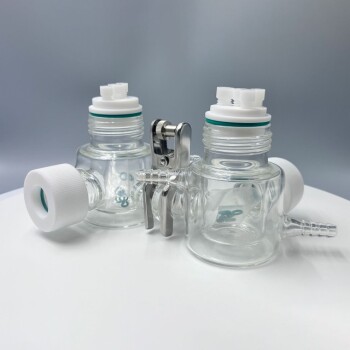
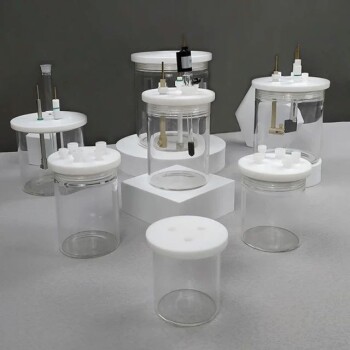
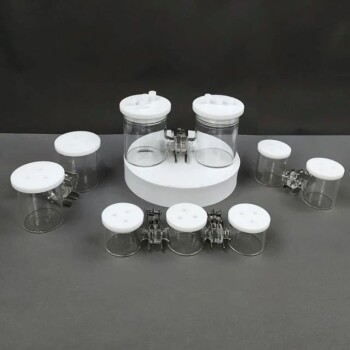
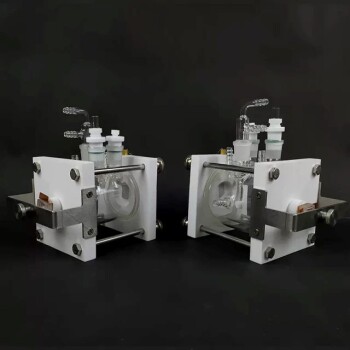
Precision in DL-EPR testing relies on a rigorously controlled three-electrode environment. To ensure accuracy, the system integrates a saturated calomel electrode (SCE) to establish a stable reference potential and a platinum counter electrode to facilitate current flow without introducing contaminants. Furthermore, the system employs a nitrogen purging device to fully deoxygenate the solution, preventing dissolved oxygen from skewing the cathodic reaction data.
The core objective of this precise setup is to isolate the material's electrochemical response from environmental variables. By stabilizing the test environment, the resulting reactivation peak current ratio ($I_r/I_a$) becomes a reliable indicator of sensitization within the chromium-depleted zones of the steel.
The Architecture of Precision
To understand how the system ensures measurement fidelity, we must look at the specific function of each component within the standardized environment.
The Role of the Reference Electrode
The system utilizes a saturated calomel electrode (SCE). This component serves as the unwavering baseline against which the potential of the stainless steel is measured.
Without a stable reference like the SCE, voltage readings would fluctuate unpredictably. This stability is required to accurately apply the potentiokinetic scans characteristic of the Double Loop method.
The Function of the Counter Electrode
A platinum electrode is employed as the counter electrode. Platinum is chosen for its chemical inertness and high conductivity.
This ensures that the current flows freely through the cell without the electrode itself corroding. An active or reactive counter electrode would introduce foreign ions into the solution, contaminating the test and altering the results.
Environmental Control via Nitrogen Purging
The presence of oxygen is a significant variable in electrochemical testing. The system uses a nitrogen purging device to displace dissolved oxygen from the electrolyte solution.
By eliminating oxygen, the system removes the influence of oxygen reduction on the cathodic reaction. This ensures that the measured current is generated solely by the corrosion processes of the super duplex stainless steel, not by background environmental reactions.
Connecting Measurement to Material Science
The ultimate goal of this precise configuration is to detect microscopic material changes.
Targeting Chromium Depletion
The precision of the cell allows for the accurate calculation of the $I_r/I_a$ ratio. This ratio compares the reactivation current ($I_r$) to the activation current ($I_a$).
Identifying Alpha-Prime Precipitates
This ratio is not just a number; it is a direct reflection of sensitization. Specifically, it measures the susceptibility to corrosion in the chromium-depleted zones that surround alpha-prime precipitates.
An imprecise cell setup would introduce noise, making it impossible to distinguish between true sensitization and experimental error.
Common Pitfalls to Avoid
Even with the correct components, procedural errors can compromise the integrity of the DL-EPR test.
Incomplete Deoxygenation
If the nitrogen purging process is shortened or interrupted, trace amounts of oxygen will remain.
This residual oxygen causes a "mixed potential" effect, artificially shifting the corrosion potential and skewing the $I_r/I_a$ ratio, leading to false positives or negatives regarding the steel's quality.
Reference Electrode Drift
The SCE relies on a specific chemical saturation to maintain its voltage.
If the electrode is damaged or the internal solution becomes diluted, the reference point "drifts." This means the voltage you think you are applying is not the voltage the steel actually experiences, rendering the test data invalid.
Making the Right Choice for Your Goal
When configuring your electrochemical cell for super duplex stainless steel analysis, focus on these actionable priorities:
- If your primary focus is detecting sensitization: Ensure your nitrogen purging protocol is strictly followed to eliminate oxygen interference, as this directly impacts the accuracy of the $I_r/I_a$ ratio.
- If your primary focus is reproducibility: Standardize the placement and maintenance of the SCE and platinum electrodes to ensure every test run starts from the exact same electrochemical baseline.
Data precision is not just about the equipment you own; it is about the rigorous environmental control you maintain.
Summary Table:
| Component | Role in DL-EPR Precision | Impact on Measurement |
|---|---|---|
| Saturated Calomel Electrode (SCE) | Reference Electrode | Provides a stable baseline potential; prevents voltage drift. |
| Platinum Electrode | Counter Electrode | Facilitates current flow without contamination due to chemical inertness. |
| Nitrogen Purging | Environmental Control | Deoxygenates the solution to isolate material response from oxygen reduction. |
| Ir/Ia Ratio Monitoring | Data Indicator | Accurately quantifies sensitization in chromium-depleted zones. |
Elevate Your Electrochemical Research Precision
Precise material analysis requires more than just a plan; it requires high-performance hardware. KINTEK specializes in providing the specialized laboratory equipment needed to achieve rigorous environmental control for DL-EPR and other critical tests.
Whether you are analyzing super duplex stainless steel or developing next-generation energy solutions, our portfolio offers the reliability your research demands:
- Electrolytic cells and high-precision electrodes for consistent electrochemical response.
- High-temperature furnaces (muffle, vacuum, CVD) for material sensitization studies.
- Battery research tools and advanced consumables like PTFE products and crucibles.
Contact KINTEK today to discuss your specific testing requirements and discover how our comprehensive range of laboratory solutions can enhance your lab's accuracy and efficiency.
References
- Kyeong-Ho Kong, Yongsoo Park. Effects of Cu Addition on the Microstructure and Localized Corrosion Resistance of Hyper Duplex Stainless Steels Aged at 748 K. DOI: 10.2320/matertrans.m2015022
This article is also based on technical information from Kintek Solution Knowledge Base .
Related Products
- H-Type Double-Layer Optical Electrolytic Electrochemical Cell with Water Bath
- Side Window Optical Electrolytic Electrochemical Cell
- Electrolytic Electrochemical Cell with Five-Port
- Electrolytic Electrochemical Cell for Coating Evaluation
- Multifunctional Electrolytic Electrochemical Cell Water Bath Single Layer Double Layer
People Also Ask
- What is the overall structure of the H-type double-layer optical water bath electrolytic cell? Precision Design for Controlled Experiments
- How is the electrolyte managed in H-type electrolytic cells for specific reactions? Achieve Precise Control and High Purity
- What checks should be performed on the H-type electrolytic cell before use? Ensure Accurate Electrochemical Data
- What is important regarding temperature control for the H-type electrolytic cell? Ensure Precision and Data Integrity
- What is the overall structure of the H-type electrolytic cell? Understanding Dual-Chamber Electrochemical Designs