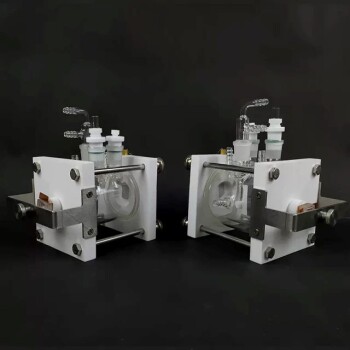
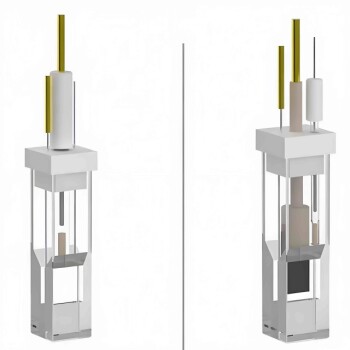
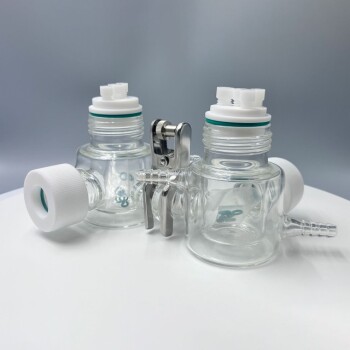
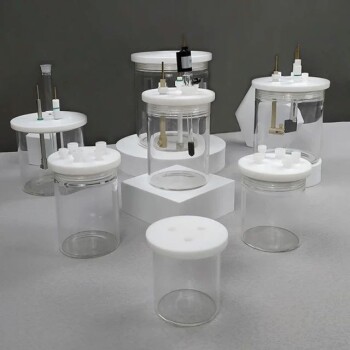
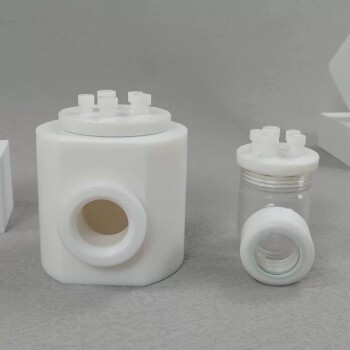
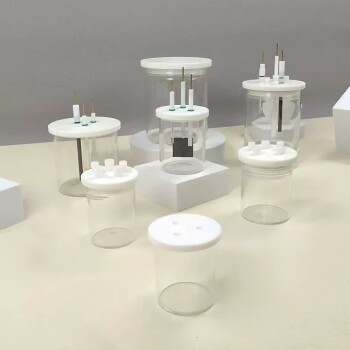
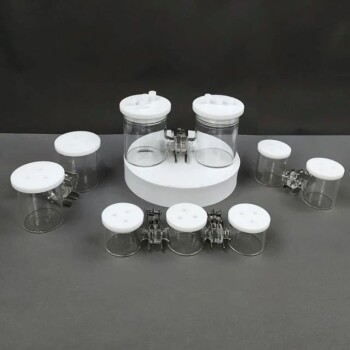
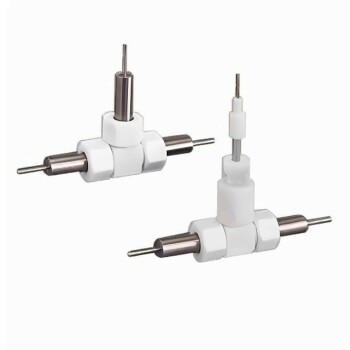
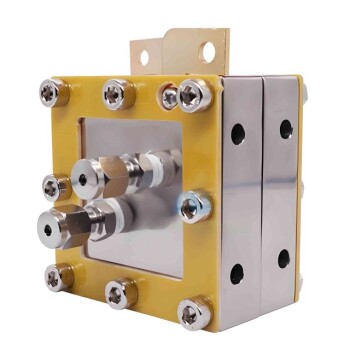
A specialized flat electrochemical cell offers the geometric control and isolation necessary for accurate corrosion testing. Its primary advantage lies in using a sealing ring to define a precise, uniform effective exposure area, which prevents electrolyte leakage and ensures that current density calculations are mathematically valid.
The reliability of localized corrosion data hinges on controlling the test environment. By mechanically isolating a specific surface area, the flat cell design eliminates external variables like edge effects, allowing for the precise determination of pitting potentials and repassivation behavior.
The Mechanics of Precision
Defining the Effective Exposure Area
In corrosion science, accuracy depends on knowing exactly how much surface is reacting. A flat electrochemical cell uses a specialized sealing ring to clamp against the specimen.
This creates a strictly defined exposure area (e.g., 0.5027 cm²). This mechanical definition is the prerequisite for all subsequent calculations.
Ensuring Accurate Current Density
Current density is calculated as total current divided by the exposed area. If the area is undefined or fluctuates due to leakage, the resulting data is meaningless.
By preventing electrolyte leakage to non-test regions, the flat cell ensures that the current measured is generated solely by the specific area under study. This guarantees the mathematical accuracy of your current density readings.
Isolating the Corrosion Mechanism
Eliminating Edge Effects
Standard samples often have edges that are more susceptible to corrosion than the flat surface. If these edges are exposed, they will corrode first, skewing the results.
The flat cell design masks these edges entirely. This ensures the test reflects the intrinsic resistance of the material surface, rather than the vulnerability of its cut sides.
Targeting Specific Surface Treatments
When analyzing surface modifications, such as a controlled nitrided layer, you must test only that layer.
The flat cell configuration restricts the corrosion test strictly to the treated face. This prevents the electrolyte from contacting the untreated substrate or sides, which would otherwise contaminate the data.
Data Quality and Analysis
High-Quality Polarization Curves
Obtaining a clean polarization curve is a fundamental requirement for studying localized corrosion initiation mechanisms.
Because the flat cell stabilizes the physical interface between the sample and the solution, it reduces noise. This setup allows the potentiostat to generate smooth, reproducible cyclic polarization curves.
Accurate Parameter Determination
With a stable baseline provided by the cell's geometry (and supported by a standard three-electrode setup), researchers can accurately identify critical thresholds.
This includes the precise determination of corrosion potential, breakdown potential, and repassivation behavior in aggressive environments like sodium chloride solutions.
Understanding the Trade-offs
The Risk of Crevice Corrosion Artifacts
While the sealing ring defines the area, the seal itself can introduce a new variable.
If the seal is not perfectly tight, or if the sample surface is too rough, a micro-gap can form between the ring and the metal. This can inadvertently induce crevice corrosion at the seal line, creating false positives that mimic pitting but are actually artifacts of the hardware setup.
Sample Geometry Limitations
This cell design is strictly limited to flat specimens.
Curved surfaces, pipes, or irregular geometries cannot be sealed effectively. Using this cell requires machining or polishing samples to a high degree of flatness to ensure a leak-proof interface.
Making the Right Choice for Your Goal
To maximize the value of your corrosion testing, align your approach with your specific objectives:
- If your primary focus is Fundamental Research: Use the flat cell to isolate initiation mechanisms and surface treatments, ensuring you are studying the material's intrinsic properties without edge interference.
- If your primary focus is Standardized Testing: Ensure your sample preparation guarantees a perfectly flat surface to prevent crevice corrosion artifacts at the sealing ring, which leads to false failure data.
The specialized flat cell turns the variable of "exposed area" into a constant, providing the foundation for rigorous, quantitative corrosion analysis.
Summary Table:
| Feature | Benefit for Corrosion Analysis |
|---|---|
| Defined Exposure Area | Ensures mathematically accurate current density calculations. |
| Sealing Ring Design | Prevents electrolyte leakage and isolates specific surface treatments. |
| Edge Masking | Eliminates edge effects to study intrinsic material resistance. |
| Interface Stability | Produces high-quality, reproducible cyclic polarization curves. |
| Mechanism Isolation | Facilitates precise determination of pitting and repassivation potentials. |
Elevate Your Material Research with KINTEK Precision
Don't let edge effects or undefined surface areas compromise your electrochemical data. KINTEK specializes in high-performance laboratory equipment, offering a comprehensive range of electrolytic cells and electrodes specifically designed for rigorous corrosion studies.
Whether you are analyzing surface modifications or fundamental pitting mechanisms, our specialized solutions—ranging from high-temperature high-pressure reactors to precision crushing and milling systems—provide the reliability your research demands.
Ready to achieve superior accuracy in your lab? Contact our experts today to find the perfect electrochemical cell and consumables for your application.
References
- M.J. Jiménez–Come, Jesús Daniel Mena Baladés. Corrosion Behaviour Modelling Using Artificial Neural Networks: A Case Study in Biogas Environment. DOI: 10.3390/met13111811
This article is also based on technical information from Kintek Solution Knowledge Base .
Related Products
- Flat Corrosion Electrolytic Electrochemical Cell
- Thin-Layer Spectral Electrolysis Electrochemical Cell
- H-Type Double-Layer Optical Electrolytic Electrochemical Cell with Water Bath
- Electrolytic Electrochemical Cell with Five-Port
- Electrolytic Electrochemical Cell for Coating Evaluation
People Also Ask
- What is the difference between electrolytic corrosion cell and electrochemical corrosion cell? Understand the Driving Force Behind Corrosion
- Why is a constant temperature control system required for electrochemical corrosion testing in SBF? Key to Lab Accuracy
- How does the design of an electrochemical electrolytic cell influence the coating uniformity? Optimize Your Catalysts
- What are the design advantages of using a flat electrochemical cell? Enhance Corrosion Testing Precision
- What procedures and observations are necessary during an experiment with a flat plate corrosion electrolytic cell? Master the 3-Phase Method