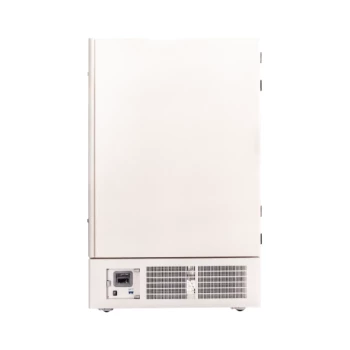
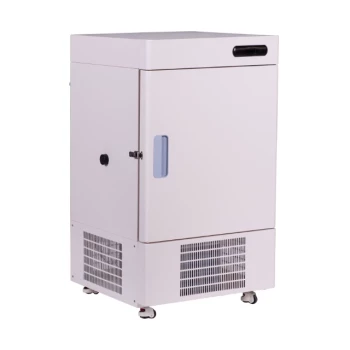
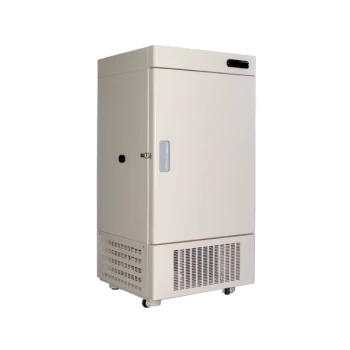
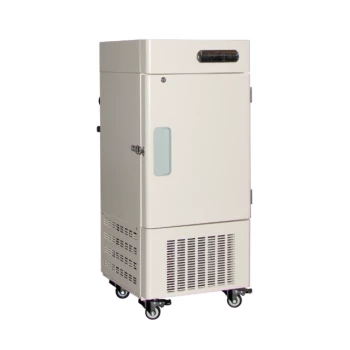
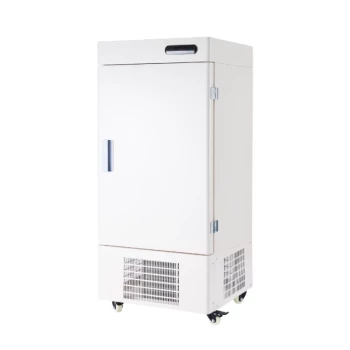
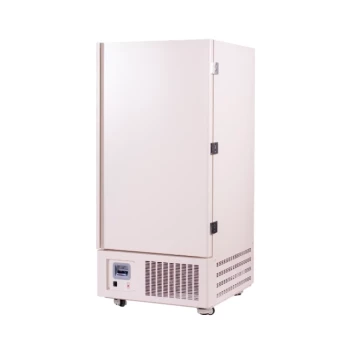
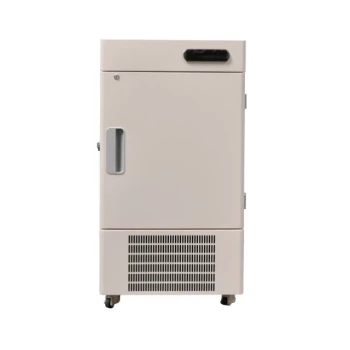
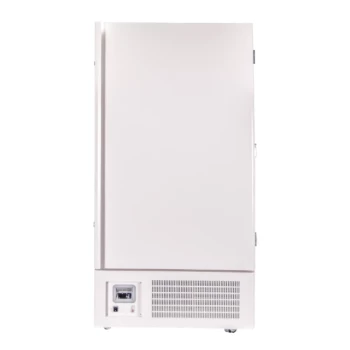
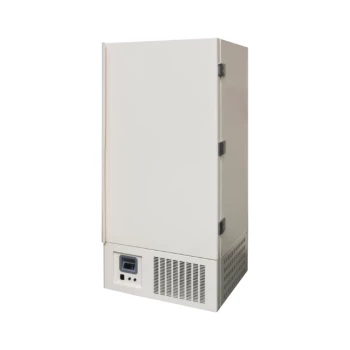
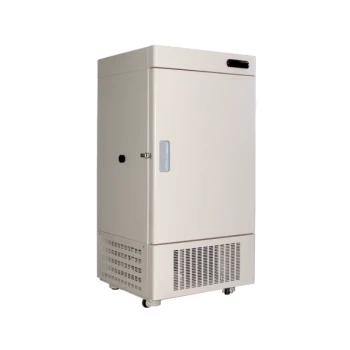
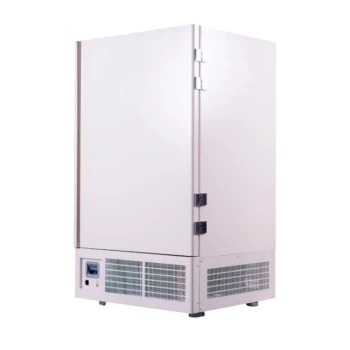
Ultra-low temperature (ULT) freezers act as the structural architects for gold nanoparticle-hydrogel composites, replacing the need for chemical cross-linking agents. By providing a stable cryogenic environment, they facilitate a "freeze-thaw" process that physically locks polymer chains together into a robust network. This process creates the specific internal porosity required to house gold nanoparticles and enable the composite's "smart" behaviors.
The core function of the ULT freezer in this context is to induce micro-regional crystallization through precise temperature control. This creates a honeycomb-like porous structure that is essential for both the uniform distribution of gold nanoparticles and the material's ability to rapidly respond to external stimuli.
The Mechanism of Physical Cross-Linking
Inducing Phase Separation
The ULT freezer is used to subject the polymer solution (often Polyvinyl Alcohol, or PVA) to extreme cold. As the water within the solution turns into ice, it forces the polymer chains to undergo phase separation.
Creating Crystalline Anchors
As the ice crystals grow, they compress the polymer chains into high-density regions. In the stable environment of the ULT freezer, these aggregated chains form ordered microcrystalline regions. These micro-crystals act as physical "knots" or cross-linking points that hold the gel together without chemical bonds.
The Role of Repeated Cycles
The references highlight the necessity of repeated freeze-thaw cycles. By cycling the material in and out of the ULT freezer, the physical network is reinforced, ensuring the final hydrogel is stable and mechanically sound.
Shaping the Internal Architecture
Forming a Honeycomb Structure
The most critical output of the ULT process is the formation of a honeycomb-like microporous structure. The ice crystals formed during freezing act as a temporary mold.
Facilitating Nanoparticle Loading
Once the material thaws and the ice melts, it leaves behind a network of open pores. This specific architecture is vital for the uniform loading of gold nanoparticles. The porous matrix acts as a carrier, securing the nanoparticles throughout the composite.
Enabling Smart Actuation
This porous structure does more than just hold the gold; it dictates performance. The honeycomb design allows water to move freely in and out of the gel. This enables the composite to achieve rapid swelling and shrinking responses—a key requirement for photo-induced actuators.
Understanding the Trade-offs
Precision vs. speed
While chemical cross-linking is faster, it introduces foreign agents into the material. The ULT freeze-thaw method is cleaner but relies heavily on precise temperature cycling. If the freezing rate is not controlled strictly within the ULT environment, the pore size distribution may become uneven, compromising the material's responsiveness.
Structural Dependency
The mechanical strength of the gel is directly tied to the freezing process. Inadequate cooling or insufficient cycles in the ULT freezer can result in a weak gel body that cannot support the mechanical stress of actuation or effectively retain the gold nanoparticles.
Making the Right Choice for Your Goal
To maximize the effectiveness of your gold nanoparticle-hydrogel composite, consider your primary performance metrics:
- If your primary focus is Biocompatibility: Rely on the ULT freezer to create physical cross-links, as this eliminates the toxicity risks associated with chemical cross-linking agents.
- If your primary focus is Response Speed: Optimize the freeze-thaw cycles to ensure a highly regular honeycomb pore structure, which minimizes hydraulic resistance and speeds up photothermal actuation.
The ULT freezer is not merely a storage device in this process; it is the active tool that dictates the microscopic geometry and macroscopic performance of the final composite material.
Summary Table:
| Feature | Role of ULT Freezer / Cold Trap | Impact on Composite Performance |
|---|---|---|
| Cross-Linking | Induces physical "knots" via freeze-thaw cycles | Eliminates toxic chemical agents; improves biocompatibility |
| Micro-Structure | Creates honeycomb-like microporous architecture | Ensures uniform nanoparticle loading and rapid swelling |
| Phase Separation | Forces polymer chains into ordered microcrystalline regions | Provides mechanical strength and structural stability |
| Thermal Control | Enables precise micro-regional crystallization | Dictates response speed and photothermal actuation efficiency |
Elevate Your Advanced Material Research with KINTEK Precision
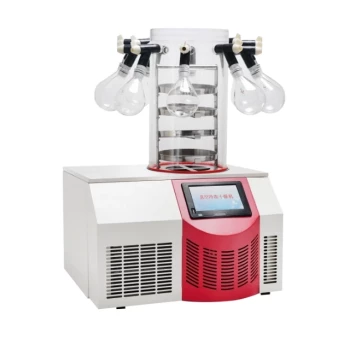
Unlock the full potential of your gold nanoparticle-hydrogel composites with KINTEK’s industry-leading laboratory solutions. From high-performance ULT freezers and cold traps for precise freeze-thaw cycles to high-temperature furnaces, crushing systems, and specialized reactors, we provide the tools necessary for cutting-edge material synthesis.
Whether you are developing photo-induced actuators or biocompatible sensors, KINTEK specializes in the laboratory equipment and consumables—including PTFE products, ceramics, and shakers—that guarantee uniform pore structures and superior mechanical performance.
Ready to optimize your fabrication process? Contact us today to discover how our comprehensive range of equipment can accelerate your research goals!
References
- Nevena Ćelić, S.R. Lukić-Petrović. The investigations of mechanical stability of highly transparent UVC-blocking ZnO-SnO2/PMMA nanocomposite coatings. DOI: 10.21175/rad.abstr.book.2023.19.22
This article is also based on technical information from Kintek Solution Knowledge Base .
Related Products
- 938L Vertical Ultra Low Temperature Freezer for Advanced Laboratory Storage
- 108L Vertical Ultra Low Temperature ULT Freezer
- 208L Advanced Precision Laboratory Ultra Low Temperature Freezer for Cold Storage
- 28L Compact Upright Ultra Low Temperature Freezer for Laboratory
- 158L Precision Vertical Ultra Low Freezer for Laboratory Applications
People Also Ask
- What features should be considered when choosing an ultra low temperature freezer? Secure Your Samples with Precision
- How is the interior of an ultra low temperature freezer designed for optimal storage? Maximize Sample Integrity with Smart Design
- How is temperature controlled in ultra low temperature freezers? A Guide to Stable -80°C Storage
- What is an ultra-low temperature freezer? Protect Your Most Valuable Biological Samples
- What is cryopreservation and how do ultra low temperature freezers facilitate this process? Preserve Your Samples for the Long Term