In the microbial preparation of Pd/C catalysts, a constant temperature shaking incubator serves as the essential bioreactor for the strain activation and expansion stages. It provides the precise thermal stability and mechanical agitation required to produce high-activity bacterial fluids, which are the foundation for the subsequent adsorption and reduction of palladium ions onto carbon supports.
The constant temperature shaking incubator acts as a dual-purpose control system that optimizes microbial metabolic rates through temperature regulation while maximizing mass transfer efficiency through continuous orbital shaking. This synergy is critical for ensuring that microorganisms, such as Shewanella oneidensis, reach the necessary physiological state to effectively reduce metal ions.
Optimizing the Biological "Factory"
The preparation of Pd/C catalysts via microbial routes relies on the metabolic health of the bacteria. The incubator ensures the biological "machinery" is primed for the heavy lifting of metal reduction.
Maintaining Precise Thermal Stability
Microorganisms used in catalyst synthesis, such as Shewanella oneidensis or Escherichia coli, require highly specific temperatures to maintain optimal enzyme activity. The incubator provides a stable thermal environment—often set at 30°C or 37°C—to ensure strains grow consistently to the required logarithmic or plateau phase.
Enhancing Oxygen Transfer for Metabolic Activity
For many aerobic or facultative anaerobic strains, sufficient dissolved oxygen is a prerequisite for rapid growth and high metabolic output. The shaking function facilitates continuous oxygen exchange between the liquid medium and the headspace, preventing the culture from becoming oxygen-limited and sluggish.
Maximizing Mass Transfer and Uniformity
Beyond biological growth, the mechanical action of the incubator plays a vital role in the physical chemistry of the catalyst preparation process.
Ensuring Uniform Cell Distribution
Precise control of rotation speeds (typically between 150 and 200 rpm) ensures that microbial cells remain suspended and uniformly distributed. This prevents bacterial sedimentation, which can lead to "dead zones" in the culture where cells lack access to nutrients or become less effective for later metal loading.
Facilitating Efficient Metal Ion Adsorption
While the primary reference focuses on the expansion phase, the agitation provided by the incubator is also critical during the loading of metal ions or precursors. Continuous oscillation eliminates mass transfer limitations, ensuring thorough contact between the bacteria, the carbon support, and the palladium ions for uniform adsorption.
Understanding the Trade-offs
While higher agitation and precise temperatures are generally beneficial, there are technical limitations and risks to consider during the microbial synthesis of catalysts.
Shear Stress vs. Oxygenation
Increasing the rotation speed enhances oxygen dissolution, but it also increases hydrodynamic shear stress. If the speed is too high, it can rupture delicate microbial cell membranes or disrupt the formation of necessary extracellular metabolites, ultimately reducing the catalyst's final activity.
Evaporation and Concentration Shifts
Extended incubation at constant temperatures can lead to medium evaporation, particularly in small-volume flasks. This can unintentionally increase the concentration of salts and nutrients, potentially shifting the pH or osmotic pressure and negatively impacting the consistency of the microbial "fluid."
Strategic Implementation for Catalyst Synthesis
To achieve the best results in microbial Pd/C preparation, the incubator settings must be tailored to the specific stage of the process and the strain being utilized.
- If your primary focus is rapid strain expansion: Prioritize high agitation speeds (180–200 rpm) and optimal growth temperatures (e.g., 37°C) to maximize biomass yield and oxygen availability.
- If your primary focus is uniform metal loading: Focus on maintaining a steady, moderate oscillation speed (150–160 rpm) to ensure thorough contact between ions and bacteria without inducing excessive shear stress.
- If your primary focus is heat-tolerant strain development: Utilize the incubator’s precise range to test growth across a gradient (e.g., 34°C to 47°C) to identify the "thermal sweet spot" for specific metabolic synthesis.
By precisely balancing thermal stability and mechanical agitation, the constant temperature shaking incubator transforms a simple bacterial culture into a high-performance tool for catalyst production.
Summary Table:
| Feature | Role in Pd/C Catalyst Preparation | Critical Benefit |
|---|---|---|
| Thermal Stability | Maintains optimal enzyme activity (30°C-37°C) | Ensures consistent microbial growth rates |
| Orbital Shaking | Enhances dissolved oxygen & mass transfer | Maximizes metabolic productivity for reduction |
| Uniform Distribution | Prevents cell and support sedimentation | Ensures even palladium ion adsorption on carbon |
| Variable Speed | Controls hydrodynamic shear stress | Protects delicate microbial membranes from rupture |
Elevate Your Catalyst Research with KINTEK’s Precision Solutions
Achieving the perfect Pd/C catalyst requires uncompromising control over your microbial environment. KINTEK specializes in high-performance laboratory equipment, including advanced constant temperature shakers and incubators designed to optimize strain activation and mass transfer.
Our comprehensive portfolio supports every stage of your catalyst workflow:
- Incubation & Growth: Precision shakers, ultra-low temperature (ULT) freezers, and cooling solutions.
- Material Processing: High-temperature furnaces (muffle, vacuum, tube) and high-pressure reactors/autoclaves for support activation and reduction.
- Preparation Tools: Crushing, milling, and sieving systems for carbon support optimization, alongside essential consumables like ceramic crucibles and PTFE products.
Whether you are refining Shewanella cultures or scaling up metal loading, KINTEK provides the reliability and precision your lab demands. Contact us today to discover how our specialized equipment can streamline your research and improve your catalyst yields!
References
- Lin jun Tong, Xiaoting Deng. Effect of calcium ion concentration on the ORR performance of Pd/C catalysts. DOI: 10.1039/d3ra07553b
This article is also based on technical information from Kintek Solution Knowledge Base .
Related Products
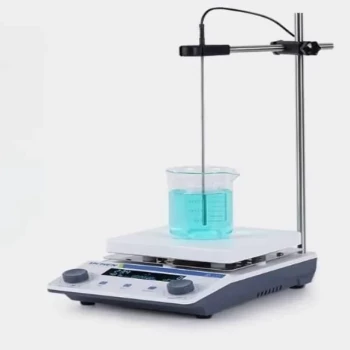
- Laboratory Small Constant Temperature Heated Magnetic Stirrer Heater and Stirrer
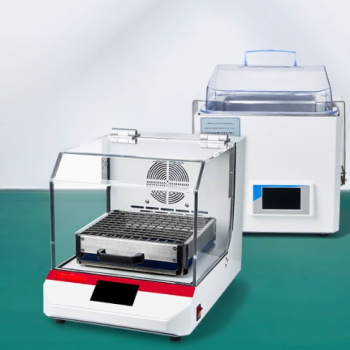
- Shaking Incubators for Diverse Laboratory Applications
- High Temperature Constant Temperature Heating Circulator Water Bath Chiller Circulator for Reaction Bath
- 50L Chiller Water Bath Cooling Circulator Low Temperature Constant Temperature Reaction Bath
- 10L Heating Chilling Circulator Cooling Water Bath Circulator for High and Low Temperature Constant Temperature Reaction
People Also Ask
- What role does a magnetic stirrer with heating play in ZnO nanoparticle synthesis? Precision Control for Quality Results
- What role does a constant temperature heating magnetic stirrer play in MFC-HAp synthesis? Achieve Material Homogeneity
- What is the function of a laboratory magnetic stirrer in Ni–Cr–P electrodeposition? Optimize Ion Transport & Coating
- Why is a laboratory magnetic stirrer required for benzoic acid esters? Boost Reaction Speed & Yield with High RPM
- What role does a laboratory magnetic stirrer play in TiO2 and TiO2-Ag sol preparation? Master Chemical Kinetics