The laboratory magnetic stirrer acts as the fundamental kinetic controller during the preparation of TiO2 and silver-doped TiO2-Ag photocatalytic sols. Its primary function is to ensure the uniform diffusion of precursors, specifically titanium tetraisopropoxide (TTIP), within solvent matrices like ethanol and glacial acetic acid. By maintaining a constant rotation speed, the device facilitates consistent hydrolysis and polycondensation reactions, which are critical for converting liquid precursors into a stable solid network.
Core Takeaway The stirrer is not merely a mixing device but a regulator of chemical kinetics; it prevents localized precipitation during the sol-gel process to ensure a colloidal dispersion with stable properties and a uniform particle size distribution.
Mechanism of Action in Sol-Gel Synthesis
Regulating Hydrolysis and Polycondensation
In the synthesis of TiO2 sols, chemical reactions must occur at a controlled rate. Hydrolysis and polycondensation turn the liquid precursors into the final inorganic network.
The magnetic stirrer provides the necessary kinetic energy to ensure these reactions happen uniformly throughout the vessel. Without this consistent agitation, reaction rates would vary by location, leading to inconsistent material properties.
Homogenizing Precursors and Dopants
For silver-doped (TiO2-Ag) sols, the challenge increases because the silver dopant must be evenly distributed within the titanium matrix.
The stirrer ensures that titanium tetraisopropoxide (TTIP) and silver sources are perfectly diffused within solvents like ethanol and glacial acetic acid. This molecular-level mixing prevents the silver from clustering, which is vital for the final photocatalytic performance.
Impact on Physical Properties
Preventing Localized Precipitation
A major risk during sol preparation is the formation of "hot spots" where reactants are too concentrated.
The magnetic stirrer generates forced convection that eliminates these concentration gradients. By doing so, it prevents the precursors from precipitating locally, which would otherwise ruin the sol's stability and clarity.
Ensuring Uniform Particle Size
The ultimate goal of the sol-gel process is often a colloidal dispersion with a specific, narrow particle size distribution.
By maintaining a controlled rotation speed, the stirrer ensures that particle growth is uniform across the entire solution. This results in a stable colloidal dispersion, where particles do not settle or agglomerate unevenly.
Understanding the Risks of Improper Agitation
The Danger of Agglomeration
If the stirring speed is inconsistent or insufficient, the sol creates environments ripe for localized aggregation.
This means particles may clump together before the gel network is fully formed. In the context of composite materials, this leads to structural defects that significantly lower the surface area available for catalytic reactions.
Mass Transfer Limitations
Inadequate stirring creates a barrier at the solid-liquid interface, known as a mass transfer limitation.
When this occurs, the chemical interaction between the dye (or pollutant) and the active catalyst sites is restricted. Continuous kinetic circulation is required to break these barriers and ensure the solution remains homogeneous from the molecular level up to the suspension level.
Making the Right Choice for Your Goal
To optimize your TiO2-Ag sol preparation, align your stirring strategy with your specific objective:
- If your primary focus is Sol Stability: Ensure constant, moderate rotation to prevent sedimentation and maintain a uniform colloidal state during the gelation window.
- If your primary focus is Catalytic Efficiency: Prioritize high-uniformity mixing to maximize the dispersion of silver dopants, ensuring they are accessible on the active sites of the catalyst.
Consistent, controlled agitation is the baseline requirement for transforming raw chemical precursors into high-performance photocatalytic nanomaterials.
Summary Table:
| Function | Role in Sol-Gel Synthesis | Impact on Final Material |
|---|---|---|
| Hydrolysis Control | Regulates kinetic energy during TTIP reaction | Ensures consistent inorganic network formation |
| Homogenization | Diffuses silver dopants molecularly within solvent | Prevents Ag clustering and optimizes catalysis |
| Precipitation Prevention | Eliminates concentration "hot spots" via convection | Maintains sol stability and optical clarity |
| Particle Size Control | Maintains uniform growth environment | Results in narrow particle size distribution |
Elevate Your Photocatalytic Research with KINTEK
Achieving the perfect TiO2-Ag sol requires more than just chemicals—it requires precision kinetics. KINTEK specializes in high-performance laboratory equipment designed to meet the rigorous demands of material science. From our ultra-stable magnetic stirrers and homogenizers to advanced high-temperature furnaces, autoclaves, and crushing systems, we provide the tools necessary for superior colloidal dispersion and catalyst synthesis.
Why choose KINTEK?
- Precision Control: Maintain exact rotation speeds and temperatures for sensitive sol-gel processes.
- Comprehensive Range: We supply everything from PTFE consumables and ceramics to battery research tools and cooling solutions.
- Expert Support: Our team understands the needs of researchers working with photocatalysts and advanced nanomaterials.
Ready to optimize your lab's output? Contact us today to find the perfect equipment for your application!
References
- Juan José Valenzuela Expósito, Francisco Antonio Corpas-Iglesias. Synthesis and Evaluation of a Photocatalytic TiO2-Ag Coating on Polymer Composite Materials. DOI: 10.3390/jcs9080383
This article is also based on technical information from Kintek Solution Knowledge Base .
Related Products
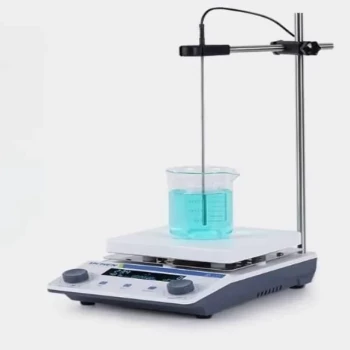
- Laboratory Small Constant Temperature Heated Magnetic Stirrer Heater and Stirrer
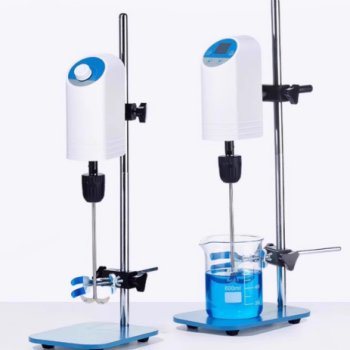
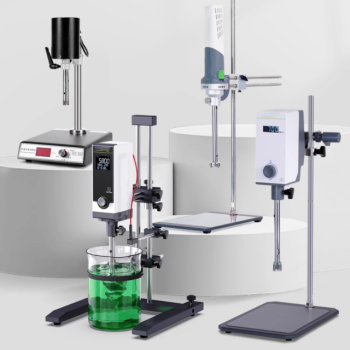
- High Performance Laboratory Stirrers for Diverse Applications
- Custom PTFE Teflon Parts Manufacturer for Magnetic Stirring Bar
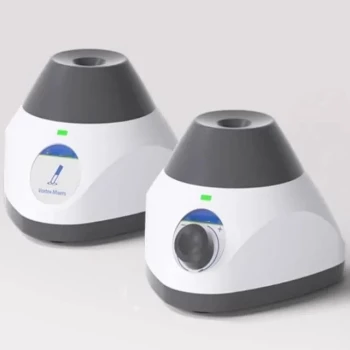
- Laboratory Vortex Mixer Orbital Shaker Multifunctional Rotation Oscillation Mixer
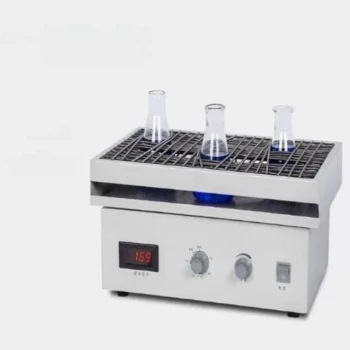
- Laboratory Multifunctional Small Speed-Adjustable Horizontal Mechanical Shaker for Lab
People Also Ask
- What role does a magnetic stirrer with heating play in ZnO nanoparticle synthesis? Precision Control for Quality Results
- What role does a constant temperature heating magnetic stirrer play in MFC-HAp synthesis? Achieve Material Homogeneity
- What is the function of a laboratory magnetic stirrer in Ni–Cr–P electrodeposition? Optimize Ion Transport & Coating
- Why is a laboratory magnetic stirrer required for benzoic acid esters? Boost Reaction Speed & Yield with High RPM
- What role does a laboratory magnetic stirrer play in the acidification pretreatment of aluminum sludge? Speed Recovery