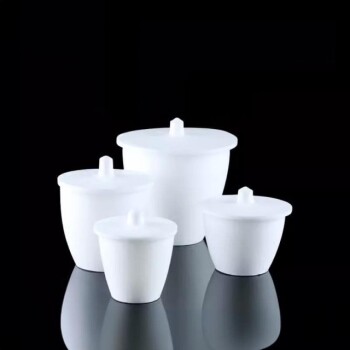
A Teflon-lined stainless steel high-pressure digestion tank acts as a chemically inert, pressurized vessel that facilitates the self-assembly of CD-MOF precursors. This reactor provides a sealed environment where high temperatures and autogenous pressures allow reactants to reach a subcritical state, significantly enhancing the solubility of cyclodextrin and metal salts. The dual-material construction ensures structural integrity through the steel shell while preventing alkaline corrosion and metal contamination via the Teflon liner.
The reactor's primary role is to create a controlled hydrothermal environment that promotes the coordination and nucleation of metal ions and cyclodextrin ligands. By isolating the reaction from the metal shell, it ensures the high purity and crystallinity of the resulting framework.
Engineering a Controlled Reaction Environment
Achieving Subcritical Solubility
High-pressure tanks allow solvents to exceed their normal boiling points without evaporating. This elevates the solubility and reactivity of precursor components, which is essential for the crystal growth of open-framework materials.
Facilitating Autogenous Pressure
As the temperature rises within the sealed chamber, autogenous pressure develops. This pressure drives the chemical bonding of species and ensures that metal ions can be deeply embedded within the triazine or carbohydrate frameworks.
Supporting Long-Duration Synthesis
Many MOF structures require extended reaction times, sometimes lasting several days at temperatures like 120°C. The sealed digestion tank maintains constant pressure and concentration throughout these long cycles, ensuring uniform crystal growth.
The Synergistic Role of Reactor Materials
Structural Integrity of the Stainless Steel Shell
The outer stainless steel shell provides the mechanical strength required to withstand and balance high internal pressures. This prevents the vessel from deforming or failing under the stresses generated by hydrothermal heat.
Chemical Shielding via PTFE Liners
The Teflon (PTFE) liner offers extreme chemical inertness against corrosive environments, such as the sodium hydroxide or concentrated acids used in synthesis. It prevents the reaction solution from attacking the metal walls, which would otherwise degrade the reactor.
Prevention of Metallic Contamination
By acting as a physical barrier, the liner ensures that no iron, chromium, or nickel from the shell leaches into the solution. This is critical for maintaining the phase purity of the CD-MOF, as foreign metal ions can disrupt the self-assembly process.
Understanding Technical Constraints and Trade-offs
Thermal Limits of PTFE
While Teflon is chemically robust, it typically has a maximum safe operating temperature of approximately 250°C. Exceeding this limit can cause the liner to soften, deform, or release hazardous fluorinated vapors.
Challenges in Heat Transfer
Teflon acts as a thermal insulator, which creates a thermal lag between the external heating source and the internal reaction mixture. Researchers must account for this delay to ensure the precursors spend the required amount of time at the target temperature.
Maintenance and Cleaning Requirements
The microporous nature of PTFE can lead to the "memory effect," where trace amounts of precursors from previous runs are retained. Rigorous acid washing and cleaning protocols are necessary to prevent cross-contamination between different batches of MOFs.
Optimizing Your Hydrothermal Synthesis
To achieve the highest quality CD-MOF precursors, your choice of reactor parameters must align with your specific material goals.
- If your primary focus is high crystal purity: Ensure the Teflon liner is free of scratches or degradation to prevent any contact between the alkaline precursors and the stainless steel shell.
- If your primary focus is structural uniformity: Prioritize precise temperature control and allow for sufficient "soak time" to compensate for the thermal insulation of the PTFE liner.
- If your primary focus is maximizing yield: Use a reactor volume that leaves approximately 20-30% "headspace" to allow for safe pressure development and efficient solvent-reactant interaction.
By mastering the balance between pressure, temperature, and chemical isolation, you can consistently produce high-performance metal-organic frameworks for advanced applications.
Summary Table:
| Component/Process | Primary Function | Key Benefit for CD-MOFs |
|---|---|---|
| Stainless Steel Shell | Provides mechanical strength | Withstands high internal autogenous pressure |
| Teflon (PTFE) Liner | Chemical inertness | Prevents alkaline corrosion and metal leaching |
| Subcritical State | Increases precursor solubility | Enhances nucleation and uniform crystal growth |
| Sealed Environment | Maintains constant pressure | Supports long-duration synthesis for stable structures |
Precision Engineering for Your Hydrothermal Synthesis
Elevate your material science research with KINTEK’s industry-leading laboratory equipment. We specialize in providing high-performance high-temperature high-pressure reactors and autoclaves designed specifically to meet the rigorous demands of MOF synthesis.
Beyond reactors, our comprehensive portfolio includes:
- Sample Preparation: Crushing and milling systems, sieving equipment, and hydraulic presses (pellet, hot, isostatic).
- Thermal Processing: A wide range of muffle, tube, vacuum, and CVD/PECVD furnaces.
- Lab Essentials: Electrolytic cells, cooling solutions (ULT freezers), and high-quality PTFE or ceramic consumables.
Ensure the purity and crystallinity of your next breakthrough. Contact KINTEK today to find the perfect reactor for your lab and benefit from our commitment to quality, durability, and technical excellence.
References
- Sundaram Chandrasekaran, Libo Deng. Mutual Self-Regulation of d-Electrons of Single Atoms and Adjacent Nanoparticles for Bifunctional Oxygen Electrocatalysis and Rechargeable Zinc-Air Batteries. DOI: 10.1007/s40820-023-01022-8
This article is also based on technical information from Kintek Solution Knowledge Base .
Related Products
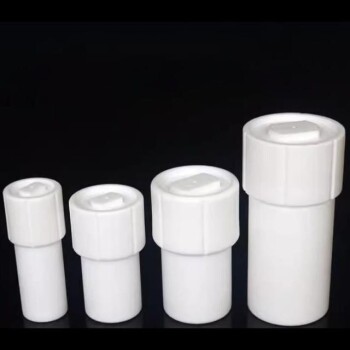
- Custom PTFE Teflon Parts Manufacturer for Microwave Digestion Tank
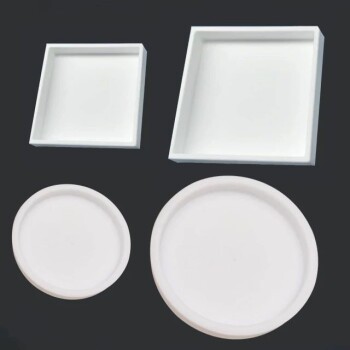
- Custom PTFE Teflon Parts Manufacturer for PTFE Containers
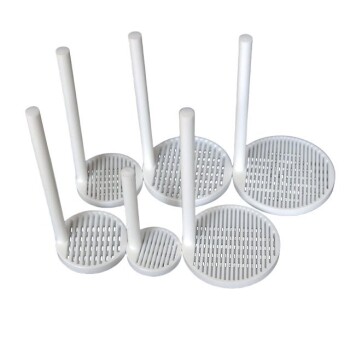
- Custom PTFE Teflon Parts Manufacturer for Cleaning Racks
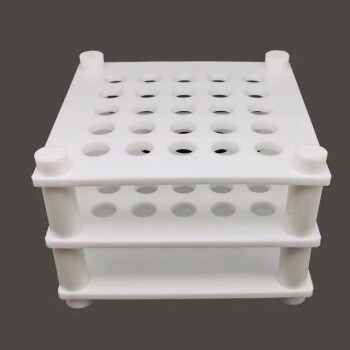
- Custom PTFE Teflon Parts Manufacturer for Centrifuge Tube Racks
- Custom PTFE Teflon Parts Manufacturer Corrosion Resistant Cleaning Rack Flower Basket
People Also Ask
- Why are PTFE containers required for PCT leaching tests? Ensure Chemical Inertness and Analytical Precision
- Why use high-quality PTFE containers for CO2 reduction electrolytes? Eliminate silicon contamination and ensure data.
- Why is PTFE Mandatory for Hydrofluoric Acid (HF) Handling? Ensure Safety and Data Integrity in Corrosion Testing
- Why is a PTFE container required for acid leaching of silicon nanosheets? Ensure High Purity and Safety
- Why are polytetrafluoroethylene (PTFE) containers essential for assessing the corrosion resistance of glassified waste?