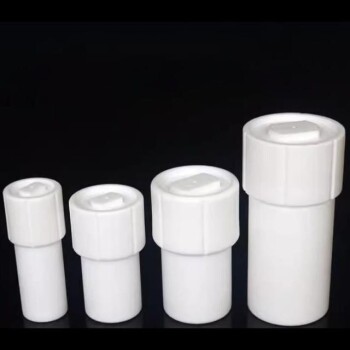
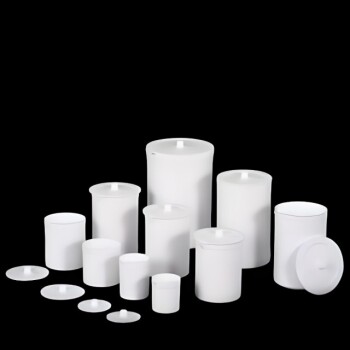
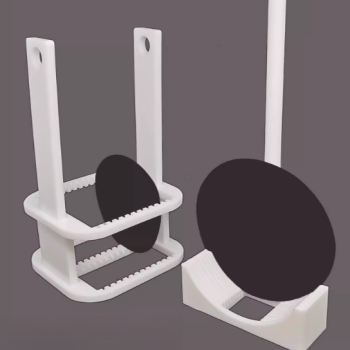
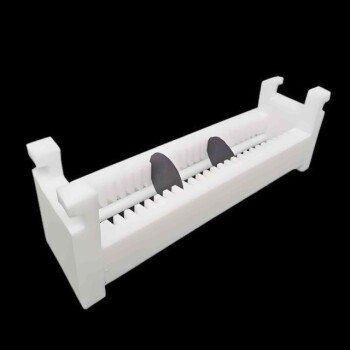
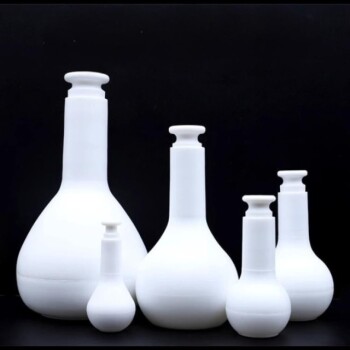
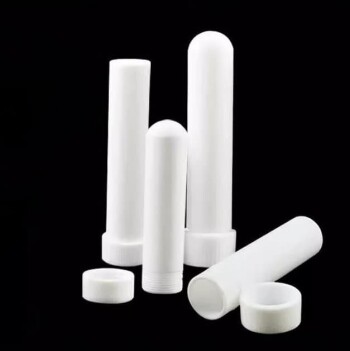
PTFE containers are mandatory for the Product Consistency Test (PCT) because they provide a chemically neutral environment that remains stable under the specific 90°C conditions of the test. Unlike standard laboratory glass or lesser plastics, PTFE releases virtually no ions into the solution, ensuring that the chemical analysis reflects only the degradation of the solidified waste form and not the container itself.
In static leaching tests, the integrity of the solution is paramount. PTFE is required because its extreme chemical inertness prevents "background noise"—container-derived contaminants—from corrupting the high-precision measurements of the solidification matrix.
The Critical Role of Chemical Inertness
Eliminating Background Leaching
The primary reason for using PTFE (polytetrafluoroethylene) is its exceptional chemical inertness. Many standard laboratory containers are capable of releasing ions into a solution over time.
In a leaching test, this "background" leaching creates a contaminated baseline. PTFE has an extremely low background of ion leaching, ensuring the container remains a neutral vessel.
Isolating the Source of Degradation
The goal of the PCT is to measure how a solidified body degrades. To do this accurately, you must be certain that every element found in the leachate came from the solidification matrix and not the jar holding it.
Using PTFE guarantees that element concentrations represent the true leaching rate of the sample, preventing false attributions of material failure.
Meeting the Demands of the PCT Environment
Stability at Elevated Temperatures
The Product Consistency Test is a high-temperature static leaching test conducted at 90°C.
At this temperature, many common polymers can degrade, warp, or release plasticizers. PTFE possesses the thermal stability required to maintain its physical and chemical integrity throughout the duration of the heating cycle.
Supporting Sensitive Analysis
The leachate produced from these tests is typically analyzed using highly sensitive instruments like ICP-AES or ICP-MS.
These instruments detect elements at trace levels. Because the analytical method is so sensitive, even microscopic amounts of container-induced contamination would interfere with the results, rendering the test invalid.
Understanding the Trade-offs
The Cost of Precision
While the primary reference focuses on performance, it is important to note that the requirement for PTFE is non-negotiable for valid results.
Using PTFE ensures data integrity, but it requires strict adherence to material protocols. You cannot substitute standard borosilicate glass—which is common in other labs—because glass leaches silica and sodium, specifically interfering with the target analytes of waste form testing.
Rigidity of Protocol
The use of PTFE is not a suggestion; it is a prerequisite for the test's validity.
Failing to use PTFE introduces uncontrolled variables (contamination). This creates a "trade-off" where operational flexibility is sacrificed for the sake of absolute analytical certainty.
Ensuring Data Integrity in Your Projects
To ensure your leaching tests meet the rigorous standards required for solidified bodies, consider the following:
- If your primary focus is Regulatory Compliance: Ensure all test apparatus is verified as PTFE to meet the standard protocols for high-temperature static leaching.
- If your primary focus is Analytical Accuracy: Use PTFE to eliminate background interference, ensuring your ICP-AES or ICP-MS data purely reflects the sample's performance.
The reliability of your leaching data depends as much on the inertness of the container as it does on the precision of your analytical instruments.
Summary Table:
| Feature | PTFE Containers | Standard Glass/Plastic |
|---|---|---|
| Chemical Inertness | Extremely High; No ion leaching | Low; Releases silica/sodium ions |
| Temperature Stability | Stable up to 260°C (Reliable at 90°C) | May warp or release plasticizers |
| Background Noise | Virtually Zero | High; Corrupts trace analysis |
| Analytical Accuracy | Ideal for ICP-AES/ICP-MS | Interferes with element detection |
| Regulatory Status | Mandatory for PCT Protocols | Prohibited for valid PCT testing |
Elevate Your Material Testing Precision with KINTEK
Don't let container-induced contamination compromise your research integrity. KINTEK specializes in providing high-performance laboratory equipment and consumables designed for the most demanding environments.
Whether you are conducting PCT leaching tests or advanced battery research, our premium PTFE products, ceramics, and crucibles ensure a chemically neutral environment for your samples. Our extensive portfolio also includes:
- High-temperature furnaces (muffle, tube, vacuum, and CVD) for precise thermal processing.
- High-pressure reactors and autoclaves for specialized chemical synthesis.
- Hydraulic presses and milling systems for flawless sample preparation.
Ensure your data reflects your sample's true performance. Contact KINTEK today to discover how our high-purity consumables and precision lab solutions can optimize your scientific workflows.
References
- Svetlana A. Kulikova, С. Е. Винокуров. Conditioning of Spent Electrolyte Surrogate LiCl-KCl-CsCl Using Magnesium Potassium Phosphate Compound. DOI: 10.3390/en13081963
This article is also based on technical information from Kintek Solution Knowledge Base .
Related Products
- Custom PTFE Teflon Parts Manufacturer for PTFE Containers
- Custom PTFE Teflon Parts Manufacturer for Microwave Digestion Tank
- Custom PTFE Teflon Parts Manufacturer PTFE Beaker and Lids
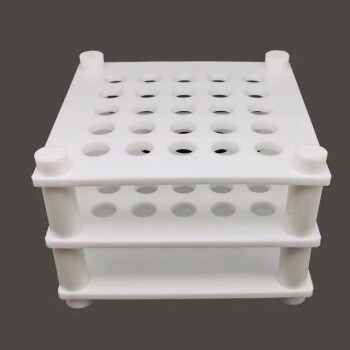
- Custom PTFE Teflon Parts Manufacturer for Centrifuge Tube Racks
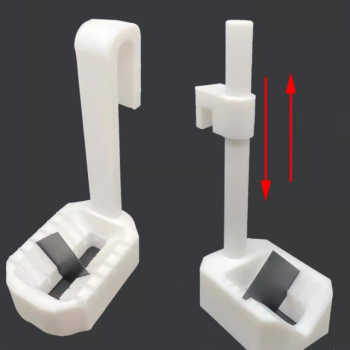
- Custom PTFE Wafer Holders for Lab and Semiconductor Processing
People Also Ask
- Why are PTFE containers necessary for selective HF etching of MAX phases? Ensure Safe & Pure MXene Synthesis
- Why is PTFE Mandatory for Hydrofluoric Acid (HF) Handling? Ensure Safety and Data Integrity in Corrosion Testing
- Why is a PTFE container required for acid leaching of silicon nanosheets? Ensure High Purity and Safety
- Why are polytetrafluoroethylene (PTFE) containers essential for assessing the corrosion resistance of glassified waste?
- Why use high-quality PTFE containers for CO2 reduction electrolytes? Eliminate silicon contamination and ensure data.