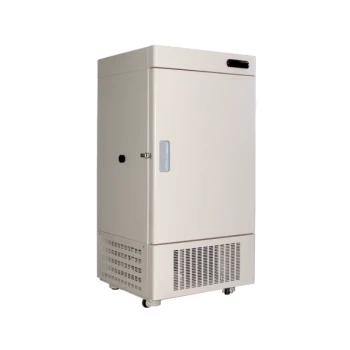
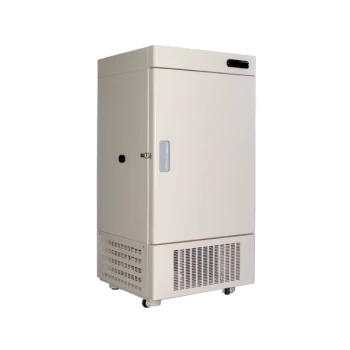
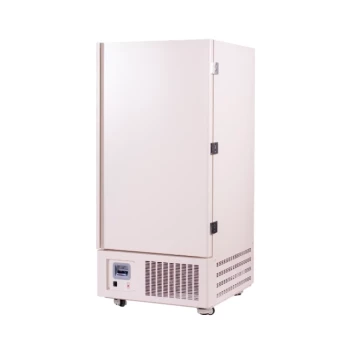
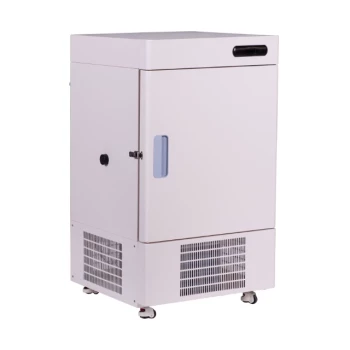
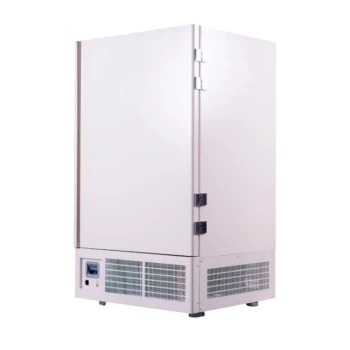
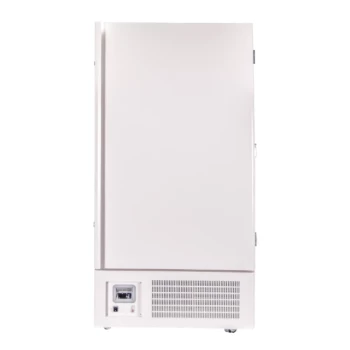
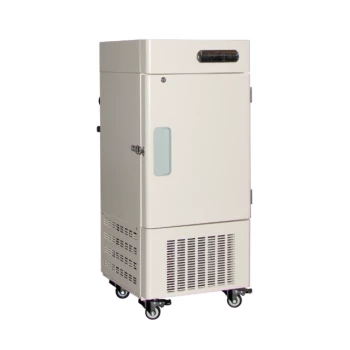
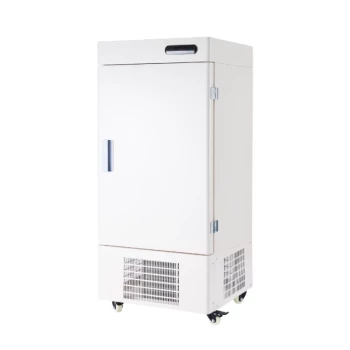
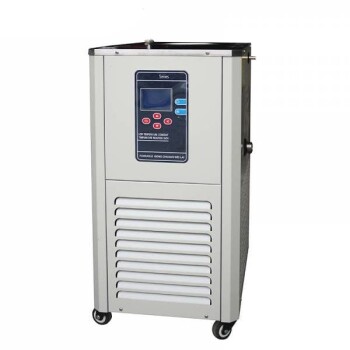
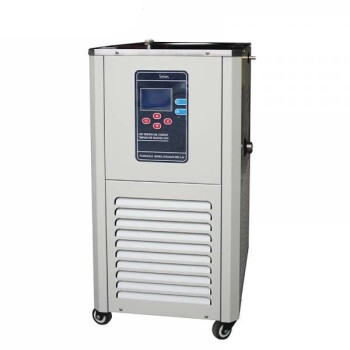
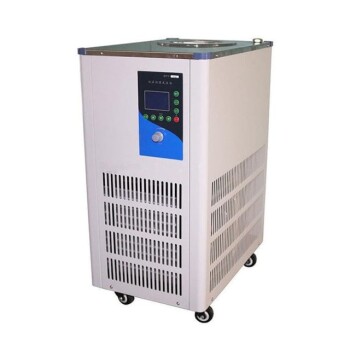
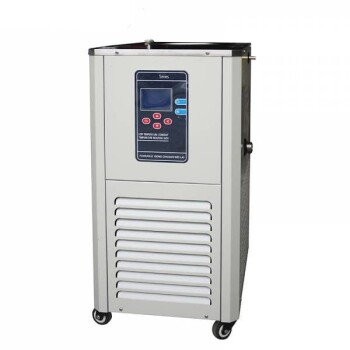
The primary function of using a high-precision low-temperature freezer is to significantly slow down the solvent evaporation rate. Specifically, maintaining the environment at 4°C regulates the escape of acetone from the TiO2-MoS2-PMMA mixture during solution casting. This controlled pace is the deciding factor between a defective, brittle sheet and a mechanically robust composite film.
The speed of drying dictates the quality of the film structure. By suppressing the volatility of acetone at 4°C, the process eliminates the turbulent solvent escape that causes surface defects, ensuring the nanomaterials integrate seamlessly into the polymer matrix.
The Mechanics of Low-Temperature Casting
Controlling Solvent Volatility
Acetone is a highly volatile solvent that evaporates rapidly at room temperature. If left unchecked, this rapid phase change creates internal stress within the drying film.
By lowering the ambient temperature to 4°C, the vapor pressure of the acetone is reduced. This forces the solvent to leave the mixture slowly and evenly, rather than boiling off aggressively.
Preventing Surface Defects
Rapid evaporation is the primary cause of microscopic and macroscopic imperfections in polymer films. When solvent rushes to the surface too quickly, it traps air and disrupts the polymer chains.
The low-temperature environment prevents the formation of surface bubbles and cracks. This results in a smooth, uniform topography that is essential for the film's optical and physical performance.
enhancing Composite Integrity
Nanomaterial Anchoring
The drying phase is not just about removing liquid; it is about organizing the solid structure. The TiO2 and MoS2 nanomaterials need time to settle within the PMMA polymer chains.
The extended drying time provided by the freezer allows these nanomaterials to better anchor to the polymer surface. This creates a cohesive internal network rather than a loose aggregate of particles.
Superior Mechanical Stability
Because the nanomaterials are firmly anchored and the polymer matrix is free of stress cracks, the final product is stronger.
Films processed at this low temperature exhibit superior mechanical stability. They are less likely to fracture under stress compared to films dried quickly in ambient conditions or ovens.
Understanding the Trade-offs
Process Speed vs. Product Quality
The most significant trade-off in this method is time. Evaporating acetone at 4°C takes considerably longer than drying at room temperature or using heat.
You are effectively trading production speed for structural perfection. For high-performance composite films, this delay is usually a necessary cost.
Equipment Precision
Not all cooling units are suitable for this task. The process requires a high-precision unit capable of maintaining a strict 4°C without fluctuation.
Temperature spikes could lead to uneven drying rates across the film, reintroducing the very defects the process aims to avoid.
Making the Right Choice for Your Goal
To determine if this method aligns with your fabrication requirements, consider your specific priorities:
- If your primary focus is mechanical durability: Utilize the 4°C freezer method to maximize nanomaterial anchoring and film toughness.
- If your primary focus is surface uniformity: Rely on low-temperature drying to eliminate the formation of bubbles and cracks.
- If your primary focus is rapid prototyping: This method may be too slow; however, acknowledge that faster drying methods will likely yield brittle, lower-quality films.
controlled evaporation is the key to unlocking the full potential of TiO2-MoS2-PMMA composites.
Summary Table:
| Feature | Rapid Drying (Ambient/Heat) | Controlled Drying (4°C Freezer) |
|---|---|---|
| Evaporation Rate | High/Turbulent | Low/Uniform |
| Surface Quality | Bubbles & Cracks | Smooth & Uniform |
| Material Structure | Brittle/Internal Stress | Mechanically Robust |
| Nanomaterial State | Loose Aggregates | Firmly Anchored |
| Main Advantage | Production Speed | Structural Perfection |
Elevate Your Composite Material Research with KINTEK
Achieving structural perfection in TiO2-MoS2-PMMA films requires more than just cooling—it requires unwavering thermal precision. At KINTEK, we specialize in high-performance laboratory solutions designed for the most delicate fabrication processes. From our high-precision ULT freezers and cooling traps that ensure uniform solvent evaporation, to our ultra-precise crushing, milling, and hydraulic presses for material preparation, we provide the tools necessary for superior mechanical stability.
Whether you are focusing on nanomaterial anchoring or perfecting polymer matrices, KINTEK’s comprehensive range of laboratory equipment and consumables is engineered to meet the rigorous demands of advanced battery research and material science.
Ready to eliminate surface defects and enhance your film integrity? Contact our technical experts today to find the perfect cooling solution for your lab!
References
- Vanessa Spanò, G. Impellizzeri. TiO2—MoS2—PMMA Nanocomposites for an Efficient Water Remediation. DOI: 10.3390/polym16091200
This article is also based on technical information from Kintek Solution Knowledge Base .
Related Products
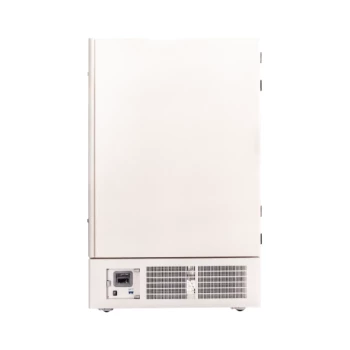
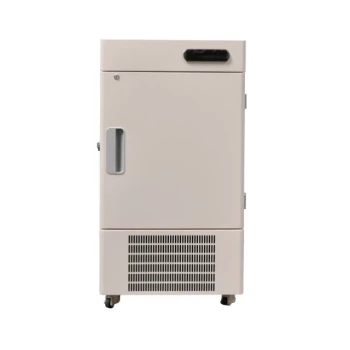
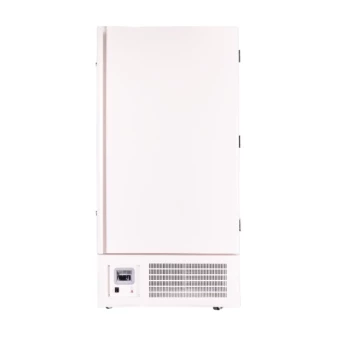
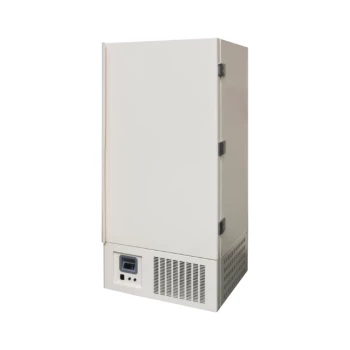
- 308L Precision Ultra Low Temperature Freezer for Laboratory Applications
- 208L Advanced Precision Laboratory Ultra Low Temperature Freezer for Cold Storage
- 408L Advanced Vertical Laboratory Ultra Low Temperature Freezer for Critical Research Material Preservation
- 108L Vertical Ultra Low Temperature ULT Freezer
- 938L Vertical Ultra Low Temperature Freezer for Advanced Laboratory Storage
People Also Ask
- How does evaporation occur in Ultra Freezers? The Core Process for Deep Freezing
- How are ultra low temperature freezers used in pharmaceutical storage? Protect Your High-Value Biologics & Vaccines
- What is the price range for ultra low temperature freezers? Protect Your Samples with the Right Investment
- How are Ultra Freezers designed for easy movement in laboratories? Unlock Lab Flexibility with Swivel Castors
- How is temperature controlled in ultra low temperature freezers? A Guide to Stable -80°C Storage