All Questions
What Is Meant By Ceramic Powder? The Engineered Blueprint For Advanced Ceramics
Ceramic powder is a highly engineered, inorganic material whose purity, particle size, and shape dictate the performance of the final ceramic component.
What Are The Examples Of Ceramic Powder? A Guide To Oxide And Non-Oxide Materials
Explore examples of ceramic powders like alumina, zirconia, and silicon carbide. Learn their classifications, properties, and how to select the right material for your application.
What Is Ceramic Powder Used For? Unlocking High-Performance Materials For Your Industry
Explore how ceramic powders are transformed into components for aerospace, medical, and electronics, offering unmatched hardness, heat resistance, and durability.
What Is The Effect Of Sintering On Ceramics? Transforming Powder Into High-Performance Materials
Learn how sintering transforms ceramic powders into dense, strong materials by eliminating porosity and developing robust microstructures.
What Happens To A Ceramic Material When It Is Sintered? The Transformation From Powder To Dense Solid
Learn how sintering transforms weak ceramic powder into a dense, strong solid through atomic diffusion, densification, and microstructural changes.
Why Do Ceramics Need To Be Sintered? Unlock Strength And Durability Through High-Temperature Fusion
Learn how sintering transforms fragile ceramic powders into strong, dense solids by enabling atomic diffusion and pore elimination for superior performance.
What Is Sintered Ceramic? A Durable, Non-Porous Material For Modern Surfaces
Discover how sintered ceramic is made and why its unique properties make it ideal for high-traffic surfaces, offering unmatched durability and stain resistance.
What Are The Properties Of Silicon Carbide Tubing? Master Extreme Conditions With Unmatched Durability
Explore silicon carbide tubing's properties: extreme hardness, high-temperature strength, corrosion resistance, and thermal shock resilience for severe-service applications.
What Is Sic In Refractory? Unlock Superior Performance For Extreme Heat & Abrasion
Silicon Carbide (SiC) enhances refractory performance with high thermal conductivity, strength, and shock resistance for demanding industrial applications.
What Is Sic Melting Point? Discover The Extreme Thermal Stability Of Silicon Carbide
Learn why SiC sublimates at 2730°C instead of melting, making it ideal for extreme high-temperature applications like furnace elements and power electronics.
Does Sic Have High Thermal Conductivity? Unlock Superior Thermal Management For Power Electronics
Discover why SiC's high thermal conductivity, up to 490 W/mK, is critical for managing heat in high-power, high-temperature applications like EV inverters.
Is Silicon Carbide Easy To Machine? Overcoming The Hardness Hurdle For Your Components
Discover why silicon carbide is difficult to machine and the specialized processes like diamond grinding and EDM required for shaping this hard ceramic.
Is Silicon Carbide Better Than Ceramic? Discover The Superior Technical Ceramic For Your Application
Silicon carbide is a high-performance technical ceramic. Learn when its extreme hardness, thermal conductivity, and chemical inertness make it the best choice.
What Temperature Can Silicon Carbide Withstand? Operating Limits From 1600°C To 2700°C
Learn the practical and theoretical temperature limits of silicon carbide (SiC), from 1600°C in air to 2700°C in inert atmospheres, and how environment dictates performance.
Related Products

Engineering Advanced Fine Alumina Al2O3 Ceramic Crucible for Laboratory Muffle Furnace

Engineering Advanced Fine Ceramics Alumina Al2O3 Crucible With Lid Cylindrical Laboratory Crucible
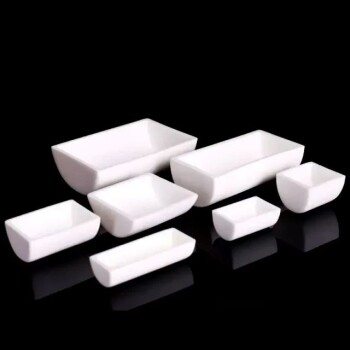
Alumina Al2O3 Ceramic Crucible Semicircle Boat with Lid for Engineering Advanced Fine Ceramics

Engineering Advanced Fine Ceramics Alumina Crucibles (Al2O3) for Thermal Analysis TGA DTA
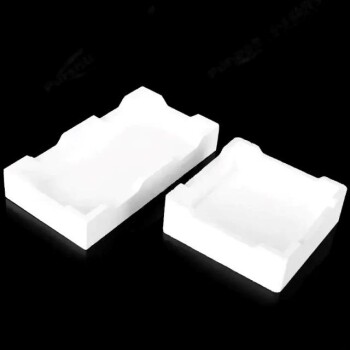
Advanced Engineering Fine Ceramics Alumina Ceramic Saggar for Fine Corundum
