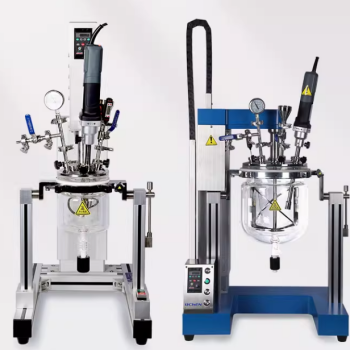
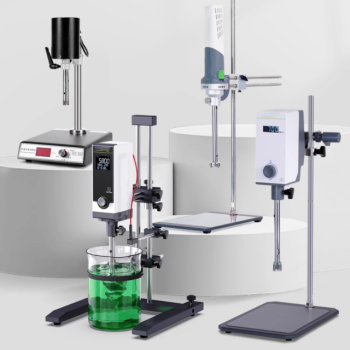
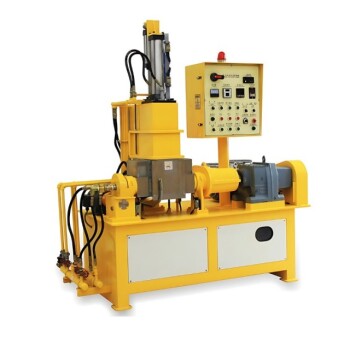
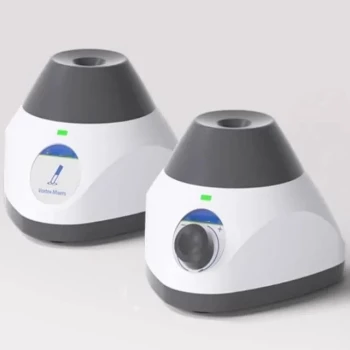
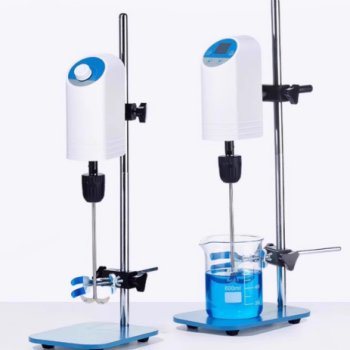
Industrial-grade homogenizing mixers function by generating intense high-shear forces to blend active materials, such as graphite or metal oxides, with conductive binders into a single, uniform suspension. This mechanical action creates a highly dispersed mixture within the solvent, effectively breaking down particle clusters to ensure a consistent, high-quality electrode slurry.
The core purpose of these mixers is to eliminate particle agglomeration through high-shear dispersion. This creates a stable, uniform slurry that is a prerequisite for producing smooth electrode coatings and maintaining consistent internal resistance in the final battery cell.
The Mechanism of High-Shear Dispersion
Breaking Down Agglomerates
The primary challenge in slurry preparation is the tendency of materials, particularly nanopowders, to clump together.
The homogenizer utilizes high-shear mixing to physically break down these agglomerates. This ensures that active particles are not just floating in the solvent but are fully separated and distributed.
Creating a Uniform Suspension
Beyond breaking particles apart, the mixer must blend distinct components—active materials, conductive agents, and binders—into a cohesive unit.
By applying shear force, the mixer ensures these elements form a uniform suspension. This homogeneity is critical for the stability of the slurry prior to the coating process.
Impact on Battery Performance and Manufacturing
Guaranteeing Electrode Surface Smoothness
The quality of the mixing process directly dictates the physical quality of the electrode sheet.
A fully dispersed slurry allows for defect-free and evenly coated electrode sheets. Without this level of dispersion, the subsequent coating process would result in rough or uneven surfaces.
Ensuring Internal Resistance Consistency
The function of the mixer extends beyond physical appearance to the electrical performance of the battery.
By eliminating agglomeration, the mixer ensures the consistency of internal resistance. This uniformity is vital for the reliable operation and longevity of the lithium-ion battery.
Critical Operational Considerations
The Risk of Instability
While high-shear mixing is powerful, the ultimate goal is slurry stability.
If the homogenizer fails to fully disperse the agents and binders, the slurry will lack the necessary uniformity and stability. This leads to immediate manufacturing defects during the coating phase.
The Necessity of Complete Dispersion
Partial mixing is not sufficient for industrial-grade applications.
The process must guarantee that active particles are highly dispersed to prevent weak spots in the electrode. Any remaining agglomerates can compromise the structural integrity and electrical efficiency of the battery.
Making the Right Choice for Your Goal
To ensure your electrode slurry meets production standards, consider your specific manufacturing objectives:
- If your primary focus is electrical performance: Ensure the mixer provides sufficient shear force to guarantee the consistency of internal resistance across the battery cells.
- If your primary focus is manufacturing yield: Prioritize mixing thoroughness to eliminate agglomerates, which is the prerequisite for obtaining smooth, defect-free electrode coatings.
High-quality homogenization is not just a mixing step; it is the foundational process that defines the reliability and efficiency of the final energy storage device.
Summary Table:
| Key Function | Mechanical Action | Impact on Battery Quality |
|---|---|---|
| Particle Dispersion | High-shear force breaking clusters | Ensures consistent internal resistance |
| Homogenization | Blending active materials & binders | Creates a stable, uniform suspension |
| Coating Preparation | Eliminating nanopowder clumping | Guarantees smooth, defect-free electrodes |
| Quality Control | Intensive mechanical mixing | Foundational for long-term cell reliability |
Optimize Your Battery Production with KINTEK Precision Homogenizers
Elevate your manufacturing yield and battery performance with KINTEK’s high-performance homogenizers and laboratory solutions. Our specialized equipment is engineered to handle the rigorous demands of lithium-ion battery research and industrial production.
Why partner with KINTEK?
- Unmatched Dispersion: Achieve perfect electrode slurry uniformity with our high-shear mixing systems.
- Comprehensive Lab Solutions: From crushing and milling systems to hydraulic presses and vacuum furnaces, we provide the full suite of tools for energy storage R&D.
- Reliable Consistency: Minimize internal resistance and eliminate coating defects with our industrial-grade shakers and processing equipment.
Whether you are refining battery chemistries or scaling up production, KINTEK offers the technical expertise and high-quality consumables you need to succeed.
Contact KINTEK today for a customized equipment consultation and take the first step toward superior energy storage technology!
References
- Hernán Paz Penagos, Diego Arturo Coy Sarmiento. Graphene and coltan. DOI: 10.23850/2422068x.5835
This article is also based on technical information from Kintek Solution Knowledge Base .
Related Products
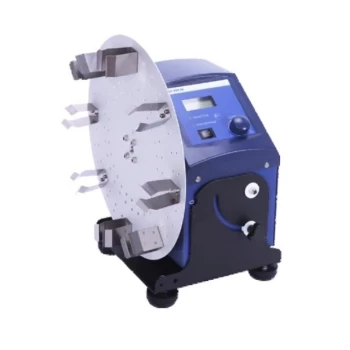
- Laboratory Disc Rotary Mixer for Efficient Sample Mixing and Homogenization
- High Performance Lab Homogenizer for Pharma Cosmetics and Food R&D
- High Shear Homogenizer for Pharmaceutical and Cosmetic Applications
- Lab Sterile Slapping Type Homogenizer for Tissue Mashing and Dispersing
- Laboratory High Throughput Tissue Grinding Mill Grinder
People Also Ask
- What is a laboratory mixer used for? Choose the Right Tool for Liquids or Solids
- What is a laboratory mixer? A Guide to Achieving Perfect Sample Homogeneity
- What are laboratory mixers used for? Achieve Perfect Sample Homogeneity and Reliable Results
- How does a high-efficiency homogenizing mixer contribute to the preparation of Tobermorite and Xonotlite precursors?
- Why is precision mixing required for concrete corrosion studies? Ensure Data Integrity through Homogenization