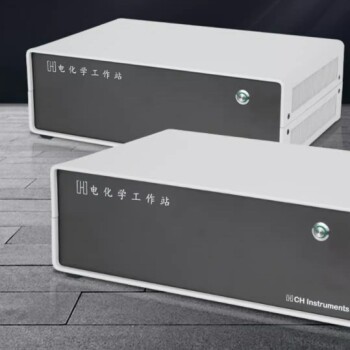
Evaluating electrode material cycle stability relies on the precise execution of Galvanostatic Charge-Discharge (GCD) tests over hundreds or thousands of cycles. A high-precision battery testing system applies a constant current density to a cell and records the resulting voltage changes over time, allowing researchers to quantify how much energy the material can store and release as it undergoes repeated chemical transitions. By measuring the decay in discharge capacity and the consistency of Coulombic efficiency, the system provides a definitive profile of the material’s long-term durability and electrochemical health.
Core Takeaway: High-precision battery testing systems evaluate cycle stability by automating long-term charge-discharge cycles under strictly controlled current densities. This process allows for the precise calculation of capacity retention and Coulombic efficiency, which are the primary metrics used to determine an electrode material's lifespan and structural integrity.
The Mechanics of Galvanostatic Charge-Discharge (GCD)
Precise Current Density Control
The system applies a specific, constant current density—often measured in milliamperes per gram (mA/g)—to the assembled battery. This controlled flow of electrons mimics real-world usage while ensuring that any changes in performance are due to material degradation rather than fluctuations in power delivery.
Real-Time Voltage and Capacity Recording
As the battery charges and discharges, the system continuously monitors voltage fluctuations and maps them against time or capacity. These "voltage profiles" or "platforms" reveal the electrochemical potentials at which lithium, potassium, or calcium ions are inserted and removed from the electrode material.
Multi-Channel Parallel Testing
High-precision systems often feature multiple independent channels, allowing researchers to test numerous coin cells or half-cells simultaneously. This parallel processing is essential for verifying the statistical consistency of a material's performance across different batches and conditions.
Key Metrics for Stability Evaluation
Capacity Retention Ratios
By comparing the discharge specific capacity of the first cycle to the capacity after 500 or 1,000 cycles, the system calculates a retention percentage. High-precision hardware is critical here, as even a minor 0.1% error in a single cycle can lead to significant miscalculations of a material's projected three-year lifespan.
Coulombic Efficiency (CE) Monitoring
The system calculates Coulombic efficiency by determining the ratio of discharge capacity to charge capacity within a single cycle. A high and stable CE (close to 100%) indicates that the electrochemical reactions are highly reversible and that minimal energy is being lost to side reactions, such as the formation of an unstable solid electrolyte interphase (SEI).
Rate Performance and Durability
Testing systems often vary the current density (e.g., from 100 mA/g to 1000 mA/g) to evaluate rate performance. This identifies how well the material maintains its stability when forced to charge or discharge rapidly, which is a critical factor for fast-charging applications.
Understanding the Trade-offs
Testing Duration vs. Data Granularity
While long-term cycling (1,000+ cycles) provides the most accurate view of stability, it can take weeks or months to complete. Researchers must balance the need for extensive cycle data with the need for rapid material iteration and development.
GCD vs. Kinetic Analysis
GCD testing is the gold standard for measuring capacity and stability, but it cannot fully explain why a material is failing. To understand changes in internal resistance or ion diffusion kinetics, researchers must supplement high-precision testing with Electrochemical Impedance Spectroscopy (EIS), which requires different specialized equipment.
Environmental Sensitivities
High-precision systems are extremely sensitive to ambient temperature fluctuations, which can skew cycle stability data. To ensure objectivity, these tests must often be conducted within temperature-controlled chambers to isolate the material's performance from environmental noise.
How to Apply This to Your Research
Selecting a Testing Strategy
To get the most out of a high-precision battery testing system, align your testing parameters with the specific chemistry and intended application of your electrode material.
- If your primary focus is long-term durability: Prioritize continuous GCD cycling over 1,000+ cycles at a moderate current density to verify capacity retention.
- If your primary focus is fast-charging capability: Utilize rate performance tests that step through increasing current densities (e.g., 0.1 A/g to 2.0 A/g) to find the material's stability limit.
- If your primary focus is chemical reversibility: Closely monitor the initial Coulombic efficiency (ICE) and the stability of the voltage platforms in the first ten cycles.
By systematically applying these high-precision measurements, you can definitively quantify the performance limits and commercial potential of new electrode materials.
Summary Table:
| Feature/Metric | Evaluation Purpose | Key Research Benefit |
|---|---|---|
| GCD Testing | Applies constant current (mA/g) to record voltage changes | Ensures precise, repeatable capacity measurement |
| Capacity Retention | Compares initial vs. final discharge capacity | Predicts long-term lifespan and structural integrity |
| Coulombic Efficiency | Measures the ratio of discharge to charge capacity | Identifies chemical reversibility and SEI stability |
| Rate Performance | Tests stability across varying current densities | Evaluates suitability for fast-charging applications |
| Multi-Channel Parallelism | Tests multiple cells simultaneously | Provides statistical consistency across material batches |
Elevate Your Battery Research with KINTEK Precision
Precision is the foundation of breakthrough energy storage. At KINTEK, we specialize in high-performance laboratory equipment designed to help researchers unlock the full potential of new electrode materials.
Whether you are conducting long-term cycle stability tests or investigating rate performance, our comprehensive portfolio offers everything you need for success, including:
- High-precision battery research tools and consumables
- Advanced crushing and milling systems for material preparation
- High-temperature muffle and vacuum furnaces for material synthesis
- Hydraulic pellet presses and precision PTFE/ceramic consumables
Don’t let measurement errors stall your innovation. Contact KINTEK today to discover how our reliable testing solutions and expert support can enhance your lab's efficiency and data accuracy.
References
- Lixia Sun, Zhong‐Cheng Song. Synthesis and electrochemical properties of Mn-doped Li2Mn0.1Ti1.9(PO4)3 materials. DOI: 10.3389/fchem.2023.1189866
This article is also based on technical information from Kintek Solution Knowledge Base .
Related Products
- Customizable Swagelok Type Test Cells for Advanced Battery Research Electrochemical Analysis
- Battery Lab Equipment 304 Stainless Steel Strip Foil 20um Thick for Battery Test
- Button Battery Case for Battery Lab Applications
- Cylindrical Battery Steel Case for Battery Lab
- Laboratory Hydraulic Press Lab Pellet Press for Button Battery
People Also Ask
- How does a standardized electrochemical test cell assist in MOx/CNTf electrode screening? Optimize Material Ratios
- Why is a dedicated electrochemical test cell necessary for carbon steel? Ensure Precise Geothermal Corrosion Data
- What is the difference between a voltaic cell and an electrochemical cell? Understand the Two Types of Energy Conversion
- How do the electrochemical cell and three-electrode testing system collaborate? Optimize Zinc Anode Deposition Control
- Why must the electrochemical cell be continuously purged with nitrogen? Ensure Precision in Ni-Cr Corrosion Tests