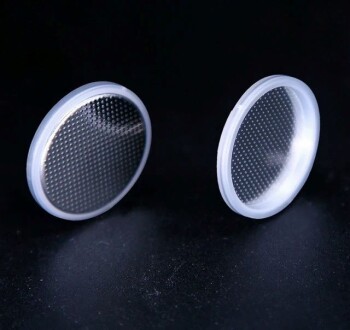
In 2032-type coin cell assembly, the microporous polypropylene separator serves as the critical internal gatekeeper. It is positioned directly between the positive and negative electrodes to prevent physical contact and electrical short-circuiting. Its specialized porous structure ensures that while electrons cannot pass through, lithium ions move freely via the electrolyte to maintain the electrical circuit.
The separator acts as both a physical insulator and an ionic conductor, ensuring safety while enabling energy flow. Selecting high-purity, high-strength polypropylene is essential for maintaining chemical stability and obtaining accurate data during long-term battery cycling.
The Dual Function of the Separator
Preventing Internal Short Circuits
The primary role of the separator is to act as a physical barrier between the anode and the cathode. By maintaining this separation, it prevents the direct contact that would lead to a catastrophic internal short circuit.
In the compact environment of a 2032 coin cell, this thin layer is the only thing standing between a functioning battery and a dead cell. It must be perfectly centered during assembly to ensure the electrodes never touch.
Facilitating Ionic Transport
While it blocks electrons, the separator must be a conduit for lithium ions. The "microporous" nature of the polypropylene allows the liquid electrolyte to saturate the material.
These microscopic pores create a pathway for ions to migrate freely between the electrodes during charge and discharge. This movement is what allows the charge transfer circuit to remain continuous and functional.
Material Integrity and Electrochemical Stability
The Role of Polypropylene
Polypropylene is selected for its excellent chemical stability in the presence of organic electrolytes. It remains inert, meaning it does not react with the battery's active materials during operation.
Using a high-purity version of this polymer is vital for research and development. It ensures that the results of your testing reflect the performance of your active materials rather than interference from a degrading separator.
Mechanical Strength and Durability
During the crimping of a 2032 coin cell, the internal components are subjected to significant pressure. A separator with high mechanical strength resists puncturing or tearing under these stresses.
This durability is also essential for long-term cycling. A robust separator maintains its structural integrity over hundreds of cycles, preventing premature failure and ensuring consistent performance.
Understanding the Trade-offs
Porosity vs. Structural Integrity
There is a delicate balance between how porous a separator is and how strong it remains. Higher porosity allows for faster ion transport but can weaken the material's resistance to dendrite penetration.
Electrolyte Wetting Challenges
Polypropylene is naturally hydrophobic, which can sometimes make it difficult for the electrolyte to "wet" or soak into the pores. If the separator is not fully saturated, the internal resistance of the battery increases, significantly hindering performance.
Applying This to Your Battery Project
Making the Right Choice for Your Goal
To achieve the best results in your 2032 coin cell assembly, consider the specific requirements of your active materials and testing protocols.
- If your primary focus is evaluating electrochemical kinetics: Use a high-purity separator with a uniform pore structure to ensure that ion transport does not become a bottleneck for your data.
- If your primary focus is long-term cycle life: Prioritize a separator with high mechanical strength to resist degradation and potential internal shorts over hundreds of charges.
- If your primary focus is high-power applications: Select a material with optimized porosity and thickness to minimize internal resistance and maximize ion flux.
Choosing the right separator ensures that your battery testing is both safe and scientifically accurate.
Summary Table:
| Feature | Primary Function | Key Benefit |
|---|---|---|
| Physical Barrier | Prevents anode/cathode contact | Eliminates internal short circuits |
| Microporous Structure | Facilitates lithium ion transport | Maintains continuous energy flow |
| Polypropylene Material | Chemical & electrochemical stability | Ensures inertness and data accuracy |
| Mechanical Strength | Resists puncture during crimping | Increases long-term cycling durability |
Elevate Your Battery Research with KINTEK Precision
Achieving accurate and reproducible data in coin cell testing starts with high-quality components. KINTEK specializes in premium laboratory equipment and battery research consumables, including high-purity microporous polypropylene separators, 2032-type coin cell cases, and advanced battery research tools. Our materials are engineered for maximum chemical stability and mechanical strength, ensuring your results reflect the true potential of your active materials rather than assembly failures.
From high-temperature furnaces (CVD, vacuum, atmosphere) for material synthesis to precision hydraulic presses for pelletizing and cell assembly, KINTEK provides a comprehensive range of solutions. We also offer electrolytic cells, cooling solutions, and essential ceramics to support every stage of your electrochemical testing.
Ready to optimize your lab's performance? Contact KINTEK today to discuss your project requirements!
References
- Yun Chen, Tingli Ma. Diatomite and Glucose Bioresources Jointly Synthesizing Anode/Cathode Materials for Lithium-Ion Batteries. DOI: 10.3390/coatings13010146
This article is also based on technical information from Kintek Solution Knowledge Base .
Related Products
- Polyethylene Separator for Lithium Battery
- Proton Exchange Membrane for Batteries Lab Applications
- Button Battery Case for Battery Lab Applications
- PTFE Electrolytic Cell Electrochemical Cell Corrosion-Resistant Sealed and Non-Sealed
- Hydrophilic Carbon Paper TGPH060 for Battery Lab Applications
People Also Ask
- What role do high-performance battery separators play in RT Na-S batteries? Enhancing Stability and Cycle Life
- How to tell if a lithium-ion battery is bad? Spot the critical signs of failure before it's too late.
- Is there a way to test lithium batteries? Understand Voltage vs. True Health
- How to check if a lithium battery is good? Safely Test Voltage, Capacity & Internal Resistance
- How to check the power of a lithium-ion battery? Master the difference between charge level and battery health.