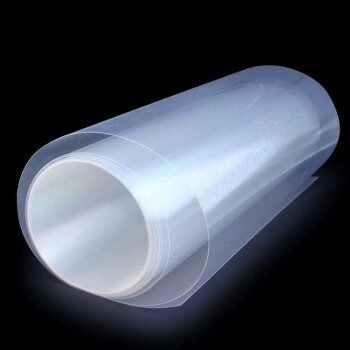
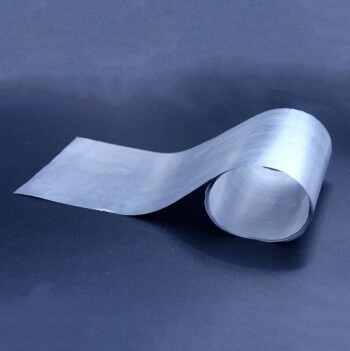
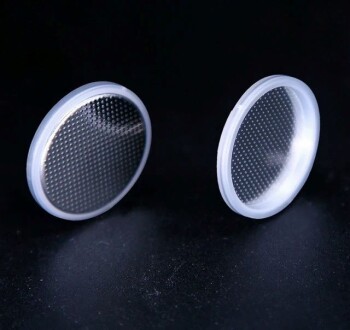
High-performance separators are the silent sentinels of sodium-sulfur battery stability. They function as a physical dielectric barrier between the metallic sodium anode and the sulfur cathode to prevent catastrophic shorting. Simultaneously, their internal porous architecture serves as the vital conduit for sodium-ion flux, directly dictating the battery's power density and long-term cycling reliability.
High-performance separators are active components that manage ion transport and mitigate the "polysulfide shuttle effect," which is the primary barrier to achieving operational stability in room-temperature sodium-sulfur systems. By maintaining structural integrity and high porosity, these separators ensure the battery remains efficient over hundreds of cycles.
The Functional Mechanics of Separation and Transport
Preventing Direct Anode-Cathode Contact
The primary role of the separator is to act as a physical insulator that keeps the reactive metallic sodium anode from touching the sulfur cathode. Any breach in this barrier leads to an internal short circuit, which can cause thermal runaway or immediate cell failure.
In laboratory-grade applications, the separator must be chemically inert to both the sodium and the electrolyte. This ensures that the barrier does not degrade during the aggressive electrochemical environment of a room-temperature sodium-sulfur (RT Na-S) cell.
Optimizing Sodium-Ion Flux
The internal porous structure of the separator acts as a reservoir and carrier for the liquid electrolyte. This network allows for the rapid diffusion of sodium ions (Na+) between the electrodes during charge and discharge cycles.
Without high porosity and proper pore distribution, ion transport becomes restricted, leading to high internal resistance. This resistance negatively impacts the battery’s rate capability and overall energy efficiency.
Mitigating the Polysulfide Shuttle Effect
Physical and Chemical Entrapment
One of the greatest challenges in RT Na-S batteries is the polysulfide shuttle effect, where soluble intermediate reaction products migrate away from the cathode. High-performance separators are designed to inhibit this migration through their specific pore morphology.
By restricting the movement of these polysulfides, the separator keeps the active materials localized at the cathode. This prevents the loss of sulfur and the subsequent formation of insulating layers on the sodium anode.
Enhancing Cycling Stability
Maintaining the integrity and porosity of the separator is essential for long-term operation. If the separator pores become clogged or the material loses its shape, the battery's capacity will rapidly decline.
A stable separator ensures that the electrolyte remains evenly distributed throughout the cell’s life. This consistency is what allows the battery to achieve the cycling stability required for practical energy storage applications.
Understanding the Trade-offs and Pitfalls
Porosity vs. Mechanical Strength
Engineers must balance high porosity for ion transport with the mechanical strength required to withstand assembly and operation. A separator that is too thin or porous may be susceptible to puncture by sodium dendrites, leading to premature failure.
Conversely, a separator that is too thick or dense will provide superior safety but will significantly hinder the battery's power density. Finding the "sweet spot" is a critical aspect of RT Na-S cell design.
Electrolyte Wettability and Retention
A common pitfall is using a separator material that does not "wet" well with the chosen electrolyte. If the electrolyte cannot fully saturate the separator, dry spots will form, leading to uneven current distribution and localized cell aging.
High-performance separators often undergo surface treatments to improve their affinity for the electrolyte. This ensures that the ion transport pathways remain open and efficient throughout the battery's entire life cycle.
Selecting a Separator Strategy for Na-S Development
How to Apply This to Your Project
When integrating separators into a room-temperature sodium-sulfur system, the choice of material must align with your specific performance targets.
- If your primary focus is Cycle Life: Prioritize separators with specialized coatings or pore structures designed specifically to inhibit the polysulfide shuttle effect.
- If your primary focus is High Rate Performance: Select materials with maximum porosity and high electrolyte uptake to ensure low internal resistance and rapid ion flux.
- If your primary focus is Safety and Reliability: Invest in high-strength, thermally stable laboratory-grade separators that offer superior resistance to dendrite penetration.
By viewing the separator as a sophisticated ion-management tool rather than a simple plastic film, you can unlock the full potential of next-generation sodium-sulfur energy storage.
Summary Table:
| Key Function | Impact on Battery Performance | Primary Design Challenge |
|---|---|---|
| Physical Barrier | Prevents short circuits & thermal runaway | Balancing thickness with safety |
| Ion Transport | Dictates power density & internal resistance | High porosity vs. mechanical strength |
| Shuttle Mitigation | Inhibits polysulfide migration for cycle stability | Optimizing pore morphology |
| Electrolyte Retention | Ensures uniform current distribution | Improving material wettability |
Elevate Your Battery Research with KINTEK
Precision is the backbone of breakthrough energy storage. At KINTEK, we specialize in providing the high-grade laboratory equipment and consumables essential for developing next-generation room-temperature sodium-sulfur batteries.
Whether you are synthesizing cathode materials in our high-temperature muffle or vacuum furnaces, preparing electrodes with our precision hydraulic presses, or conducting electrochemical tests using our specialized battery research tools and electrolytic cells, KINTEK ensures your lab is equipped for success. From high-purity ceramic crucibles to robust PTFE products, we provide the materials that stand up to the most aggressive chemical environments.
Ready to optimize your battery assembly and achieve superior cycling stability? Contact our technical experts today to discover how KINTEK can power your research!
References
- Shen Fei Zhao, Chang Ming Li. Biomass‐Derived Micro‐Mesoporous Carbon with Oxygen Functional Groups for High‐Rate Na–S Batteries at Room Temperature. DOI: 10.1002/aenm.202302490
This article is also based on technical information from Kintek Solution Knowledge Base .
Related Products
- Polyethylene Separator for Lithium Battery
- Proton Exchange Membrane for Batteries Lab Applications
- Aluminum Foil Current Collector for Lithium Battery
- Electric button battery sealing machine
- Manual button battery sealing machine (digital display)
People Also Ask
- How to tell if a lithium-ion battery is bad? Spot the critical signs of failure before it's too late.
- Is there a way to test lithium batteries? Understand Voltage vs. True Health
- How to check if a lithium battery is good? Safely Test Voltage, Capacity & Internal Resistance
- How to check the power of a lithium-ion battery? Master the difference between charge level and battery health.
- What are the disadvantages of zeolite adsorbent? Key Limitations for Your Process