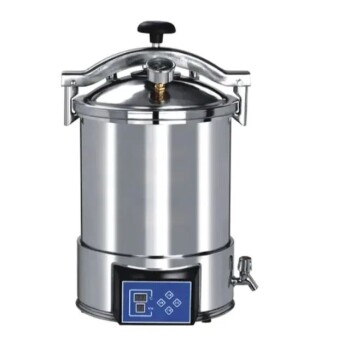
The use of a Teflon-lined autoclave is fundamental to the synthesis of Ni2P@Co9S8 metal heterostructures. This specialized equipment provides the chemical stability and controlled high-pressure environment necessary to facilitate the self-assembled growth of cobalt and sulfur sources onto Ni2P nanorods. This process results in tightly contacted heterojunction interfaces that are essential for efficient interfacial charge transfer.
The Teflon-lined autoclave acts as a high-pressure reactor that enables corrosive chemical reactions at elevated temperatures while protecting the integrity of the sample. By maintaining a sealed, pressurized environment, it drives the precise self-assembly and crystallization required to form high-performance metal heterostructures.
Chemical Stability and Corrosion Resistance
Protection Against Corrosive Reagents
The synthesis of Ni2P@Co9S8 often involves highly reactive chemical reagents that would degrade standard metallic containers. Teflon (PTFE) provides an inert barrier that resists corrosion from both acidic and alkaline precursors used in the hydrothermal process.
Maintaining Structural Integrity
By preventing the reaction vessel from reacting with its contents, the Teflon liner ensures that the chemical stoichiometry of the Ni2P@Co9S8 remains precise. This stability is critical when working with sulfur and phosphorus sources that can be highly aggressive at reaction temperatures.
Vessel Longevity and Safety
The liner protects the outer stainless steel shell of the autoclave from stress corrosion and pitting. This ensures the safety of the high-pressure environment and extends the operational life of the laboratory equipment.
Facilitating Precise Heterostructure Formation
Controlled Self-Assembled Growth
At a constant temperature of 150°C, the autoclave facilitates the self-assembled growth of cobalt and sulfur on the surface of Ni2P nanorods. The autogenous pressure generated within the sealed vessel forces the precursors to interact uniformly across the nanorod surface.
Enhanced Interfacial Charge Transfer
The high-pressure environment promotes the formation of tightly contacted metal heterojunctions. These high-quality interfaces are vital for reducing resistance and enhancing the movement of electrons between the Ni2P and Co9S8 layers.
Improved Reaction Kinetics
The sealed environment allows the reaction to occur at temperatures exceeding the solvent's boiling point, significantly accelerating reaction kinetics. This facilitates deeper solvent penetration and more efficient diffusion of ions into the pre-synthesized Ni2P framework.
Ensuring Material Purity and Quality
Prevention of Metal Ion Contamination
Metallic autoclaves without liners can leach iron, chromium, or nickel ions into the solution, which acts as a dopant and alters the catalyst's properties. The Teflon liner acts as a non-reactive barrier, ensuring that the resulting Ni2P@Co9S8 heterostructure remains free from unintended metallic impurities.
Uniform Nucleation and Crystallization
The stable thermal and pressure conditions inside the liner allow for uniform nucleation of the Co9S8 phase. This results in a more homogeneous distribution of the secondary material, preventing the formation of large, disconnected aggregates.
High-Purity Precursor Development
By eliminating external contamination and providing a stable environment, the autoclave ensures the high purity of the precursors. This leads to a final product with a high specific surface area and optimized electronic properties for electrochemical applications.
Understanding the Trade-offs
Temperature Limitations
The primary limitation of Teflon-lined autoclaves is the thermal threshold of PTFE, which typically should not exceed 200°C–220°C. Exceeding these temperatures can cause the liner to soften, deform, or release toxic vapors, potentially ruining the synthesis.
Pressure Sensitivity and Safety
Because the pressure is autogenous (generated by the heating of the solvent), it can be difficult to measure precisely in real-time without specialized sensors. Users must carefully calculate the filling ratio of the liner to prevent over-pressurization, which could lead to vessel failure.
Heat Transfer Delays
Teflon is an excellent thermal insulator, which means there is a time lag between the oven reaching the target temperature and the solution inside the liner reaching that same temperature. This must be accounted for in the reaction timing to ensure complete crystallization of the heterostructure.
How to Apply This to Your Project
Recommendations for Synthesis
When utilizing a Teflon-lined autoclave for your secondary hydrothermal reactions, consider your specific material goals:
- If your primary focus is interfacial quality: Ensure the filling ratio is between 60% and 80% to generate sufficient autogenous pressure for tight heterojunction contact.
- If your primary focus is chemical purity: Always pre-clean the Teflon liner with aqua regia or a similar acid wash to remove residual metal ions from previous experiments.
- If your primary focus is structural uniformity: Utilize a slow heating and cooling ramp (e.g., 2-5°C per minute) to allow the Teflon-insulated solution to reach equilibrium without thermal shocks.
The Teflon-lined autoclave is the indispensable engine for creating the high-quality, uncontaminated interfaces required for advanced Ni2P@Co9S8 heterostructures.
Summary Table:
| Key Feature | Benefit to Ni2P@Co9S8 Synthesis |
|---|---|
| PTFE Liner | Provides chemical stability against corrosive sulfur and phosphorus precursors. |
| Autogenous Pressure | Facilitates uniform self-assembled growth and tight metal heterojunction interfaces. |
| Non-reactive Barrier | Prevents metal ion leaching (Fe, Cr, Ni) to ensure high material purity. |
| Sealed Environment | Accelerates reaction kinetics by enabling temperatures above the solvent boiling point. |
Elevate Your Nanomaterial Research with KINTEK
Achieving precise, high-purity heterostructures like Ni2P@Co9S8 requires laboratory equipment that offers uncompromising reliability and chemical resistance. KINTEK specializes in high-performance hydrothermal reactors and autoclaves designed for rigorous chemical synthesis.
Our extensive portfolio features everything from high-temperature high-pressure reactors and PTFE consumables to advanced furnaces (muffle, vacuum, CVD), hydraulic presses, and battery research tools. Whether you are optimizing interfacial charge transfer or scaling up catalyst production, KINTEK provides the specialized cooling solutions, homogenizers, and ceramics needed for consistent, contamination-free results.
Ready to optimize your synthesis process? Contact KINTEK today to find the perfect autoclave solution for your laboratory!
References
- Xingxing Zhu, Qing Jiang. Charge Self‐Regulation of Metallic Heterostructure Ni<sub>2</sub>P@Co<sub>9</sub>S<sub>8</sub> for Alkaline Water Electrolysis with Ultralow Overpotential at Large Current Density. DOI: 10.1002/advs.202303682
This article is also based on technical information from Kintek Solution Knowledge Base .
Related Products
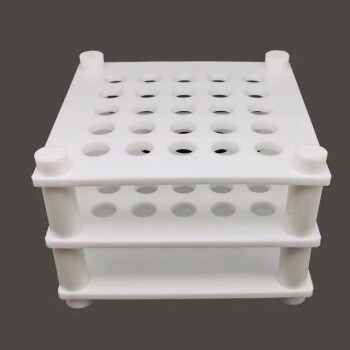
- Custom PTFE Teflon Parts Manufacturer for Centrifuge Tube Racks
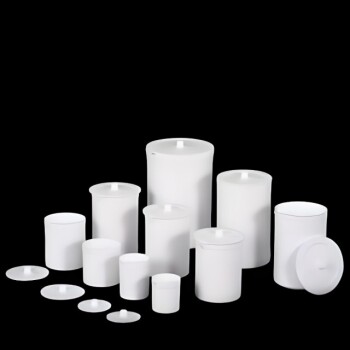
- Custom PTFE Teflon Parts Manufacturer PTFE Beaker and Lids
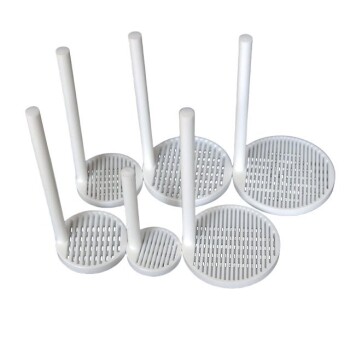
- Custom PTFE Teflon Parts Manufacturer for Cleaning Racks
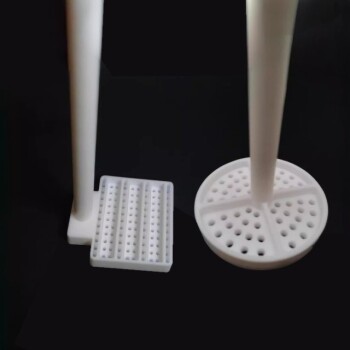
- Custom PTFE Teflon Parts Manufacturer Corrosion Resistant Cleaning Rack Flower Basket
- Custom Machined and Molded PTFE Teflon Parts Manufacturer for Laboratory ITO FTO Conductive Glass Cleaning Flower Basket
People Also Ask
- Why is slender PTFE tubing necessary for flow control in multi-channel catalyst aging? Ensure Equal Gas Distribution
- Why are PTFE containers required for PCT leaching tests? Ensure Chemical Inertness and Analytical Precision
- Why are PTFE containers necessary for selective HF etching of MAX phases? Ensure Safe & Pure MXene Synthesis
- What role do PTFE containers play in trace metal detection? Ensure Analytical Precision in Photocatalysis Studies
- Why is a PTFE container required for acid leaching of silicon nanosheets? Ensure High Purity and Safety