Laboratory electrolytic hydrogen charging offers superior efficiency and control compared to gas-phase methods. By utilizing acidic solutions and constant current density at room temperature, this technique generates high-activity atomic hydrogen rapidly. This allows metal specimens to reach full saturation in significantly shorter periods, such as 24 hours, making it a highly effective tool for studying hydrogen-induced cracking (HIC).
Core Takeaway Electrolytic charging provides a flexible, high-speed alternative to gas-phase charging by bypassing the need for high-pressure or high-temperature environments. It is particularly effective for isolating specific failure mechanisms—such as dislocation pinning and cleavage fracture—allowing researchers to rapidly assess material sensitivity under controlled conditions.
The Efficiency of Atomic Hydrogen Generation
Rapid Saturation at Room Temperature
The primary advantage of electrolytic charging is speed. Unlike gas-phase charging, which often requires elevated temperatures or pressures to drive diffusion, electrolytic equipment operates effectively at room temperature.
This method allows for the rapid generation of atomic hydrogen. Consequently, metal specimens can achieve full hydrogen saturation in a relatively short timeframe, often within just 24 hours.
Producing High-Activity Hydrogen
This technique excels at generating high-activity atomic hydrogen directly on the specimen's surface.
By conducting the process in acidic solutions, the equipment ensures a high concentration of hydrogen is available for absorption. This creates a severe environment that accelerates the testing timeline compared to gaseous exposure.
Control and Flexibility in Experimental Design
Precise Regulation via Current Density
Electrolytic charging offers high flexibility through the regulation of electrical parameters.
Researchers can apply a constant current density (e.g., 200 A·m⁻²) to precisely control the rate of hydrogen evolution. This allows for consistent, reproducible dosing of hydrogen into the material lattice.
Targeted Microstructural Analysis
The controllable nature of this method makes it ideal for studying specific microscopic interactions.
It provides an efficient means to investigate how hydrogen atoms induce dislocation pinning and promote cleavage fracture. It is also particularly useful for analyzing how hydrogen interacts with precipitated phases within complex structures like welded joints.
Understanding the Trade-offs
Environmental Specificity
While highly efficient, electrolytic charging simulates a specific environment: wet, acidic conditions.
This differs from dry gas-phase charging, which simulates high-pressure storage environments. Researchers must ensure that the acidic solution aligns with the service conditions they intend to mimic or the specific damage mechanism they wish to isolate.
Surface Integrity
The use of acidic solutions to generate high-activity hydrogen can affect the specimen's surface.
Care must be taken to ensure that the corrosive nature of the electrolyte does not degrade the sample surface in a way that interferes with the assessment of internal hydrogen-induced cracking.
Making the Right Choice for Your Goal
To determine if electrolytic charging is the right approach for your study, consider your specific research objectives:
- If your primary focus is rapid material screening: Electrolytic charging is the superior choice, allowing you to reach full saturation in as little as 24 hours without complex high-pressure setups.
- If your primary focus is mechanism isolation: This method provides the control necessary to specifically study dislocation pinning and interaction with precipitates in welded joints.
By leveraging the speed and controllability of electrolytic charging, you can accelerate your understanding of material failure mechanisms in hydrogen environments.
Summary Table:
| Feature | Electrolytic Hydrogen Charging | Gas-Phase Hydrogen Charging |
|---|---|---|
| Saturation Speed | Rapid (e.g., full saturation in 24 hrs) | Slow (often requires days/weeks) |
| Temperature | Room Temperature | Often requires elevated temperatures |
| Control Mechanism | Constant Current Density (Electrical) | Pressure and Temperature |
| Hydrogen State | High-activity atomic hydrogen | Molecular hydrogen dissociation |
| Best Used For | Rapid screening; dislocation pinning analysis | High-pressure storage simulation |
Elevate Your Material Research with KINTEK Precision
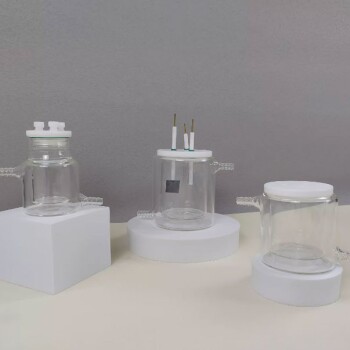
Accelerate your hydrogen-induced cracking studies with KINTEK’s advanced laboratory solutions. KINTEK specializes in high-performance laboratory equipment, including specialized electrolytic cells and electrodes designed for precise hydrogen charging, as well as high-temperature high-pressure reactors for comparative gas-phase analysis.
Whether you are analyzing dislocation pinning in welded joints or screening new alloys for HIC sensitivity, our comprehensive portfolio—from electrochemical tools to high-temperature furnaces and ULT freezers—ensures your lab achieves reproducible, high-accuracy results.
Ready to optimize your hydrogen embrittlement testing? Contact KINTEK today for expert guidance and tailored equipment solutions!
References
- J. Blach, Ladislav Falat. The Influence of Thermal Exposure and Hydrogen Charging on the Notch Tensile Properties and Fracture Behaviour of Dissimilar T91/TP316H Weldments. DOI: 10.1515/htmp-2013-0053
This article is also based on technical information from Kintek Solution Knowledge Base .
Related Products
- Laboratory Hydraulic Press Lab Pellet Press for Button Battery
- Laboratory Hydraulic Pellet Press for XRF KBR FTIR Lab Applications
- Customizable PEM Electrolysis Cells for Diverse Research Applications
- Lab Electrochemical Workstation Potentiostat for Laboratory Use
- Li-Air Battery Case for Battery Lab Applications
People Also Ask
- Why is a high-precision laboratory hydraulic press necessary for radiation-shielding? Ensure Data Accuracy & Density
- Why is a laboratory hydraulic press required during the preparation of Ti3AlC2 precursor pellets?
- How does the laboratory hydraulic press contribute to the preparation of solid targets for laser ablation?
- What is the function of a laboratory hydraulic press in preparing La2FeCrO6? Ensure High-Density Ceramic Pellets
- Why use a lab hydraulic press for 380 MPa Ti-Al alloy compaction? Unlock superior density and structural integrity.