Knowledge What are the primary benefits of using hydrogen firing for sintering parts? Achieve Peak Density & Corrosion Resistance
Author avatar

Tech Team · Kintek Solution

Updated 21 hours ago

What are the primary benefits of using hydrogen firing for sintering parts? Achieve Peak Density & Corrosion Resistance


Hydrogen firing is primarily utilized to maximize the physical integrity and longevity of sintered components. Its two most critical benefits are the substantial improvement of the part's final density and the significant enhancement of its corrosion resistance.

By employing a pure hydrogen atmosphere during high-temperature sintering, manufacturers can optimize key material properties, ensuring the conversion of loose powder into solid parts that are both structurally dense and environmentally durable.

Optimizing Material Properties

Achieving Maximum Density

The primary driver for using hydrogen firing is the maximization of material density.

By effectively fusing the material, the process reduces internal porosity. This results in a solid, cohesive component with superior structural integrity.

Enhancing Corrosion Resistance

Beyond structural strength, hydrogen firing directly improves the chemical resilience of the part.

Parts processed in this atmosphere exhibit higher resistance to corrosion. This is essential for components that will be exposed to harsh operating environments.

The Role of Hydrogen in Powder Metallurgy

A Controlled Non-Air Atmosphere

Pure hydrogen gas (H2) serves as one of the most effective non-air atmospheres available.

This controlled environment prevents oxidation and other atmospheric contamination that can occur during standard air firing. It allows the sintering process to occur without compromising the chemical purity of the metal.

Thermal Fusion and Uniformity

Hydrogen Furnace Sintering is a fundamental technique within the broader field of powder metallurgy (PM).

The process thermally fuses powder particles into solid forms with high consistency. This ensures that the material properties are uniform throughout the entire part, rather than just on the surface.

Precision and Accuracy

Extremely Accurate Sizing

The stability of the hydrogen atmosphere contributes to high dimensional precision.

Manufacturers rely on this method to produce parts with extremely accurate sizes. This reliability is critical when producing components with tight tolerances.

Reducing Variation

Uniformity is a key outcome of hydrogen firing.

Because the atmosphere is controlled and consistent, the resulting parts display minimal variation. This repeatability is vital for large-scale production runs.

Understanding the Process Requirements

High-Temperature Necessity

It is important to recognize that hydrogen firing is a high-temperature process.

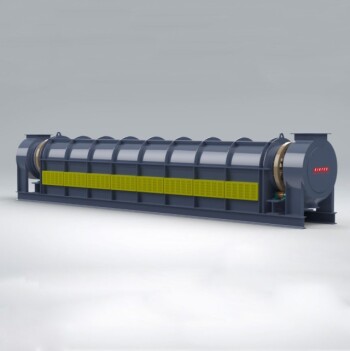
To achieve the necessary thermal fusion, specialized furnaces are required. The equipment must be capable of sustaining the extreme heat needed to bond metal powders.

Specialized Atmosphere Management

Using pure hydrogen is distinct from standard atmospheric firing.

It requires a dedicated "non-air" environment. This adds a layer of complexity to the manufacturing setup compared to simpler firing methods, as the atmosphere must be carefully maintained to ensure effectiveness.

Making the Right Choice for Your Goal

To determine if hydrogen firing aligns with your manufacturing objectives, consider your specific performance requirements:

  • If your primary focus is Durability: Choose hydrogen firing to maximize final density and ensure the part can withstand corrosive environments.
  • If your primary focus is Precision: Rely on this method for powder metallurgy projects that demand extremely accurate sizing and material uniformity.

Hydrogen firing transforms loose powder into high-performance components by combining thermal fusion with superior atmospheric control.

Summary Table:

Benefit Impact on Material Key Outcome
Maximized Density Reduces internal porosity via thermal fusion Superior structural integrity and strength
Corrosion Resistance Prevents oxidation and chemical degradation Enhanced longevity in harsh environments
Atmosphere Control Pure H2 non-air environment High chemical purity and no contamination
Dimensional Accuracy Minimizes variation during sintering Extremely tight tolerances and repeatability
Uniformity Consistent heat distribution Homogeneous properties throughout the component

Elevate Your Powder Metallurgy with KINTEK Expertise

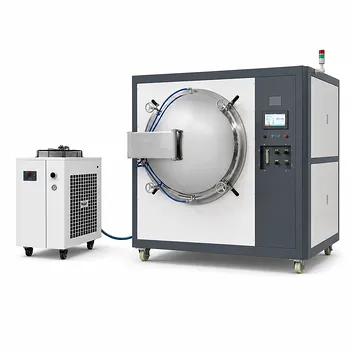
Unlock the full potential of your materials with KINTEK’s advanced thermal processing solutions. Whether you are aiming for maximum density in sintered components or superior corrosion resistance, our high-performance high-temperature atmosphere furnaces are designed to deliver precise hydrogen firing environments tailored to your needs.

From high-temperature high-pressure reactors to specialized crushing, milling, and hydraulic press systems, KINTEK provides the comprehensive laboratory equipment and consumables required for elite material research and large-scale production.

Ready to optimize your manufacturing precision? Contact our technical specialists today to discover how our custom laboratory solutions can enhance your lab's efficiency and product durability.

Related Products

People Also Ask

Related Products

Controlled Nitrogen Inert Hydrogen Atmosphere Furnace

Controlled Nitrogen Inert Hydrogen Atmosphere Furnace

KT-AH Hydrogen atmosphere furnace - induction gas furnace for sintering/annealing with built-in safety features, dual housing design, and energy-saving efficiency. Ideal for lab and industrial use.

1700℃ Controlled Atmosphere Furnace Nitrogen Inert Atmosphere Furnace

1700℃ Controlled Atmosphere Furnace Nitrogen Inert Atmosphere Furnace

KT-17A Controlled atmosphere furnace: 1700℃ heating, vacuum sealing technology, PID temperature control, and versatile TFT smart touch screen controller for laboratory and industrial use.

1200℃ Controlled Atmosphere Furnace Nitrogen Inert Atmosphere Furnace

1200℃ Controlled Atmosphere Furnace Nitrogen Inert Atmosphere Furnace

Discover our KT-12A Pro Controlled atmosphere furnace - high precision, heavy duty vacuum chamber, versatile smart touch screen controller, and excellent temperature uniformity up to 1200C. Ideal for both laboratory and industrial application.

Mesh belt controlled atmosphere furnace

Mesh belt controlled atmosphere furnace

Discover our KT-MB mesh belt sintering furnace - perfect for high-temperature sintering of electronic components & glass insulators. Available for open air or controlled atmosphere environments.

1800℃ Muffle Oven Furnace for Laboratory

1800℃ Muffle Oven Furnace for Laboratory

KT-18 muffle furnace with Japan Al2O3 polycrystalline fibe and Silicon Molybdenum heating element, up to 1900℃, PID temperature control and 7" smart touch screen. Compact design, low heat loss, and high energy efficiency. Safety interlock system and versatile functions.

1400℃ Laboratory High Temperature Tube Furnace with Alumina Tube

1400℃ Laboratory High Temperature Tube Furnace with Alumina Tube

Looking for a tube furnace for high-temperature applications? Our 1400℃ Tube Furnace with Alumina Tube is perfect for research and industrial use.

High Pressure Laboratory Vacuum Tube Furnace Quartz Tubular Furnace

High Pressure Laboratory Vacuum Tube Furnace Quartz Tubular Furnace

KT-PTF High Pressure Tube Furnace: Compact split tube furnace with strong positive pressure resistance. Working temp up to 1100°C and pressure up to 15Mpa. Also works under controller atmosphere or high vacuum.

Laboratory Muffle Oven Furnace Bottom Lifting Muffle Furnace

Laboratory Muffle Oven Furnace Bottom Lifting Muffle Furnace

Efficiently produce batches with excellent temperature uniformity using our Bottom Lifting Furnace. Features two electric lifting stages and advanced temperature control up to 1600℃.

1400℃ Muffle Oven Furnace for Laboratory

1400℃ Muffle Oven Furnace for Laboratory

Get precise high-temperature control up to 1500℃ with KT-14M Muffle furnace. Equipped with a smart touch screen controller and advanced insulation materials.

1700℃ Muffle Oven Furnace for Laboratory

1700℃ Muffle Oven Furnace for Laboratory

Get superior heat control with our 1700℃ Muffle Furnace. Equipped with intelligent temperature microprocessor, TFT touch screen controller & advanced insulation materials for precise heating up to 1700C. Order now!

1200℃ Split Tube Furnace with Quartz Tube Laboratory Tubular Furnace

1200℃ Split Tube Furnace with Quartz Tube Laboratory Tubular Furnace

KT-TF12 split tube furnace: high-purity insulation, embedded heating wire coils, and max. 1200C. Widely used for new materials and chemical vapour deposition.

1700℃ Laboratory High Temperature Tube Furnace with Alumina Tube

1700℃ Laboratory High Temperature Tube Furnace with Alumina Tube

Looking for a high-temperature tube furnace? Check out our 1700℃ Tube Furnace with Alumina Tube. Perfect for research and industrial applications up to 1700C.

Laboratory Rapid Thermal Processing (RTP) Quartz Tube Furnace

Laboratory Rapid Thermal Processing (RTP) Quartz Tube Furnace

Get lightning-fast heating with our RTP Rapid Heating Tube Furnace. Designed for precise, high-speed heating and cooling with convenient sliding rail and TFT touch screen controller. Order now for ideal thermal processing!

Vacuum Heat Treat and Molybdenum Wire Sintering Furnace for Vacuum Sintering

Vacuum Heat Treat and Molybdenum Wire Sintering Furnace for Vacuum Sintering

A vacuum molybdenum wire sintering furnace is a vertical or bedroom structure, which is suitable for withdrawal, brazing, sintering and degassing of metal materials under high vacuum and high temperature conditions. It is also suitable for dehydroxylation treatment of quartz materials.

2200 ℃ Tungsten Vacuum Heat Treat and Sintering Furnace

2200 ℃ Tungsten Vacuum Heat Treat and Sintering Furnace

Experience the ultimate refractory metal furnace with our Tungsten vacuum furnace. Capable of reaching 2200℃, perfect for sintering advanced ceramics and refractory metals. Order now for high-quality results.

600T Vacuum Induction Hot Press Furnace for Heat Treat and Sintering

600T Vacuum Induction Hot Press Furnace for Heat Treat and Sintering

Discover the 600T Vacuum Induction Hot Press Furnace, designed for high-temperature sintering experiments in vacuum or protected atmospheres. Its precise temperature and pressure control, adjustable working pressure, and advanced safety features make it ideal for nonmetal materials, carbon composites, ceramics, and metal powders.

Vertical High Temperature Graphite Vacuum Graphitization Furnace

Vertical High Temperature Graphite Vacuum Graphitization Furnace

Vertical high temperature graphitization furnace for carbonization and graphitization of carbon materials up to 3100℃.Suitable for shaped graphitization of carbon fiber filaments and other materials sintered in a carbon environment.Applications in metallurgy, electronics, and aerospace for producing high-quality graphite products like electrodes and crucibles.

Vacuum Hot Press Furnace Heated Vacuum Press Machine Tube Furnace

Vacuum Hot Press Furnace Heated Vacuum Press Machine Tube Furnace

Reduce forming pressure & shorten sintering time with Vacuum Tube Hot Press Furnace for high-density, fine-grain materials. Ideal for refractory metals.

Ultra-High Temperature Graphite Vacuum Graphitization Furnace

Ultra-High Temperature Graphite Vacuum Graphitization Furnace

The ultra-high temperature graphitization furnace utilizes medium frequency induction heating in a vacuum or inert gas environment. The induction coil generates an alternating magnetic field, inducing eddy currents in the graphite crucible, which heats up and radiates heat to the workpiece, bringing it to the desired temperature. This furnace is primarily used for graphitization and sintering of carbon materials, carbon fiber materials, and other composite materials.

Laboratory Vacuum Tilt Rotary Tube Furnace Rotating Tube Furnace

Laboratory Vacuum Tilt Rotary Tube Furnace Rotating Tube Furnace

Discover the versatility of Laboratory Rotary Furnace: Ideal for calcination, drying, sintering, and high-temperature reactions. Adjustable rotating and tilting functions for optimal heating. Suitable for vacuum and controlled atmosphere environments. Learn more now!


Leave Your Message