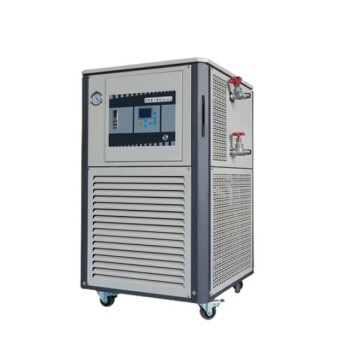
Selecting the right water bath requires balancing your specific thermal requirements with your laboratory's physical constraints. To make an informed decision, you must evaluate the unit's temperature range, thermal uniformity and stability, and total capacity relative to its workbench footprint. Additionally, you must consider power requirements, the durability of construction (including covers), control features, and the availability of necessary accessories.
The ideal water bath is defined not just by how much it holds, but by its ability to maintain precise thermal conditions across the entire vessel while fitting within your lab's spatial and electrical infrastructure.
Thermal Performance and Precision
Temperature Range Requirements
You must first define the specific temperature limits your protocols demand.
Ensure the prospective unit can comfortably reach and maintain both the minimum and maximum temperatures required for your applications, whether for gentle warming or near-boiling procedures.
Temperature Uniformity
Uniformity refers to the consistency of temperature at different points within the bath.
For sensitive biological or chemical reactions, it is critical that the temperature is identical in the corners of the bath as it is in the center to prevent experimental variance.
Stability Over Time
Stability measures how well the bath maintains a set temperature over a duration.
High-stability units prevent temperature drift, which is essential for long incubations where even minor fluctuations can compromise results.
Physical Dimensions and Build Quality
Capacity vs. Workbench Footprint
You must assess how much sample volume you need to process simultaneously versus the desk space available.
A common error is buying a bath with sufficient internal volume that is too large for the designated benchtop area; always measure the external "footprint" before purchasing.
Construction and Materials
The durability of the unit is largely determined by its construction materials.
Look for corrosion-resistant materials, such as stainless steel, particularly if you are using additives in the water or working in humid environments.
The Role of Covers
Covers are a critical, often overlooked component of the system's construction.
A well-fitted cover is essential for maintaining temperature stability, preventing rapid evaporation, and protecting samples from external contaminants.
Controls and Operational Needs
Control Features
Decide between analog and digital control systems based on your need for precision.
Digital controls offer higher accuracy and repeatability, while programmable features allow for automated temperature ramping and timing, which can streamline complex protocols.
Power Requirements
Verify the voltage and amperage requirements of the unit against your lab's electrical supply.
Mismatching power requirements can lead to equipment failure or safety hazards, so ensure your facility can support the unit's electrical load.
Essential Accessories
Consider what peripheral equipment is necessary to hold your samples securely.
Check for the availability of racks, tube holders, or circulating pumps that are compatible with the specific model to maximize its utility.
Understanding the Trade-offs
Precision vs. Cost
Higher thermal stability and uniformity typically require advanced heating elements and circulation systems, which increase the price.
If your application is routine (e.g., thawing reagents), you may not need the high-cost precision required for sensitive enzymatic reactions.
Capacity vs. Heating Speed
Larger baths offer greater throughput but often take longer to reach the set temperature and consume more energy.
If rapid heating is a priority, a smaller unit or one with a more powerful heating element may be a better investment than a high-capacity tank.
Making the Right Choice for Your Lab
To select the best water bath for your needs, match the features to your primary application:
- If your primary focus is sensitive biological cultures: Prioritize temperature uniformity and stability to ensure reproducible conditions across all samples.
- If your primary focus is high-throughput processing: Prioritize capacity and accessory availability to handle large volumes of tubes or flasks efficiently.
- If your primary focus is limited bench space: Prioritize a unit with a compact footprint that maximizes internal volume without overcrowding your workspace.
By systematically evaluating these factors, you ensure your equipment supports your science rather than hindering it.
Summary Table:
| Feature | Key Consideration | Importance |
|---|---|---|
| Thermal Precision | Range, Uniformity & Stability | Ensures consistency for sensitive biological/chemical reactions. |
| Physical Build | Capacity vs. Footprint | Balances sample volume needs with available laboratory bench space. |
| Construction | Material & Covers | Stainless steel durability and covers prevent evaporation/drift. |
| Control System | Digital vs. Analog | Digital offers higher accuracy, repeatability, and programming. |
| Infrastructure | Power & Accessories | Ensures electrical compatibility and utility via racks or pumps. |
Elevate Your Lab's Thermal Control with KINTEK
Precision is the backbone of every successful experiment. At KINTEK, we specialize in providing high-performance laboratory equipment tailored to your specific research needs. Whether you require a high-precision water bath, advanced high-temperature furnaces, or robust crushing and milling systems, our comprehensive portfolio ensures your lab operates at peak efficiency.
Why choose KINTEK?
- Comprehensive Range: From vacuum and atmosphere furnaces to high-pressure reactors and autoclaves.
- Specialized Tools: We offer dedicated solutions for battery research, electrolytic cells, and cooling solutions like ULT freezers.
- Essential Consumables: High-quality PTFE products, ceramics, and crucibles to support your daily operations.
Ready to optimize your workflow with industry-leading equipment? Contact our experts today to find the perfect solution for your laboratory.
Related Products
- Multifunctional Electrolytic Electrochemical Cell Water Bath Single Layer Double Layer
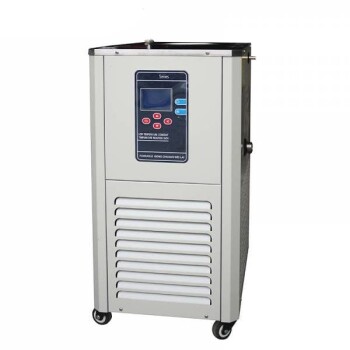
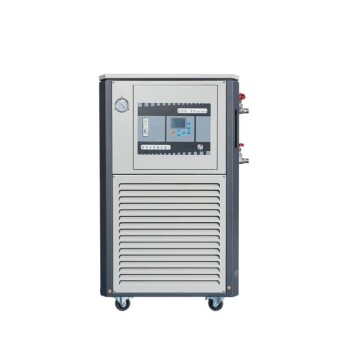
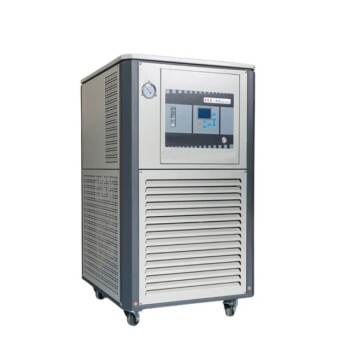
- 50L Chiller Water Bath Cooling Circulator Low Temperature Constant Temperature Reaction Bath
- Optical Water Bath Electrolytic Electrochemical Cell
- 10L Chilling Circulator Cooling Water Bath Low Temperature Constant Temperature Reaction Bath
- Double Layer Five-Port Water Bath Electrolytic Electrochemical Cell
People Also Ask
- What does the routine maintenance of a double-layer water-bath electrolytic cell involve? A Guide to Ensuring Precision and Longevity
- When is professional repair required for a double-layer water-bath electrolytic cell? Protect Your Lab's Precision and Safety
- What are the key features of a double-layer water-bath electrolytic cell? Achieve Precise Temperature Control for Your Experiments
- What are the procedures for after using a double-layer water-bath electrolytic cell? Ensure Equipment Longevity and Data Accuracy
- What is the typical experimental system used with a double-layer water-bath electrolytic cell? Achieve Precise Electrochemical Control