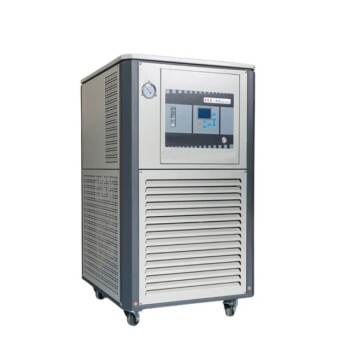
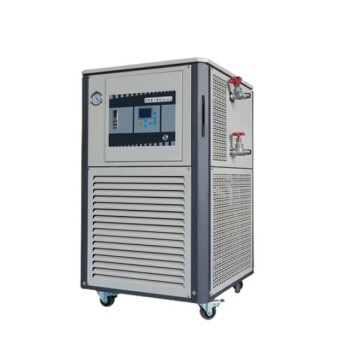
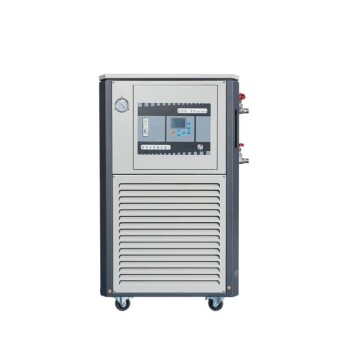
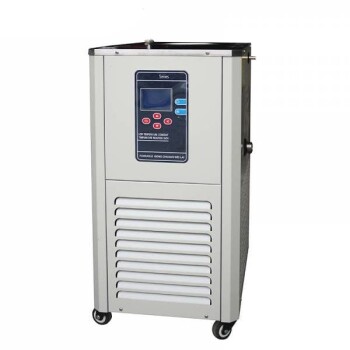
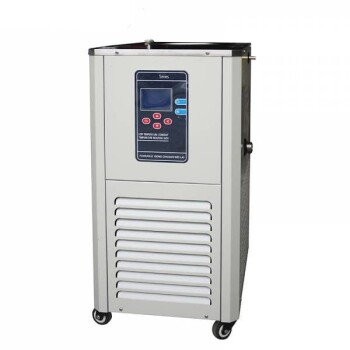
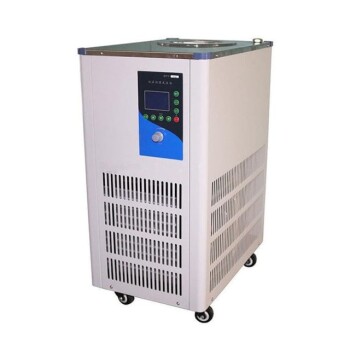
A recirculating thermostatic bath is strictly required for high-precision Cyclic Voltammetry (CV) because it eliminates thermal variables that distort electrochemical data. By actively maintaining the electrolyte at a specific set point, usually 25°C, this equipment ensures that any observed changes in current are due to the material properties being tested, not fluctuations in the lab environment.
Electrochemical reaction rates and diffusion coefficients are highly sensitive to thermal changes. Without strict temperature regulation, you cannot guarantee the reproducibility of critical metrics, particularly for reactions like Hydrogen Evolution (HER) or platinum redox peaks.
The Physical Necessity of Thermal Stability
Temperature’s Impact on Reaction Kinetics
Electrochemical reaction rates are physically tied to temperature. Even minor thermal fluctuations can cause significant shifts in how fast a reaction occurs at the electrode surface.
A recirculating bath clamps the temperature at a fixed value. This prevents artificial spikes or drops in current density that would otherwise be misinterpreted as catalytic activity.
Controlling Diffusion Coefficients
The speed at which ions move through an electrolyte—their diffusion coefficient—changes with temperature. As the electrolyte warms or cools, the mass transport of reactants to the electrode surface alters.
If the temperature drifts during a CV scan, the shape of the voltammogram will distort. Automatic temperature control ensures that mass transport remains constant throughout the entire experiment.
Ensuring Reproducibility in Critical Tests
Consistency in Peak Analysis
High-precision testing requires that specific characteristic peaks appear at the exact same potentials across multiple trials. This is vital for analyzing complex mechanisms like the Hydrogen Evolution Reaction (HER) and the Hydrogen Oxidation Reaction (HOR).
The primary reference highlights that platinum redox characteristic peaks are particularly sensitive. Without a stable thermal environment, these peaks may shift or change intensity, rendering the data unreliable for comparative analysis.
Standardizing Experimental Conditions
Reproducibility is the cornerstone of scientific validation. To compare results between different days or different laboratories, the experimental conditions must be identical.
A thermostatic bath standardizes the thermal variable. This allows researchers to confidently attribute differences in performance to the catalyst or electrode material, rather than the time of day the test was run.
Understanding the Trade-offs
Equipment Complexity vs. Data Integrity
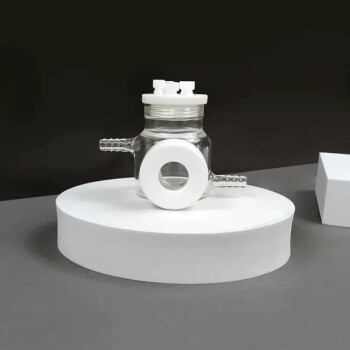
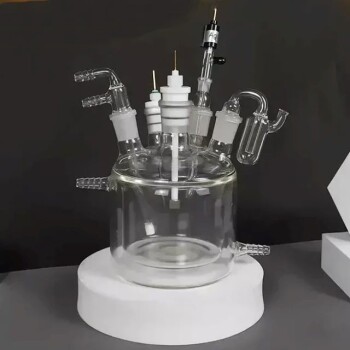
Integrating a recirculating bath requires a specifically designed electrochemical cell (often with a water jacket) and additional plumbing. This adds cost and setup time compared to a simple beaker setup.
However, the trade-off is often non-negotiable for high-precision work. While omitting the bath simplifies the physical setup, it introduces a level of uncertainty that invalidates rigorous quantitative analysis.
Making the Right Choice for Your Goal
To decide whether this equipment is necessary for your specific application, consider your end goal:
- If your primary focus is quick, qualitative screening: You may be able to operate at ambient temperature if minor shifts in peak position are acceptable.
- If your primary focus is quantitative analysis or publication: You must use a recirculating thermostatic bath to ensure reaction rates and diffusion coefficients are reproducible.
True precision in electrochemistry requires treating temperature as a controlled constant, never as a variable.
Summary Table:
| Feature | Impact on CV Testing | Necessity for High Precision |
|---|---|---|
| Temperature Control | Stabilizes reaction kinetics and current density | Essential for reproducibility |
| Diffusion Regulation | Maintains constant ion transport to electrodes | Prevents voltammogram distortion |
| Peak Stability | Ensures consistent potential for redox peaks | Critical for HER/HOR analysis |
| Standardization | Eliminates ambient lab temperature fluctuations | Required for data validation |
Elevate Your Electrochemical Research Precision with KINTEK
Don't let thermal fluctuations compromise your data integrity. KINTEK specializes in advanced laboratory equipment designed for the most demanding electrochemical applications. Whether you are conducting critical battery research, optimizing electrolytic cells and electrodes, or performing high-precision Cyclic Voltammetry, our high-performance cooling solutions and thermostatic baths provide the thermal stability you need.
From high-temperature furnaces and vacuum reactors to essential PTFE consumables and ceramics, KINTEK provides a comprehensive ecosystem for modern laboratories.
Ready to achieve superior reproducibility? Contact us today to discover how our temperature control solutions and specialized lab equipment can enhance your research outcomes!
References
- Timon N. Geppert, Hany A. El‐Sayed. HOR Activity of Pt-TiO<sub>2-Y</sub> at Unconventionally High Potentials Explained: The Influence of SMSI on the Electrochemical Behavior of Pt. DOI: 10.1149/1945-7111/ab90ae
This article is also based on technical information from Kintek Solution Knowledge Base .
Related Products
- High Temperature Constant Temperature Heating Circulator Water Bath Chiller Circulator for Reaction Bath
- 50L Chiller Water Bath Cooling Circulator Low Temperature Constant Temperature Reaction Bath
- 20L Heating Chilling Circulator Cooling Water Bath Circulator for High and Low Temperature Constant Temperature Reaction
- 50L Heating Chilling Circulator Cooling Water Bath Circulator for High and Low Temperature Constant Temperature Reaction
- 5L Heating Chilling Circulator Cooling Water Bath Circulator for High and Low Temperature Constant Temperature Reaction
People Also Ask
- What is the necessity of a circulating water bath in chlorate production? Optimize Yield & Purity with Precision
- How do constant temperature circulators impact weight-loss immersion tests? Ensure Precision in Corrosion Analysis
- How does a constant temperature circulator support the leaching reaction of gold scrap? Optimize Gold Recovery Results
- Why is a constant temperature water bath used for precursor storage in CVD? Achieve Stable Nanocrystalline SiC Deposition
- Why is a high-precision constant temperature water bath necessary for anaerobic digestion? Ensure Success at 37±0.02°C