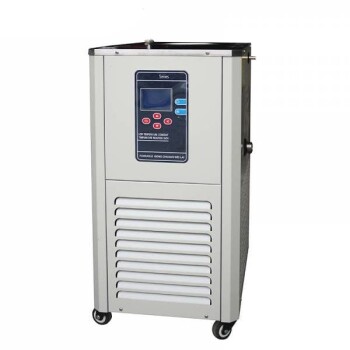
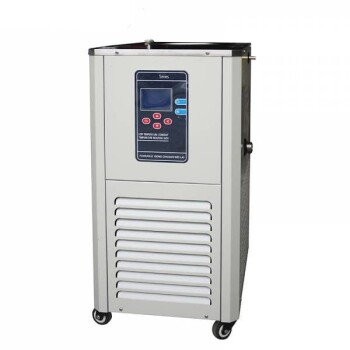
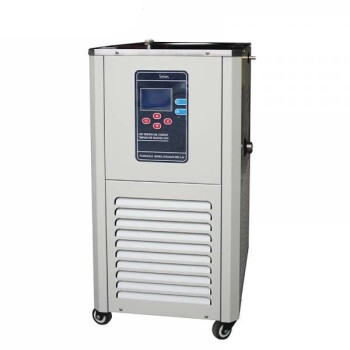
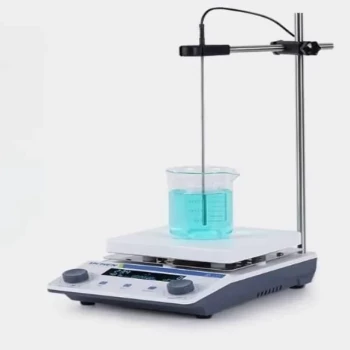
The primary function of a constant temperature water bath is to rigorously simulate the thermal environment of the human oral cavity. In experiments measuring monomer conversion rates, this apparatus maintains dental composite samples—specifically dual-cure cements—at a stable 37°C. This ensures that the polymerization reaction proceeds exactly as it would inside a patient's mouth.
The water bath acts as a critical environmental control, bridging the gap between laboratory bench testing and clinical reality. By fixing the temperature at 37°C, researchers ensure that subsequent measurements of polymerization are biologically valid.
Replicating Physiological Conditions
The Importance of 37°C
The chemical reaction that hardens dental resin is sensitive to heat. To predict how a material will perform clinically, you cannot cure it at room temperature.
The water bath creates a stable 37°C environment, mimicking the natural temperature of the oral cavity. This isolates the variable of temperature, ensuring it matches human physiology perfectly.
The 24-Hour Stabilization Period
According to standard protocols, samples are typically immersed in the water bath for 24 hours.
This duration is critical for dual-cure cements. It allows the polymerization process to stabilize and reach a state of equilibrium before any measurements are taken.
Enabling Accurate Analysis
Preparing for Infrared Spectroscopy
The ultimate goal of using the water bath is to prepare samples for infrared spectroscopy.
This analytical method determines the actual degree of polymerization. However, the data is only useful if the sample was cured under correct thermal conditions.
Determining Monomer Conversion
The conversion rate—how much liquid resin turns into solid plastic—defines the material's strength and safety.
By controlling the heat profile in the water bath, you ensure the conversion rate measured is the "actual" rate a dentist would achieve, not an artificial laboratory artifact.
Critical Considerations for Experimental Design
Precision is Non-Negotiable
While the concept is simple, the execution must be precise. The "constant" in constant temperature is the most vital variable.
Fluctuations in water temperature during the 24-hour window can alter reaction kinetics. This would lead to inconsistent conversion data that does not accurately reflect clinical performance.
Material Specificity
The protocol referenced specifically highlights dual-cure cements.
Different materials may require different handling, but for these adhesives, the 24-hour warm water immersion is the standard for generating reliable baseline data.
Ensuring Validity in Resin Testing
To ensure your experimental data holds up to scrutiny, you must prioritize the fidelity of the curing environment.
- If your primary focus is Clinical Relevance: Ensure your water bath is calibrated exactly to 37°C to mimic the oral cavity, rather than ambient room temperature.
- If your primary focus is Data Accuracy: Adhere strictly to the 24-hour immersion period to allow the polymerization reaction to complete before attempting infrared spectroscopy.
By treating the thermal environment as a variable as important as the chemical composition itself, you ensure your results translate from the lab to the dental chair.
Summary Table:
| Parameter | Specification | Purpose in Dental Research |
|---|---|---|
| Target Temperature | 37°C | Replicates the human oral cavity environment |
| Immersion Duration | 24 Hours | Allows polymerization to stabilize and reach equilibrium |
| Primary Apparatus | Constant Temp Water Bath | Ensures uniform heat distribution and thermal stability |
| Key Outcome | Monomer Conversion Rate | Provides biologically valid data for infrared spectroscopy |
| Target Material | Dual-cure Cements | Standardizes the curing process for accurate strength testing |
Elevate Your Dental Research Precision with KINTEK
To achieve biologically valid results in monomer conversion studies, precise thermal control is non-negotiable. KINTEK specializes in high-performance laboratory equipment, including constant temperature water baths, cooling solutions (ULT freezers, freeze dryers), and specialized dental furnace systems designed to meet the rigorous demands of dental material science.
Whether you are analyzing dual-cure cements or testing new resin composites, our equipment ensures your laboratory conditions perfectly mirror clinical reality. From high-temperature furnaces and dental-specific sintering tools to PTFE consumables and hydraulic presses, we provide everything you need for accurate, reproducible data.
Ready to optimize your experimental workflow? Contact our laboratory specialists today to find the perfect equipment for your research needs.
References
- Ivana Vučenović, Biljana Đ. Glišić. Zinc(II) complex with 4-ethynyl-2,2’-bipyridine: synthesis, characterization and DNA/BSA interactions. DOI: 10.21175/rad.abstr.book.2023.45.2
This article is also based on technical information from Kintek Solution Knowledge Base .
Related Products
- High Temperature Constant Temperature Heating Circulator Water Bath Chiller Circulator for Reaction Bath
- 50L Chiller Water Bath Cooling Circulator Low Temperature Constant Temperature Reaction Bath
- 10L Chilling Circulator Cooling Water Bath Low Temperature Constant Temperature Reaction Bath
- 30L Chiller Water Bath Cooling Circulator Low Temperature Constant Temperature Reaction Bath
- 40L Chiller Water Bath Cooling Circulator Low Temperature Constant Temperature Reaction Bath
People Also Ask
- What is the necessity of a circulating water bath in chlorate production? Optimize Yield & Purity with Precision
- How do constant temperature circulators impact weight-loss immersion tests? Ensure Precision in Corrosion Analysis
- How does a constant temperature circulator support the leaching reaction of gold scrap? Optimize Gold Recovery Results
- Why is a constant temperature water bath used for precursor storage in CVD? Achieve Stable Nanocrystalline SiC Deposition
- Why is a high-precision constant temperature water bath necessary for anaerobic digestion? Ensure Success at 37±0.02°C