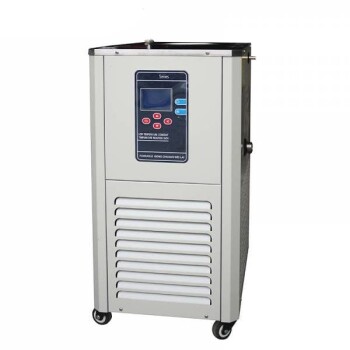
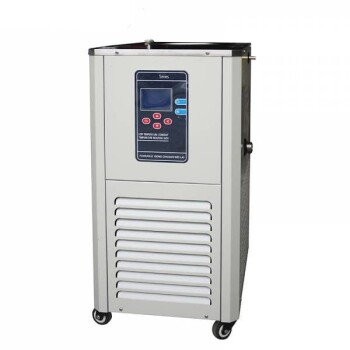
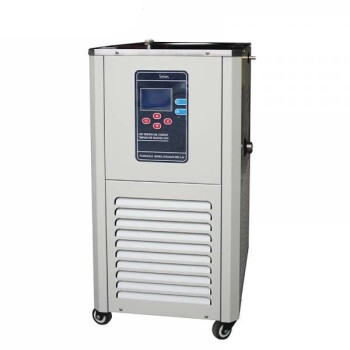
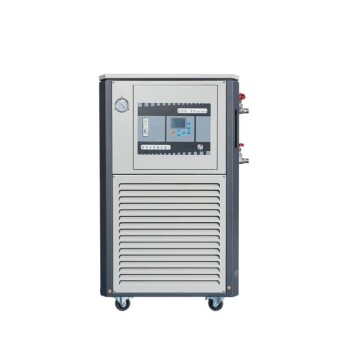
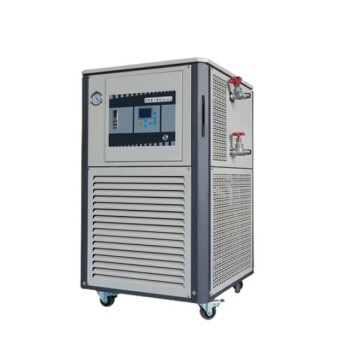
A constant temperature water bath acts as the fundamental baseline for experimental accuracy. It is necessary because even minor thermal fluctuations can introduce uncontrollable variables that distort data regarding corrosion inhibitor efficiency. By maintaining a strict, stable environment—typically between 298 K and 338 K—you ensure that any observed changes in corrosion rates are a direct result of the inhibitor's chemical properties, rather than environmental inconsistencies.
Precision in thermal control is the prerequisite for calculating critical thermodynamic parameters. Without a constant temperature, it is impossible to accurately determine activation energy or enthalpy changes, rendering the performance evaluation scientifically invalid.
The Physics of Inhibition and Temperature
Controlling Molecular Motion
Temperature is a measure of kinetic energy; as it rises, molecules move faster. Fluctuations in temperature directly alter the thermal motion of molecules within the corrosive medium.
If the temperature varies during an experiment, the collision rate between corrosive ions and the metal surface becomes inconsistent. A constant temperature bath eliminates this variable, ensuring the reaction kinetics remain steady.
Stabilizing Adsorption-Desorption Equilibrium
Corrosion inhibitors largely function by adsorbing (sticking) onto the metal surface to form a protective film. This process is governed by an adsorption-desorption equilibrium, which is highly sensitive to heat.
A stable thermal environment is required to reach and maintain this equilibrium. Without it, the inhibitor may rapidly adsorb and desorb unpredictably, preventing the assessment of its true protective capability.
Deriving Essential Data
Calculating Activation Energy ($E_a$)
To understand the energy barrier a reaction must overcome, researchers calculate activation energy. This calculation requires precise data points collected at specific, invariant temperatures.
Using a constant temperature bath allows for the strict temperature gradients necessary to perform these calculations accurately.
Determining Enthalpy Change ($\Delta H$)
Enthalpy change helps determine if the adsorption process is endothermic (absorbing heat) or exothermic (releasing heat). This distinction is vital for understanding the mechanism of inhibition—whether it is physical or chemical in nature.
Reliable $\Delta H$ values can only be derived from experimental data where the temperature is tightly controlled and known.
Understanding the Trade-offs
Static vs. Dynamic Simulation
While a standard water bath provides excellent thermal control, it typically represents a static environment. It may not account for the shear forces present in real-world pipelines where fluids are in constant motion.
The Role of Biological Variables
In scenarios involving microorganisms (such as Bacillus cereus), a simple water bath may be insufficient if it lacks agitation.
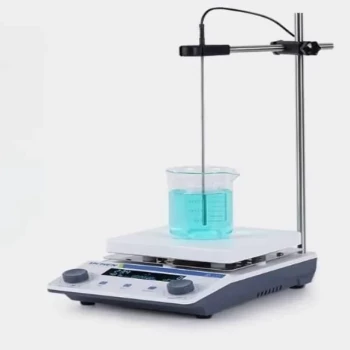
As noted in supplementary studies, studying the biodegradation of inhibitors often requires a constant-temperature shaker. This equipment adds kinetic motion to simulate flow and mixing, which is necessary to evaluate how microbial activity might break down inhibitor side chains under realistic conditions.
Making the Right Choice for Your Goal
To ensure your data is robust and applicable to your specific engineering challenge, align your equipment with your primary objective.
- If your primary focus is Thermodynamic Analysis: Prioritize a static constant temperature water bath to isolate molecular behavior and calculate accurate $E_a$ and $\Delta H$ values.
- If your primary focus is Real-World Flow Simulation: Opt for a constant-temperature shaker to mimic the shear forces and kinetic conditions of flowing media.
- If your primary focus is Biological Degradation: Ensure your thermal setup includes agitation to replicate the environment necessary for microbial activity and inhibitor film breakdown.
Ultimately, the integrity of your corrosion data relies entirely on your ability to isolate the variable of temperature from the chaos of the environment.
Summary Table:
| Feature | Importance in Evaluation | Impact on Data |
|---|---|---|
| Kinetic Control | Stabilizes molecular motion and collision rates | Ensures steady reaction kinetics |
| Adsorption Balance | Maintains equilibrium between metal and inhibitor | Accurate assessment of film protection |
| Thermodynamics | Provides fixed points for $E_a$ and $\Delta H$ | Validates the mechanism of inhibition |
| Consistency | Eliminates environmental thermal fluctuations | Isolates chemical performance variables |
Enhance Your Corrosion Research with KINTEK Precision Solutions
Precise thermal management is the foundation of scientific validity in corrosion studies. KINTEK specializes in high-performance laboratory equipment designed to meet the rigorous demands of chemical and material research.
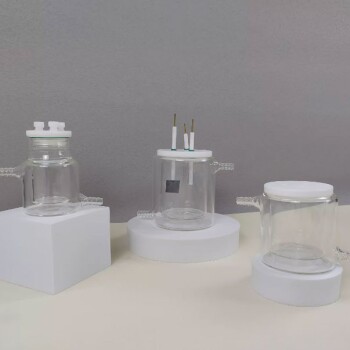
Whether you require constant temperature water baths for static thermodynamic analysis or shakers and cooling solutions (ULT freezers, chillers) for dynamic simulations, our portfolio provides the stability your data deserves. Our expertise extends beyond thermal control to include electrolytic cells and electrodes, high-temperature furnaces, and PTFE consumables, ensuring a comprehensive setup for your laboratory.
Ready to achieve superior experimental accuracy? Contact KINTEK today to discuss your equipment needs and find the perfect fit for your research goals.
References
- Alinanuswe J. Mwakalesi. Corrosion Inhibition of Mild Steel in Sulphuric Acid Solution with Tetradenia riparia Leaves Aqueous Extract: Kinetics and Thermodynamics. DOI: 10.33263/briac131.032
This article is also based on technical information from Kintek Solution Knowledge Base .
Related Products
- High Temperature Constant Temperature Heating Circulator Water Bath Chiller Circulator for Reaction Bath
- 50L Chiller Water Bath Cooling Circulator Low Temperature Constant Temperature Reaction Bath
- 10L Chilling Circulator Cooling Water Bath Low Temperature Constant Temperature Reaction Bath
- 30L Chiller Water Bath Cooling Circulator Low Temperature Constant Temperature Reaction Bath
- 40L Chiller Water Bath Cooling Circulator Low Temperature Constant Temperature Reaction Bath
People Also Ask
- What is the necessity of a circulating water bath in chlorate production? Optimize Yield & Purity with Precision
- How do constant temperature circulators impact weight-loss immersion tests? Ensure Precision in Corrosion Analysis
- How does a constant temperature circulator support the leaching reaction of gold scrap? Optimize Gold Recovery Results
- Why is a constant temperature water bath used for precursor storage in CVD? Achieve Stable Nanocrystalline SiC Deposition
- Why is a high-precision constant temperature water bath necessary for anaerobic digestion? Ensure Success at 37±0.02°C