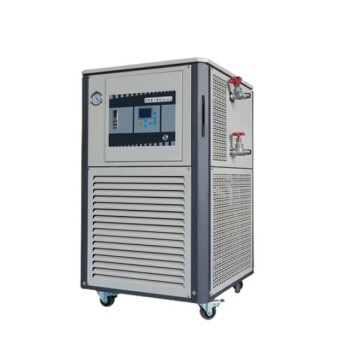
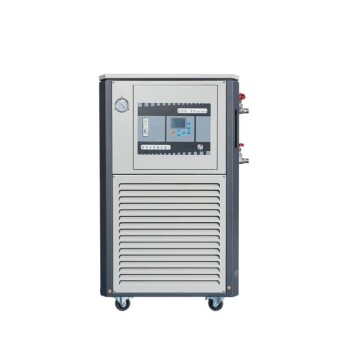
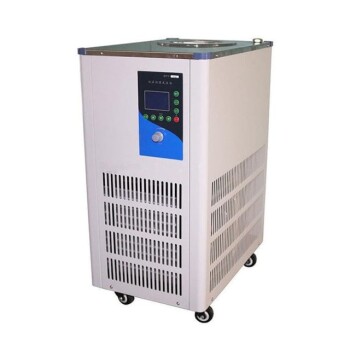
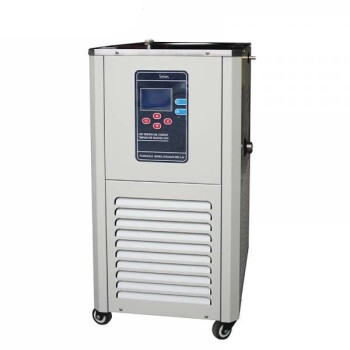
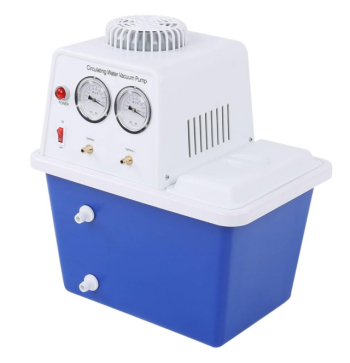
Precision is the cornerstone of reliable electrochemical data. An automatic temperature control circulation device ensures that simulated geothermal environments remain at a constant target temperature, such as 70°C, over extended periods. Without this regulation, unavoidable temperature fluctuations compromise the validity of the experiment by altering the fundamental thermodynamics of the corrosion process.
Corrosion is thermodynamically sensitive, meaning even minor temperature shifts change reaction rates and molecular behavior. Automated thermal control is the requisite baseline to guarantee that Electrochemical Impedance Spectroscopy (EIS) data accurately reflects inhibitor performance rather than environmental instability.
The Thermodynamics of Corrosion Stability
Impact on Reaction Rates
Corrosion is fundamentally a thermodynamically sensitive process. The rate at which metal dissolves is directly correlated to the thermal energy in the system.
Without strict control, temperature variance causes the rate of metal dissolution to fluctuate unpredictably. This introduces significant noise into the monitoring process, making it difficult to distinguish between material failure and environmental anomalies.
Influence on Adsorption Kinetics
In simulated geothermal environments, the behavior of chemical inhibitors is paramount. Temperature directly dictates the adsorption kinetics of these molecules onto the metal surface.
If the temperature drifts, the ability of the inhibitor to adhere to or protect the metal changes. An automatic circulation device ensures the temperature remains constant, allowing you to observe the true chemical behavior of the inhibitor without thermal interference.
Ensuring Data Integrity in Long-Term Testing
The Challenge of Duration
Simulating geothermal conditions often requires monitoring periods exceeding 17 hours. Maintaining a manual or passive thermal equilibrium over this duration is virtually impossible.
An automatic device locks the temperature (e.g., at 70°C) to ensure consistency from the first hour to the last. This consistency is vital for valid longitudinal studies.
Reliability of EIS Results
Electrochemical Impedance Spectroscopy (EIS) is a highly sensitive measurement technique. To accurately evaluate the thermal stability of inhibitors, the baseline environment must remain static.
Precise temperature control is a prerequisite for generating reliable EIS data. It ensures that any changes in impedance are due to the degradation of the inhibitor, not a drop in fluid temperature.
The Risks of Thermal Instability
The "Average Temperature" Pitfall
A common mistake in electrochemical setups is assuming that maintaining an "average" temperature is sufficient. However, short-term thermal spikes or drops can trigger irreversible changes.
For example, a brief temperature spike can cause the desorption of a protective film. Even if the temperature returns to normal, the protective layer may be compromised, leading to skewed data for the remainder of the experiment.
Making the Right Choice for Your Goal
To ensure your electrochemical monitoring yields valid, reproducible data, you must eliminate thermodynamic variables.
- If your primary focus is evaluating inhibitor performance: Use automated control to stabilize adsorption kinetics, ensuring that measured efficiency reflects chemical bonding rather than temperature shifts.
- If your primary focus is long-term data reliability: Implement a circulation device to maintain a flat temperature profile over 17+ hours, preventing thermal fluctuations from distorting metal dissolution rates.
Precise thermal control transforms electrochemical monitoring from a rough estimate into a rigorous, reproducible science.
Summary Table:
| Feature | Impact on Electrochemical Monitoring | Benefit for Geothermal Research |
|---|---|---|
| Thermodynamic Stability | Prevents metal dissolution rate fluctuations | Ensures precise corrosion data |
| Adsorption Kinetics | Maintains consistent inhibitor film bonding | Accurately evaluates inhibitor performance |
| Long-Term Regulation | Maintains 70°C+ stability for 17+ hours | Eliminates manual errors in longitudinal studies |
| Data Accuracy | Reduces noise in EIS measurements | Guarantees reproducible, high-quality results |
Elevate Your Electrochemical Research with KINTEK Precision
Don't let thermal instability compromise your critical research data. At KINTEK, we specialize in high-performance laboratory solutions tailored for demanding environments. Whether you are conducting long-term corrosion studies or high-pressure experiments, our comprehensive range of electrolytic cells, electrodes, and high-temperature high-pressure reactors provides the stability you need.
From advanced battery research tools to precise cooling solutions and cold traps, KINTEK is dedicated to supporting scientists and engineers in achieving reproducible, rigorous results.
Ready to optimize your lab setup? Contact us today to discover how our high-temperature furnaces and specialized electrochemical consumables can enhance your project's efficiency and accuracy.
References
- Chahinez Helali, Ioannis Ignatiadis. Corrosion Inhibition of Carbon Steel Immersed in Standardized Reconstituted Geothermal Water and Individually Treated with Four New Biosourced Oxazoline Molecules. DOI: 10.3390/met14121439
This article is also based on technical information from Kintek Solution Knowledge Base .
Related Products
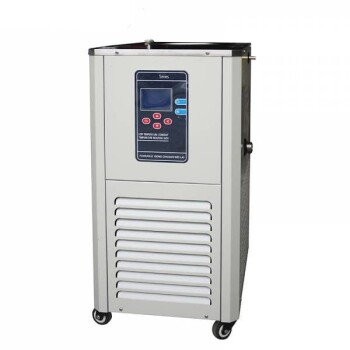
- 5L Heating Chilling Circulator Cooling Water Bath Circulator for High and Low Temperature Constant Temperature Reaction
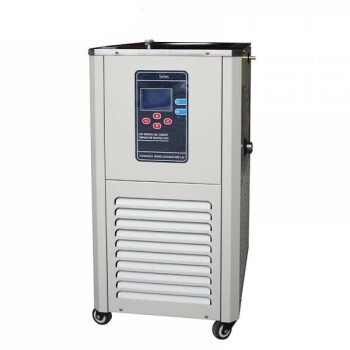
- 100L Heating Chilling Circulator Cooling Water Bath Circulator for High and Low Temperature Constant Temperature Reaction
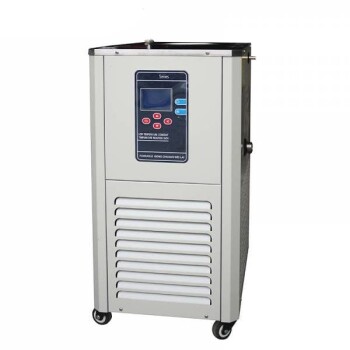
- 10L Heating Chilling Circulator Cooling Water Bath Circulator for High and Low Temperature Constant Temperature Reaction
- High Temperature Constant Temperature Heating Circulator Water Bath Chiller Circulator for Reaction Bath
- 20L Heating Chilling Circulator Cooling Water Bath Circulator for High and Low Temperature Constant Temperature Reaction
People Also Ask
- What is the necessity of a circulating water bath in chlorate production? Optimize Yield & Purity with Precision
- How does a constant temperature circulator support the leaching reaction of gold scrap? Optimize Gold Recovery Results
- How do constant temperature circulators impact weight-loss immersion tests? Ensure Precision in Corrosion Analysis
- What is the importance of a circulating water cooling system? Key to Protecting Your High-Temperature Lab Equipment
- Why is a circulating water chiller required for Prussian Blue nanoparticles? Ensure Stability & Batch Reproducibility