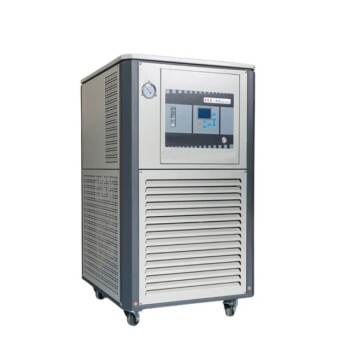
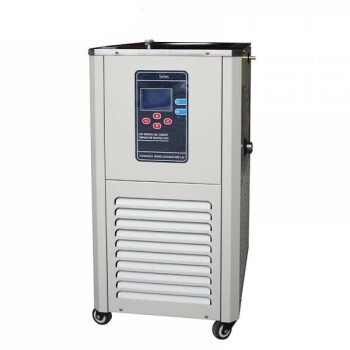
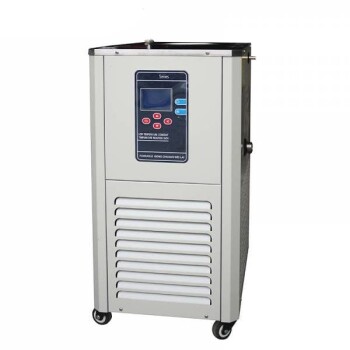
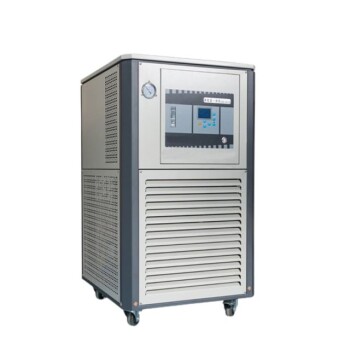
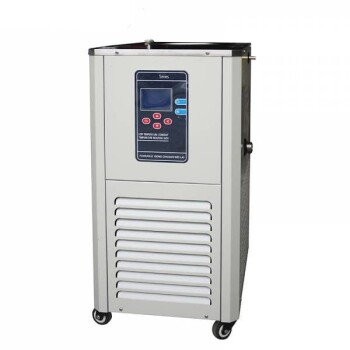
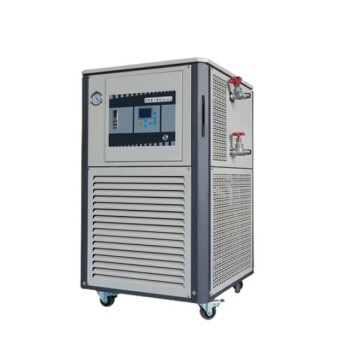
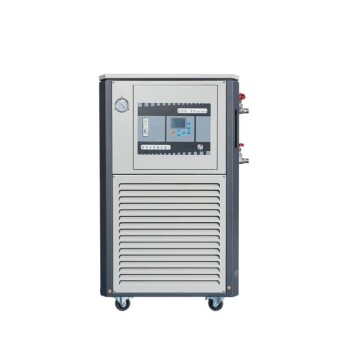
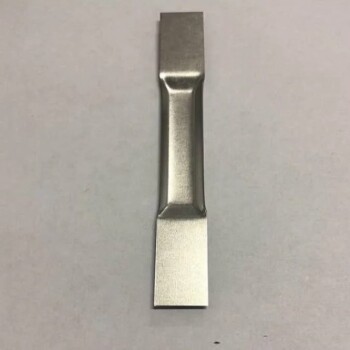
A thermostatic water bath functions as the critical environmental control system during physiological saline corrosion tests for Oxide Dispersion Strengthened (ODS) steel. Its primary role is to maintain the electrolyte solution at a strictly controlled temperature, typically 37±1°C, to accurately simulate the thermal conditions found within the human body. By preventing temperature fluctuations, the device ensures that the observed corrosion behavior reflects how the material would actually perform in a bioengineering application.
The core purpose of this device is stability. Because corrosion kinetics and the protective surface layers of ODS steel are highly sensitive to thermal changes, the thermostatic bath ensures that experimental data remains scientifically valid and comparable across different studies.
The Role of Temperature in Bio-Simulation
Simulating Physiological Reality
In the context of testing ODS steel for biomedical applications, the testing environment must mimic the host. The thermostatic device heats the saline solution to match human body temperature, usually 37±1°C.
This specific thermal setpoint allows researchers to evaluate how the steel reacts to the corrosive saline environment under realistic biological conditions, rather than room temperature.
Controlling Reaction Kinetics
Corrosion is fundamentally an electrochemical process. The rate at which this process occurs is dictated by temperature.
The heating device ensures the corrosion rate remains consistent with what would occur in vivo. Without this control, the chemical reactions on the steel's surface could accelerate or decelerate artificially, leading to misleading data regarding the material's lifespan.
Impact on ODS Steel Performance
Stability of Passivation Films
ODS steel relies on the formation of a passive film—a thin protective layer on the surface—to resist corrosion. The primary reference notes that the stability of these passivation films is highly sensitive to temperature.
The thermostatic bath maintains the precise conditions required to test whether this protective film will hold up or break down inside the body.
Ensuring Data Validity
For experimental data to be useful, it must be reproducible. The thermostatic control eliminates temperature variables that could skew results.
This ensures scientific validity, allowing researchers to confidently compare the corrosion resistance of ODS steel against other biomaterials or across different experimental trials.
Understanding the Trade-offs
The Risk of Thermal Fluctuation
The primary pitfall in these tests is a lack of precision. The device must be capable of strict control within tight margins (e.g., ±1°C).
If the heating device allows the temperature to drift even slightly outside this range, the corrosion rate may shift unpredictably. This renders the simulation inaccurate, as it no longer reflects the stable thermal environment of the human body.
Complexity vs. Necessity
Using a high-precision thermostatic bath adds complexity to the setup compared to simple ambient testing.
However, this complexity is a necessary trade-off. Ambient temperature testing fails to account for the thermal sensitivity of the passivation films, effectively invalidating the test for bioengineering purposes.
Making the Right Choice for Your Goal
To ensure your corrosion testing provides actionable data, consider the following based on your specific objectives:
- If your primary focus is Biological Accuracy: Ensure your device is calibrated to exactly 37±1°C to mirror the human body's thermal homeostasis.
- If your primary focus is Data Comparability: Use a device with strict feedback controls to eliminate thermal drift, ensuring your results can be benchmarked against standard literature.
Ultimately, the reliability of your corrosion data depends as much on the thermal stability of your solution as it does on the composition of the steel itself.
Summary Table:
| Feature | Role in ODS Steel Corrosion Testing | Impact on Research |
|---|---|---|
| Temperature Control | Maintains constant 37±1°C | Accurately mimics human physiological conditions |
| Kinetic Regulation | Stabilizes electrochemical reaction rates | Ensures consistent and reproducible corrosion data |
| Film Protection | Evaluates passivation film stability | Predicts material lifespan in biomedical applications |
| Thermal Stability | Eliminates environmental variables | Prevents data skewing caused by room temp fluctuations |
Elevate Your Biomedical Research with KINTEK Precision
Ensure the scientific validity of your corrosion studies with KINTEK’s high-performance laboratory equipment. From high-precision thermostatic water baths and cooling solutions to advanced electrolytic cells and electrodes, we provide the specialized tools necessary to simulate physiological environments with uncompromising accuracy.
Whether you are testing ODS steel or developing next-generation biomaterials, KINTEK offers a comprehensive range of laboratory furnaces, hydraulic presses, and essential consumables tailored to your rigorous testing standards. Partner with KINTEK today for reliable, high-quality solutions that drive your innovation forward.
References
- Zbigniew Oksiuta, Ewa Och. CORROSION RESISTANCE OF MECHANICALLY ALLOYED 14%Cr ODS FERRITIC STEEL. DOI: 10.2478/ama-2013-0007
This article is also based on technical information from Kintek Solution Knowledge Base .
Related Products
- High Temperature Constant Temperature Heating Circulator Water Bath Chiller Circulator for Reaction Bath
- Double-Layer Water Bath Electrolytic Electrochemical Cell
- 20L Heating Chilling Circulator Cooling Water Bath Circulator for High and Low Temperature Constant Temperature Reaction
- Double Layer Five-Port Water Bath Electrolytic Electrochemical Cell
- 5L Heating Chilling Circulator Cooling Water Bath Circulator for High and Low Temperature Constant Temperature Reaction
People Also Ask
- What is the necessity of a circulating water bath in chlorate production? Optimize Yield & Purity with Precision
- How do constant temperature circulators impact weight-loss immersion tests? Ensure Precision in Corrosion Analysis
- How does a constant temperature circulator support the leaching reaction of gold scrap? Optimize Gold Recovery Results
- Why is a constant temperature water bath used for precursor storage in CVD? Achieve Stable Nanocrystalline SiC Deposition
- Why is a high-precision constant temperature water bath necessary for anaerobic digestion? Ensure Success at 37±0.02°C