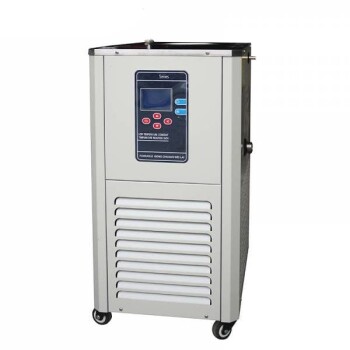
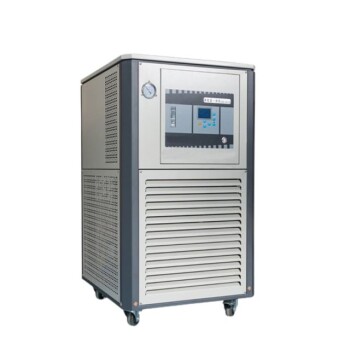
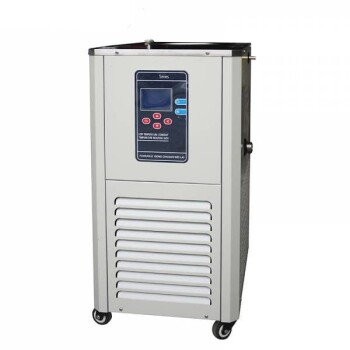
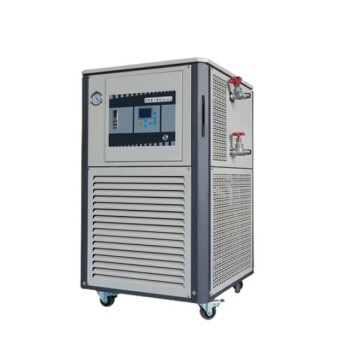
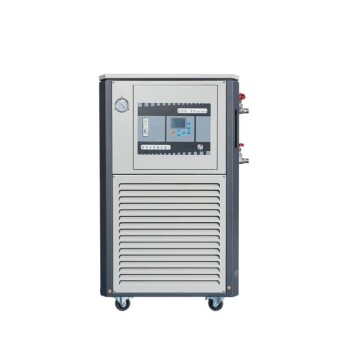
Manganese electrolysis processes rely on thermostatic water bath heating devices to strictly control the electrolyte's temperature environment. By maintaining a precise set point, typically around 40 °C, these devices stabilize the fundamental chemical properties of the solution, preventing fluctuations that damage the quality of the metal deposition.
Core Takeaway: Temperature stability is not just a variable; it is a control mechanism for product quality. A thermostatic water bath ensures consistent electrochemical kinetics, preventing structural defects like nodules and degradation in the final manganese layer.
The Critical Role of Temperature Stability
Electrolysis is a sensitive electrochemical process where thermal variables dictate efficiency. The water bath serves as a stabilizer for three distinct physical and chemical factors.
Regulating Ion Hydrolysis Balance
The chemical state of the electrolyte is highly sensitive to heat. Ion hydrolysis balance refers to the equilibrium of chemical reactions occurring within the fluid.
A thermostatic bath maintains this equilibrium. If the temperature deviates, the chemical balance shifts, potentially altering the composition of the electrolyte and the purity of the reaction.
Controlling Diffusion Rates
Diffusion rate determines how quickly manganese ions move through the solution to the electrode. This movement must be predictable for a uniform coating.
The heating device ensures that the thermal energy driving this movement remains constant. This leads to a steady supply of ions to the cathode surface.
Optimizing Electrolyte Conductivity
Conductivity measures how easily electricity flows through the solution. This property is directly linked to temperature.
By holding the electrolyte at a specific temperature (e.g., 40 °C), the device ensures optimal and consistent conductivity. This prevents variances in voltage that could disrupt the plating process.
Consequences of Thermal Instability
The primary reason for using a high-precision heating device is to avoid the physical defects caused by temperature swings.
Ensuring Consistent Reaction Kinetics
Electrochemical reaction kinetics refers to the speed and pathway of the chemical changes at the electrode.
Drastic temperature fluctuations cause these kinetics to become erratic. A stable thermal environment ensures the reaction proceeds at a steady, controlled pace.
Preventing Deposition Defects
When kinetics are unstable, the physical layer of manganese suffers. The primary symptoms of this instability are degradation of deposition layer quality and the formation of abnormal nodules.
Nodules are irregular growths on the metal surface that compromise structural integrity. The water bath prevents these by eliminating the thermal spikes that trigger them.
Understanding the Operational Trade-offs
While the thermostatic water bath is essential for quality, it introduces specific operational constraints that must be respected.
The Sensitivity to Fluctuation
The reliance on this device highlights the intolerance of the manganese electrolysis process to environmental changes.
Unlike more robust plating processes that might operate within a wide thermal range, manganese electrolysis requires strict adherence to a specific set point.
This means that any failure in the heating device or the circulation of the water bath immediately jeopardizes the entire batch. The system trades operational flexibility for high-precision output.
Making the Right Choice for Your Goal
To ensure the success of your electrolysis setup, align your thermal control strategy with your specific quality targets.
- If your primary focus is surface uniformity: Prioritize the water bath's ability to stabilize diffusion rates, ensuring ions arrive at the cathode evenly.
- If your primary focus is structural integrity: Leverage the device to maintain strict temperature limits, which is the only way to prevent abnormal nodule growth.
Control the temperature to control the chemistry; precise thermal management is the prerequisite for high-quality manganese deposition.
Summary Table:
| Parameter | Role of Thermostatic Water Bath | Impact on Manganese Quality |
|---|---|---|
| Ion Hydrolysis | Maintains chemical equilibrium | Ensures electrolyte purity and stability |
| Diffusion Rate | Stabilizes ion movement to the cathode | Guarantees a uniform and smooth coating |
| Conductivity | Fixes electrolyte electrical resistance | Prevents voltage fluctuations and energy loss |
| Reaction Kinetics | Keeps electrochemical speed constant | Prevents abnormal nodules and structural defects |
Elevate Your Electrolysis Precision with KINTEK
Consistency is the backbone of high-quality metal deposition. At KINTEK, we specialize in providing advanced laboratory equipment designed to meet the rigorous demands of electrochemical research. Our high-precision thermostatic water baths and cooling solutions ensure your manganese electrolysis processes remain within strict thermal limits, eliminating structural defects and optimizing ion diffusion.
Beyond thermal control, KINTEK offers a comprehensive range of electrolytic cells, electrodes, and high-temperature reactors tailored for metallurgy and battery research. Whether you need specialized ceramics, crucibles, or hydraulic presses for material preparation, our team is ready to equip your lab with the tools for success.
Ready to stabilize your chemical reactions? Contact our technical experts today to find the perfect equipment for your specific application!
References
- Jie Yang, Hanke Wei. Chaos-enhanced manganese electrolysis: nodule suppression and improved efficiency using controllable chaotic electrical signals. DOI: 10.1038/s41598-024-83747-z
This article is also based on technical information from Kintek Solution Knowledge Base .
Related Products
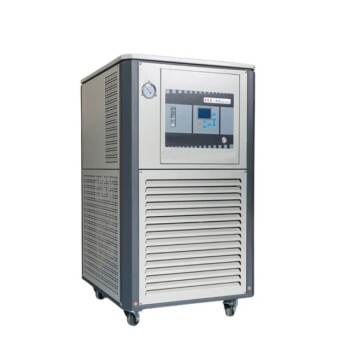
- High Temperature Constant Temperature Heating Circulator Water Bath Chiller Circulator for Reaction Bath
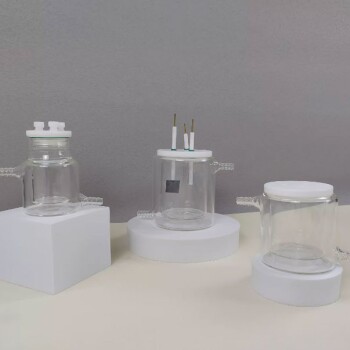
- Double-Layer Water Bath Electrolytic Electrochemical Cell
- 20L Heating Chilling Circulator Cooling Water Bath Circulator for High and Low Temperature Constant Temperature Reaction
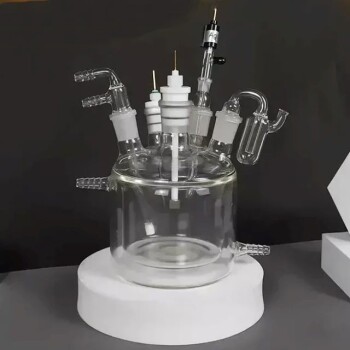
- Double Layer Five-Port Water Bath Electrolytic Electrochemical Cell
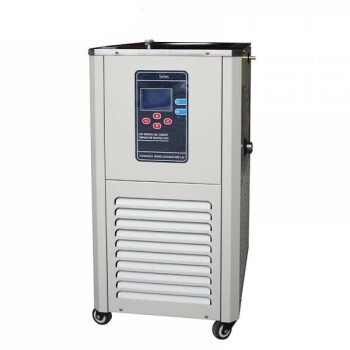
- 5L Heating Chilling Circulator Cooling Water Bath Circulator for High and Low Temperature Constant Temperature Reaction
People Also Ask
- What is the necessity of a circulating water bath in chlorate production? Optimize Yield & Purity with Precision
- How do constant temperature circulators impact weight-loss immersion tests? Ensure Precision in Corrosion Analysis
- How does a constant temperature circulator support the leaching reaction of gold scrap? Optimize Gold Recovery Results
- Why is a constant temperature water bath used for precursor storage in CVD? Achieve Stable Nanocrystalline SiC Deposition
- Why is a high-precision constant temperature water bath necessary for anaerobic digestion? Ensure Success at 37±0.02°C