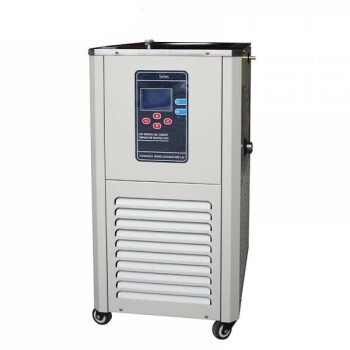
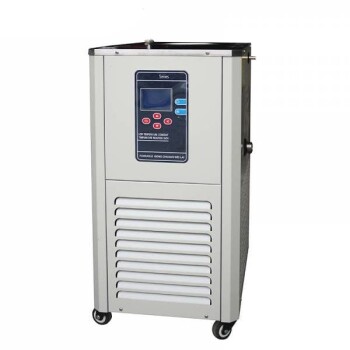
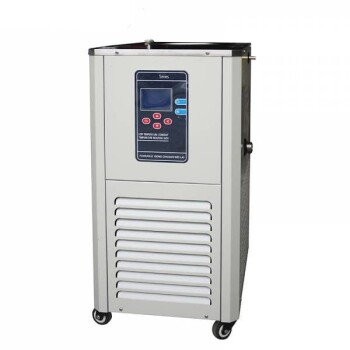
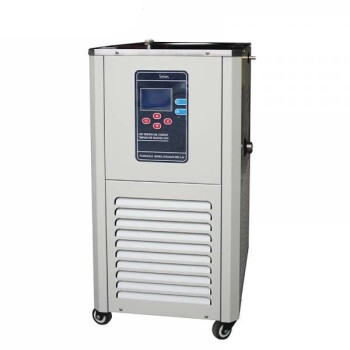
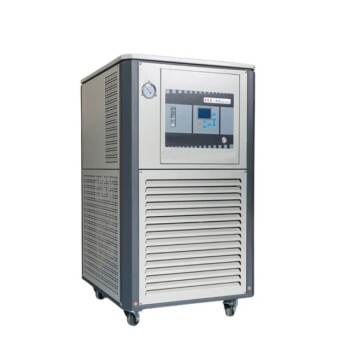
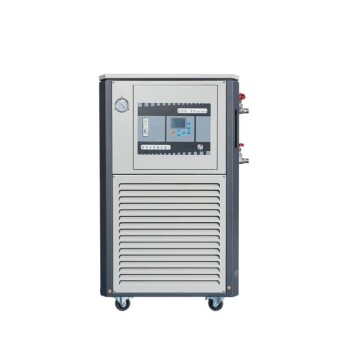
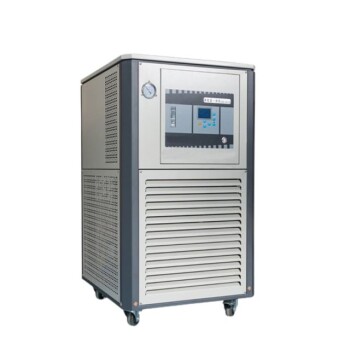
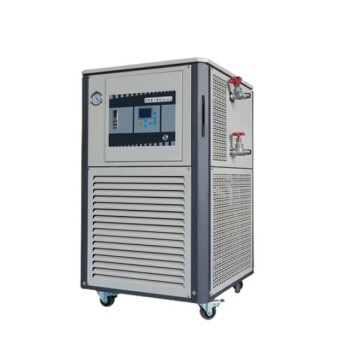
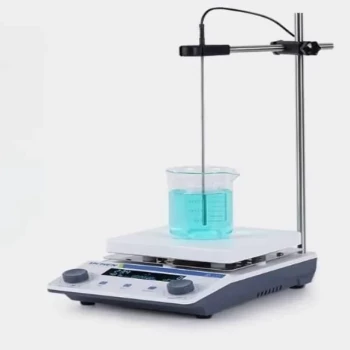
Controlled environment constant temperature water baths and sealed reaction vessels are primarily utilized to simulate rigorous curing conditions, specifically maintaining 60 degrees Celsius and 100 percent relative humidity. This precise combination is required to artificially accelerate the hydration reaction of magnesium oxide (MgO), allowing researchers to stress-test the material in a fraction of the standard time.
By creating an extreme hygrothermal environment, this equipment fast-tracks the evaluation of novel binders, specifically determining their anti-hydration performance and structural stability before they are used in industrial applications.
The Science of Accelerated Testing
Simulating Rigorous Conditions
Refractory materials often face harsh environments in the real world, but waiting for natural degradation is inefficient for testing.
Researchers use constant temperature water baths to lock in a thermal environment of exactly 60 degrees Celsius. Simultaneously, sealed reaction vessels trap moisture to achieve 100 percent relative humidity, ensuring the material is saturated.
Driving the Hydration Reaction
Magnesium oxide (MgO) is susceptible to hydration, a reaction that can compromise the structural integrity of a refractory.
Under normal ambient conditions, this reaction can be slow. By applying heat and saturation, the equipment forces the hydration reaction of magnesium oxide to occur rapidly. This allows engineers to observe potential failure points quickly.
Evaluating Binder Performance
Testing Novel Binders
The primary goal of this setup is often to validate new materials, such as silanized colloidal silica.
Standard binders may fail under hygrothermal stress. This testing apparatus determines if the novel binder can withstand the accelerated conditions without breaking down.
Assessing Anti-Hydration Capabilities
A critical metric for refractory binders is their ability to prevent the hydration of MgO.
If the binder works correctly, it will shield the MgO even inside the sealed, humid vessel. This test definitively proves the anti-hydration performance of the mixture.
Ensuring Structural Stability
The ultimate output of this testing is data on stability.
If the material expands, cracks, or loses strength during the 60-degree curing process, it is deemed unstable. This ensures that only materials capable of maintaining their structure under stress move forward to production.
Understanding the Limitations
Artificial vs. Natural Aging
While highly effective, this method represents an artificial acceleration.
The results provide a "worst-case scenario" baseline. It effectively identifies weak points, but it is an extreme stress test that exceeds typical storage conditions.
Making the Right Choice for Your Goal
When designing a testing protocol for refractory materials, consider your specific objective:
- If your primary focus is rapid innovation: Use this setup to screen novel binders like silanized colloidal silica quickly, eliminating weak candidates early in the R&D cycle.
- If your primary focus is structural assurance: Utilize these rigorous conditions to certify that your binder provides sufficient anti-hydration protection for magnesium oxide components.
This equipment combination is the industry standard for converting long-term durability questions into immediate, data-backed answers.
Summary Table:
| Feature | Testing Parameter | Purpose in Refractory Testing |
|---|---|---|
| Temperature Control | Constant 60°C | Artificially accelerates the MgO hydration reaction |
| Humidity Level | 100% Relative Humidity | Simulates extreme hygrothermal stress conditions |
| Equipment Used | Sealed Reaction Vessels | Traps moisture to ensure full saturation of materials |
| Primary Metric | Anti-Hydration Performance | Validates the effectiveness of novel binders (e.g., Silanized Silica) |
| Target Outcome | Structural Stability | Identifies expansion or cracking before industrial application |
Elevate Your Material Testing with KINTEK Precision
Don't let slow R&D cycles hold back your innovation. KINTEK specializes in advanced laboratory equipment designed to simulate the most rigorous environmental conditions. Whether you are testing the anti-hydration performance of novel binders or the structural stability of magnesium oxide components, our comprehensive range of constant temperature water baths, high-temperature high-pressure reactors, and autoclaves provides the precision you need.
From crushing and milling systems for sample preparation to high-temperature furnaces and hydraulic presses for material synthesis, KINTEK offers end-to-end solutions for refractory research and industrial quality control. Contact our technical experts today to discover how our high-performance equipment can fast-track your material evaluation and ensure long-term durability in the field.
References
- Rafael Salomão, P. R. T. Tiba. Novel Colloidal Silica Technology For In Situ Spinelization in MgO-Containing Refractories. DOI: 10.1590/1980-5373-mr-2023-0438
This article is also based on technical information from Kintek Solution Knowledge Base .
Related Products
- High Temperature Constant Temperature Heating Circulator Water Bath Chiller Circulator for Reaction Bath
- 50L Chiller Water Bath Cooling Circulator Low Temperature Constant Temperature Reaction Bath
- 10L Chilling Circulator Cooling Water Bath Low Temperature Constant Temperature Reaction Bath
- 30L Chiller Water Bath Cooling Circulator Low Temperature Constant Temperature Reaction Bath
- 40L Chiller Water Bath Cooling Circulator Low Temperature Constant Temperature Reaction Bath
People Also Ask
- What is the necessity of a circulating water bath in chlorate production? Optimize Yield & Purity with Precision
- How do constant temperature circulators impact weight-loss immersion tests? Ensure Precision in Corrosion Analysis
- How does a constant temperature circulator support the leaching reaction of gold scrap? Optimize Gold Recovery Results
- Why is a constant temperature water bath used for precursor storage in CVD? Achieve Stable Nanocrystalline SiC Deposition
- Why is a high-precision constant temperature water bath necessary for anaerobic digestion? Ensure Success at 37±0.02°C