Gold (Au) is defined by its unique combination of chemical inertness and high-performance physical properties. It is a dense, soft, and malleable metal that retains its bright yellow luster because it does not tarnish in air or water. For coating applications, its primary value is derived from its excellent electrical conductivity and its ability to reflect a broad spectrum of electromagnetic radiation.
While Gold is visually distinct, its critical engineering value lies in its stability; it maintains high conductivity and reflectivity in environments where other metals would oxidize or corrode.
Chemical Resistance and Stability
Impervious to Tarnish
One of Gold's most critical properties for coatings is that it does not tarnish when exposed to air or water.
This makes it an ideal choice for protective finishes, as the surface maintains its integrity over time without degrading.
Low Chemical Reactivity
Gold is one of the least reactive chemical elements known.
In practical applications, this inertness ensures that a gold coating will not easily interact with surrounding materials or environmental contaminants, preventing corrosion.
Functional Performance
Excellent Electrical Conductivity
Gold possesses excellent electrical conductivity, making it a standard choice for electronic plating and contacts.
Because it does not form an insulating oxide layer (tarnish), this conductivity remains stable and reliable over the lifespan of the component.
Broad-Spectrum Reflectivity
Gold is a highly effective reflector of electromagnetic radiation.
This property applies not just to visible light, but also extends to infrared and radio waves, making it valuable for thermal management and shielding applications.
Physical Workability
Malleability and Ductility
The metal is inherently malleable and ductile.
This allows Gold to be worked into extremely thin layers or complex shapes without breaking, which is essential for uniform coating processes.
High Density
Gold is a dense material.
While this contributes to its solid feel and value, it also means that even thin coatings can provide significant mass or shielding properties relative to their thickness.
Understanding the Trade-offs
Mechanical Softness
The primary reference notes that Gold is a soft metal.
While this aids in malleability, it presents a challenge for coatings in high-wear environments. Pure gold coatings can be susceptible to scratching or mechanical abrasion, potentially compromising the protective layer if not hardened or alloyed.
Making the Right Choice for Your Goal
Gold is rarely chosen for cost efficiency; it is chosen for performance reliability in demanding conditions.
- If your primary focus is electrical reliability: Prioritize Gold for its ability to maintain excellent conductivity without the risk of insulating oxidation or tarnish.
- If your primary focus is thermal or signal management: Leverage Gold’s capability as a good reflector of infrared and radio waves to manage heat or shielding.
- If your primary focus is aesthetics: Rely on its bright yellow color and resistance to tarnish to maintain a pristine visual appearance indefinitely.
Gold is the material of choice when failure due to environmental reactivity is not an option.
Summary Table:
| Property | Industrial Benefit | Key Application Area |
|---|---|---|
| Chemical Inertness | Does not tarnish or oxidize in air/water | Protective finishes & aerospace |
| Electrical Conductivity | Stable, reliable low-resistance contacts | Electronics & semiconductor plating |
| Reflectivity | High reflection of IR and radio waves | Thermal management & shielding |
| Malleability | Easily worked into ultra-thin, uniform layers | Thin-film deposition & sensors |
| Mechanical Softness | High ductility but susceptible to abrasion | Specialized soft-contact interfaces |
Elevate Your Laboratory & Research Outcomes with KINTEK
Are you looking to leverage the superior properties of Gold or other specialized materials in your next project? KINTEK specializes in providing high-precision laboratory equipment and consumables designed for the most demanding environments. From advanced high-temperature furnaces (muffle, vacuum, CVD) to high-pressure reactors and specialized electrolytic cells, our solutions empower researchers to achieve unmatched reliability and precision.
Whether you are working on battery research, thermal management, or material deposition, our experts are ready to provide the tools and consumables—including high-purity ceramics, crucibles, and milling systems—that your facility requires.
Ready to optimize your process? Contact us today to discuss your project needs and receive a tailored quote!
Related Products
- Electron Beam Evaporation Coating Gold Plating Tungsten Molybdenum Crucible for Evaporation
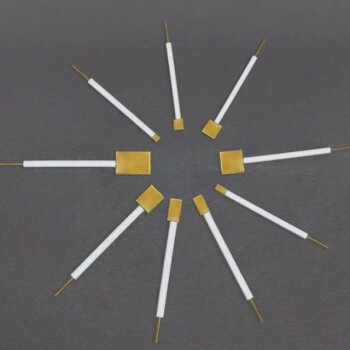
- Gold Electrochemical Sheet Electrode Gold Electrode
- Custom CVD Diamond Coating for Lab Applications
- Gold Disc Electrode
- High Purity Gold Platinum Copper Iron Metal Sheets
People Also Ask
- What is the container that holds the metal source material called in e-beam evaporation? Ensure Purity and Quality in Your Thin-Film Deposition
- What materials are used in electron beam evaporation? Master High-Purity Thin Film Deposition
- What is the process of e-beam coating? Achieve High-Purity, Precise Thin Films for Your Lab
- What is e-beam evaporation? Achieve High-Purity Thin Film Deposition for Your Lab
- What is the voltage of e-beam evaporation? Achieve Precise Thin-Film Deposition