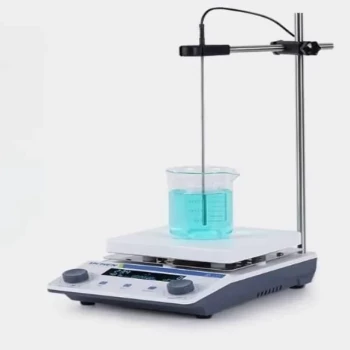
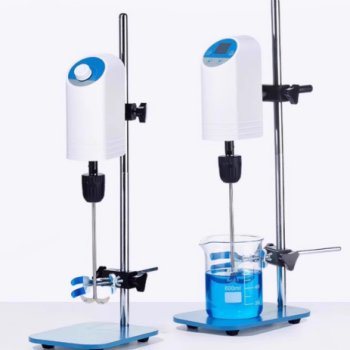
High-pressure stainless steel reactors with magnetic stirring provide the essential environment for safe, efficient, and reproducible polyethylene hydrocracking. These systems allow researchers to maintain the critical 2 MPa hydrogen pressures and temperatures exceeding 230°C required to break down long-chain polymers. By integrating magnetic stirring, the reactor overcomes the extreme mass transfer resistance inherent in viscous LDPE/HDPE melts, ensuring that gaseous hydrogen and solid catalysts interact effectively.
These reactors combine structural robustness with high-shear mixing to ensure that gaseous hydrogen, solid catalysts, and liquid polymer melts achieve maximum contact. This synergy is necessary to achieve high yields and faster reaction kinetics while maintaining safety under extreme conditions.
Overcoming Mass Transfer Resistance
The Role of High-Shear Magnetic Stirring
Polyethylene hydrocracking involves a complex three-phase system: gaseous hydrogen, solid catalysts, and highly viscous polymer melts. Integrated magnetic stirring provides the strong shear forces necessary to pull hydrogen gas into the dense melt. This action ensures that the catalyst remains suspended and in constant contact with the reactants.
Eliminating Concentration Gradients
In a static environment, the reaction would slow down as hydrogen is consumed at the catalyst surface and cannot be easily replaced. Continuous magnetic stirring eliminates concentration gradients within the fluid. This results in a faster path to phase equilibrium and more accurate data for determining reaction baselines.
Maximizing Reaction Efficiency and Safety
Managing High-Pressure Hydrogen Environments
The use of stainless steel provides the mechanical performance required to withstand the stress of 2 MPa (or higher) hydrogen pressure. This structural integrity is vital for hydrogenolysis processes that may reach up to 50 bar. Robust sealing mechanisms prevent leaks, which is a critical safety requirement when working with flammable hydrogen at high temperatures.
Thermal Uniformity and Process Intensification
Stainless steel offers excellent thermal conductivity, ensuring that the polymer melt is heated uniformly throughout the vessel. This prevents localized "hot spots" that could lead to unwanted side reactions or degraded product quality. By optimizing these conditions, the reactor enables process intensification, allowing for faster kinetics and potentially smaller reactor footprints.
Understanding the Trade-offs
Viscosity Thresholds and Stirrer Torque
While magnetic stirring is highly effective, it has physical limits regarding melt viscosity. If the polyethylene molecular weight is too high or the temperature is too low, the torque required may exceed the magnetic coupling’s strength. In such cases, the stirrer may decouple, leading to a complete stall in mass transfer.
Material Fatigue and Hydrogen Embrittlement
Repeated cycling of high temperatures and pressures can lead to material fatigue in stainless steel. Furthermore, exposure to high-pressure hydrogen at elevated temperatures requires specific grades of stainless steel to avoid hydrogen embrittlement. Regular inspection of the reactor vessel and seals is mandatory to prevent catastrophic failure over time.
Making the Right Choice for Your Goal
To maximize the utility of a high-pressure reactor in polyethylene testing, align your hardware choices with your specific research objectives:
- If your primary focus is catalyst screening: Prioritize a reactor with precise magnetic stirring control to ensure that mass transfer limitations do not mask the true kinetic performance of your catalyst.
- If your primary focus is process safety and durability: Invest in high-grade stainless steel alloys specifically rated for high-pressure hydrogen service to minimize the risk of embrittlement and vessel fatigue.
- If your primary focus is product purity: Consider the use of specialized liners (like PTFE) if your reaction involves corrosive additives, though ensure they can withstand the 230°C+ temperatures required for LDPE/HDPE.
By mastering the balance between mechanical agitation and high-pressure containment, you can achieve the precise control necessary for advanced polymer upcycling and hydrocracking research.
Summary Table:
| Feature | Technical Advantage | Research Impact |
|---|---|---|
| Magnetic Stirring | High-shear mixing | Overcomes melt viscosity; eliminates concentration gradients |
| Stainless Steel Body | Structural integrity | Safely contains 2 MPa hydrogen at temperatures >230°C |
| Thermal Conductivity | Uniform heat distribution | Prevents localized hot spots and unwanted side reactions |
| Sealing Mechanism | Leak-proof containment | Ensures safety during high-pressure hydrogenolysis processes |
Elevate Your Polymer Research with KINTEK Solutions
Precision and safety are non-negotiable in polymer upcycling and hydrocracking. KINTEK specializes in high-performance laboratory equipment designed for the most demanding environments. Our range of high-temperature high-pressure reactors and autoclaves is engineered to handle the complexities of LDPE/HDPE testing, providing the robust agitation and thermal control necessary for breakthrough results.
Beyond reactors, KINTEK offers a comprehensive portfolio including:
- Material Processing: Crushing, milling, and hydraulic presses (pellet, hot, isostatic).
- Thermal Control: Muffle, tube, and vacuum furnaces, plus cooling solutions like ULT freezers.
- Lab Essentials: Electrolytic cells, battery research tools, and high-durability ceramics/PTFE consumables.
Ready to optimize your lab's efficiency and safety? Contact our technical experts today to find the perfect reactor configuration for your specific research goals!
References
- Qingyun Kang, Jinxing Chen. Entropy Confinement Promotes Hydrogenolysis Activity for Polyethylene Upcycling. DOI: 10.1002/ange.202313174
This article is also based on technical information from Kintek Solution Knowledge Base .
Related Products
- Stainless High Pressure Autoclave Reactor Laboratory Pressure Reactor
- Mini SS High Pressure Autoclave Reactor for Laboratory Use
- Customizable High Pressure Reactors for Advanced Scientific and Industrial Applications
- Customizable Laboratory High Temperature High Pressure Reactors for Diverse Scientific Applications
- Custom PTFE Teflon Parts Manufacturer for Magnetic Stirring Bar
People Also Ask
- Why is a laboratory high-pressure reactor used in the hydrothermal synthesis of hydroxyapatite catalysts?
- What role does a laboratory high-pressure reactor play in the leaching process of spent cathode materials? Optimize Recovery
- Why is a laboratory high-pressure reactor necessary for synthesizing fly ash-based zeolite? Achieve Pure Crystallization
- What conditions do laboratory high-pressure reactors provide for HTC? Optimize Your Biochar Production Processes
- What is the function of a high-pressure reactor autoclave? Enhancing Cu/N Co-Doped Carbon Catalyst Synthesis