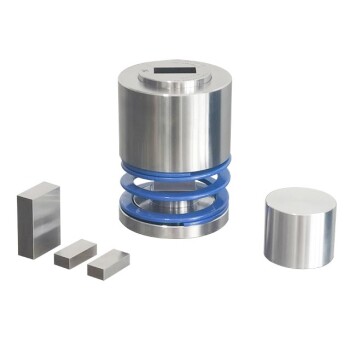
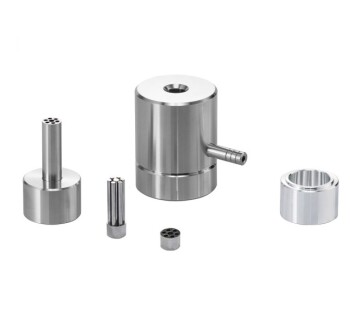
The fundamental necessity of a high-pressure reactor lies in its ability to create the specific thermodynamic conditions required for hydrothermal crystallization.
To synthesize zeolite from fly ash, you must subject the material to a sealed, alkaline environment where high temperatures and pressures force the dissolution and structural rearrangement of stubborn aluminosilicate components. Without the reactor to maintain these conditions, the solvents would vaporize before the necessary chemical transformation could occur.
The reactor acts as a thermodynamic vessel that allows alkaline solutions to remain in a liquid state at temperatures exceeding their boiling points, facilitating the conversion of amorphous fly ash into a highly ordered crystalline zeolite structure.
Creating the Necessary Thermodynamic Environment
Achieving Subcritical Conditions
Standard atmospheric conditions are insufficient for zeolite synthesis. A laboratory reactor creates a sealed environment that allows the system to reach pressures between 1 bar and 15 bar.
This pressure is critical because it prevents the liquid solvent (water) from vaporizing, even as temperatures rise between 90°C and 150°C.
By keeping the solvent in a liquid, subcritical state, the reactor ensures continuous contact between the alkaline solution and the solid fly ash.
Establishing a Uniform Thermal Field
The quality of the final zeolite depends heavily on temperature stability. The reactor provides a uniform thermal field throughout the crystallization vessel.
Inconsistencies in temperature can lead to impurities or irregular pore structures. The controlled environment of the autoclave ensures that the thermal energy is distributed evenly, promoting consistent crystal growth.
Driving the Chemical Transformation
Dissolution of Aluminosilicates
Fly ash is composed of stable aluminosilicate glass that does not easily break down. The high-pressure reactor enables alkaline activators, such as NaOH or KOH, to aggressively attack the fly ash structure.
Under these intense conditions, the silica and alumina species dissolve into the solution, forming a precursor hydrogel.
Gelation and Rearrangement
Once the aluminosilicates are dissolved, the reactor maintains the conditions necessary for gelation.
During this phase, the dissolved components begin to reassemble. The high-pressure environment facilitates the rearrangement of these molecules into a new, highly ordered lattice.
Crystallization and Aging
The final step is the growth of the zeolite crystal itself. Over a period typically ranging from 24 to 96 hours, the precursor gel precipitates and crystallizes.
The reactor sustains the specific physical conditions required to age the gel, ultimately yielding a zeolite framework with a regular, defined pore structure.
Operational Considerations and Trade-offs
Process Duration vs. Quality
While the reactor enables the synthesis, it is not an instant process. The crystallization period is significant, requiring the equipment to maintain stable conditions for days.
Rushing this process by altering parameters outside the optimal 90°C–150°C range can result in incomplete crystallization or the formation of unwanted phases.
Equipment Complexity and Safety
Operating at pressures up to 15 bar requires robust safety protocols and specialized equipment, typically involving stainless steel vessels with chemical-resistant liners.
This adds a layer of operational complexity compared to open-air chemical reactions, as the vessel must be perfectly sealed to prevent pressure loss or hazardous leaks during the high-temperature phase.
Making the Right Choice for Your Goal
When configuring your synthesis protocol, consider your specific end-goal requirements:
- If your primary focus is Crystal Purity: Prioritize the stability of the uniform thermal field within the reactor to prevent structural irregularities.
- If your primary focus is Reaction Efficiency: Ensure the reactor can safely sustain the upper limits of the pressure range (approx. 15 bar) to maximize the contact between the alkaline medium and the fly ash.
- If your primary focus is Material Structure: Verify that the reactor allows for a prolonged, uninterrupted aging period (up to 96 hours) to ensure complete lattice formation.
By controlling the pressure and temperature variables within this sealed environment, you turn a waste byproduct into a sophisticated, high-value molecular sieve.
Summary Table:
| Feature | Synthesis Requirement | Role of High-Pressure Reactor |
|---|---|---|
| Thermodynamics | Subcritical conditions (90°C–150°C) | Prevents solvent vaporization; maintains liquid phase. |
| Pressure Range | 1 bar to 15 bar | Facilitates dissolution of stable aluminosilicates. |
| Thermal Control | Uniform thermal field | Ensures consistent crystal growth and pore structure. |
| Reaction Time | 24 to 96 hours | Sustains stable physical conditions for long-term aging. |
Elevate Your Material Research with KINTEK Precision
Transform waste into high-value molecular sieves with the industry's most reliable hydrothermal solutions. KINTEK specializes in advanced laboratory equipment designed for the rigorous demands of zeolite synthesis. Our high-temperature high-pressure reactors and autoclaves provide the precise thermal stability and pressure control needed to ensure maximum crystal purity and reaction efficiency.
Beyond reactors, we support your entire workflow with:
- Crushing and milling systems for fly ash preparation.
- Ceramics and crucibles for high-temp processing.
- Cooling solutions and shakers for post-synthesis handling.
Contact KINTEK today to find the perfect reactor configuration for your laboratory and accelerate your chemical transformation goals!
References
- Waleed Jadaa. Wastewater Treatment Utilizing Industrial Waste Fly Ash as a Low-Cost Adsorbent for Heavy Metal Removal: Literature Review. DOI: 10.3390/cleantechnol6010013
This article is also based on technical information from Kintek Solution Knowledge Base .
Related Products
- Customizable Laboratory High Temperature High Pressure Reactors for Diverse Scientific Applications
- Stainless High Pressure Autoclave Reactor Laboratory Pressure Reactor
- High Pressure Laboratory Autoclave Reactor for Hydrothermal Synthesis
- Mini SS High Pressure Autoclave Reactor for Laboratory Use
- Customizable High Pressure Reactors for Advanced Scientific and Industrial Applications
People Also Ask
- How do high-pressure and high-temperature reactors ensure the effective treatment of lignocellulosic wastewater in WAO?
- What equipment is required for high-pressure high-temperature reactions? Master Extreme Chemistry Safely
- How do you control high pressure in a reactor? A Guide to Safe & Stable Operation
- Why is argon better than nitrogen for inert atmosphere? Ensure Absolute Reactivity & Stability
- How does initial oxygen pressure affect the wet oxidation of pharmaceutical sludge? Master Your Oxidation Depth