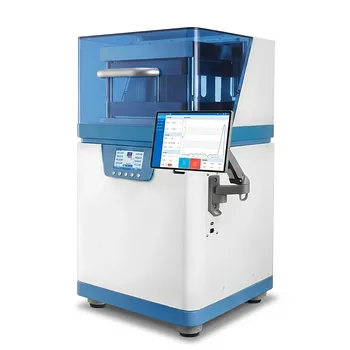
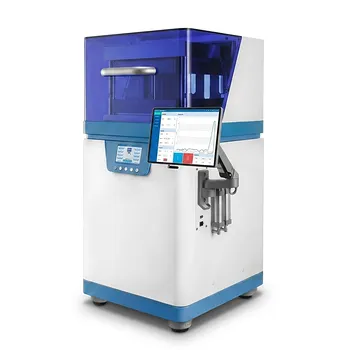
The laboratory high-pressure reactor is the foundational tool for intensified hydrometallurgy. It creates a sealed environment where high temperatures and elevated pressures work in tandem to rapidly dissolve metal elements—specifically nickel, cobalt, manganese, and lithium—from spent battery cathodes. By operating under conditions that far exceed atmospheric limits, these reactors overcome the chemical inertia of stable cathode structures, transforming a slow dissolution process into a high-efficiency extraction.
The primary role of a high-pressure reactor is to provide the "thermal and physical energy" required to break the crystal lattice of spent cathode materials. This equipment enables leaching agents to remain in a liquid state well above their atmospheric boiling points, significantly accelerating reaction kinetics and maximizing metal recovery.
Accelerating Reaction Kinetics through Intensification
Facilitating High-Temperature Acid Leaching
Spent cathode materials are often chemically stable, making them resistant to standard atmospheric leaching. A high-pressure reactor allows the leaching agent (such as hydrochloric or sulfuric acid) to reach temperatures like 160°C to 270°C while remaining in a liquid phase. This intense thermal energy provides the necessary activation energy to deconstruct the mineral or oxide structures holding the target metals.
Drastic Reduction in Processing Time
In an atmospheric vessel, leaching can take hours or even days to reach acceptable yields. The pressurized environment of a reactor significantly accelerates the dissolution rate, often reducing reaction times from hours to minutes. This speed is achieved because the increased pressure and temperature increase the frequency and energy of molecular collisions between the acid and the cathode powder.
Maximizing Elemental Recovery Rates
By operating at high pressures (often reaching 40–50 bar), the reactor ensures that leaching agents penetrate deep into the pores of the spent material. This "deep leaching" capability allows researchers to achieve recovery rates as high as 95% or greater for valuable metals. It is particularly effective for refractory materials that would otherwise remain as solid residue in standard processes.
Precision Control and Environmental Safety
Containment of Volatile Acid Mists
Leaching often involves aggressive acids that can volatilize into hazardous mists when heated. The sealed design of the high-pressure reactor prevents these corrosive vapors from escaping into the laboratory environment. This not only protects the researchers but also maintains the concentration of the leaching agent, ensuring the stoichiometry of the reaction remains consistent.
Precise Parameter Management
High-pressure reactors are equipped with sophisticated sensors to monitor internal pressure and temperature in real-time. This level of control allows for the precise adjustment of chemical reaction kinetic parameters. Researchers can simulate specific industrial conditions, such as deep underground gasification or industrial-scale autoclave leaching, at a benchtop scale.
Prevention of Solvent Loss
When working with specific solvents or ammonia-based leaching agents, maintaining a liquid state is critical for forming soluble metal complexes. The reactor’s ability to maintain a controlled high-pressure environment prevents the "boil-off" of these reagents. This ensures that the chemical environment remains stable throughout the duration of the leaching cycle.
Understanding the Trade-offs
Increased Equipment Complexity and Cost
While high-pressure reactors offer superior performance, they are significantly more expensive and complex than atmospheric glass reactors. They require specialized materials, such as high-grade stainless steel or Hastelloy, to withstand both the extreme pressure and the corrosive nature of the leaching acids. Maintenance requirements are also higher, involving regular inspections of seals, pressure relief valves, and burst disks.
Heightened Safety Risks
Operating at pressures of 50 bar and temperatures exceeding 200°C introduces significant physical risks. Any failure in the vessel or seals can lead to a rapid decompression event or the release of superheated corrosive liquids. Operators must undergo specific training to manage these risks and ensure the equipment is used within its certified design limits.
Optimizing Your Leaching Protocol
How to Apply This to Your Research
The choice of reactor settings depends heavily on the specific chemistry of your spent cathode material and your ultimate recovery goals.
- If your primary focus is maximum lithium recovery: Focus on maintaining the leaching agent slightly above its atmospheric boiling point to ensure high solubility while minimizing energy consumption.
- If your primary focus is processing refractory (hard-to-dissolve) oxides: Utilize higher pressure ranges (30-50 bar) to provide the mechanical and thermal energy required to break the crystal lattice.
- If your primary focus is environmental safety and reagent recycling: Prioritize the reactor's sealing integrity to capture and condense all volatile components for post-reaction analysis.
By mastering the high-pressure environment, you can transform spent battery waste into a high-value stream of recycled materials with industrial precision.
Summary Table:
| Feature | Role in Leaching Process | Impact on Results |
|---|---|---|
| High Temperature | Deconstructs stable crystal lattices (160°C - 270°C) | Faster dissolution of Ni, Co, Mn, and Li |
| High Pressure | Maintains liquid phase of reagents at 40–50 bar | Enables "deep leaching" for >95% recovery |
| Sealed Design | Prevents escape of corrosive acid mists and vapors | Ensures environmental safety and stoichiometry |
| Precision Control | Real-time monitoring of kinetic parameters | Reproducible results for industrial scaling |
| Solvent Retention | Prevents reagent boil-off (e.g., ammonia) | Maintains stable chemical environment |
Scale Your Battery Recycling Research with KINTEK
Accelerate your hydrometallurgical breakthroughs with KINTEK’s industry-leading laboratory equipment. We specialize in providing high-performance high-temperature high-pressure reactors and autoclaves designed specifically to handle the rigors of acid leaching and metal recovery.
Beyond reactors, KINTEK offers a complete ecosystem for battery research, including:
- Crushing and milling systems for cathode powder preparation.
- Electrolytic cells and electrodes for downstream purification.
- Cooling solutions (ULT freezers and freeze dryers) for material stability.
- Essential consumables like PTFE products and high-purity ceramics.
Whether you are optimizing lithium recovery or processing refractory oxides, our equipment ensures precision, safety, and reliability. Contact KINTEK today to discuss your specific research needs and discover how our specialized tools can enhance your laboratory's efficiency.
References
- Tianyu Wang, Yue Yang. Fluorine migration and in-situ doping for regeneration of Ni-rich LiNi0.9Co0.05Mn0.05O2 cathode material from spent lithium-ion batteries. DOI: 10.1007/s40843-023-2512-1
This article is also based on technical information from Kintek Solution Knowledge Base .
Related Products
- Customizable Laboratory High Temperature High Pressure Reactors for Diverse Scientific Applications
- Stainless High Pressure Autoclave Reactor Laboratory Pressure Reactor
- High Pressure Laboratory Autoclave Reactor for Hydrothermal Synthesis
- Mini SS High Pressure Autoclave Reactor for Laboratory Use
- Customizable High Pressure Reactors for Advanced Scientific and Industrial Applications
People Also Ask
- How do high-pressure and high-temperature reactors ensure the effective treatment of lignocellulosic wastewater in WAO?
- What equipment is required for high-pressure high-temperature reactions? Master Extreme Chemistry Safely
- How do you control high pressure in a reactor? A Guide to Safe & Stable Operation
- How does initial oxygen pressure affect the wet oxidation of pharmaceutical sludge? Master Your Oxidation Depth
- Why is argon better than nitrogen for inert atmosphere? Ensure Absolute Reactivity & Stability