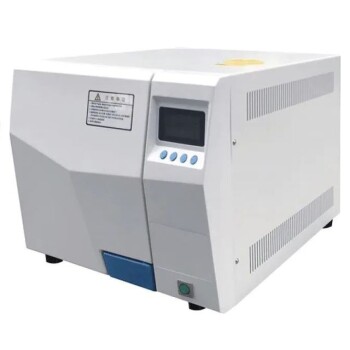
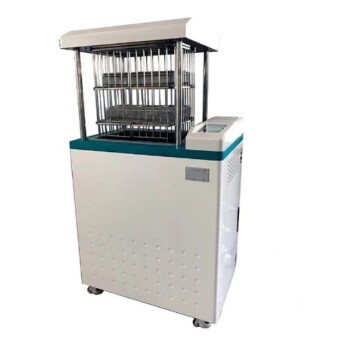
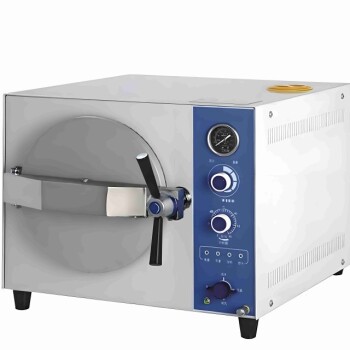
In the solvothermal synthesis of copper and nitrogen co-doped carbon, the high-pressure reactor autoclave functions as a controlled environment to facilitate atomic-level coordination. By maintaining a sealed chamber at elevated temperatures (typically 180°C), the autoclave creates autogenous pressure that allows solvents like isopropanol and glycerol to remain liquid far above their normal boiling points. This specific state is essential for forcing metal complexes to penetrate the polyacrylonitrile (PAN) polymer matrix and establish the initial chemical bonds required for high-performance catalyst precursors.
The primary role of the high-pressure autoclave is to provide the thermodynamic conditions necessary for deep molecular penetration and uniform atomic distribution. This ensures that copper and nitrogen are integrated into the polymer precursor at a structural level before the final carbonization process begins.
Facilitating Molecular Penetration and Coordination
Overcoming Boiling Point Limitations
The autoclave allows the reaction mixture to reach temperatures, such as 180°C, that would otherwise cause solvents like isopropanol to evaporate. By keeping these solvents in a high-energy liquid or supercritical state, the reactor increases the kinetic energy of the reactants.
This elevated energy state accelerates chemical reaction rates and facilitates the thorough recombination of organic ligands and metal ions. Without this pressure, the system could not reach the thermal threshold required for copper and nitrogen to integrate into the polymer framework.
Enabling Deep Penetration into Polymers
High-pressure conditions enhance the contact between the liquid phase precursors and the polymer surfaces. This is critical when working with materials like polyacrylonitrile (PAN), as the pressure forces metal salt molecules deep into the complex nanoporous channels of the precursor.
This "forced" penetration ensures that the copper species are not just coating the surface but are embedded within the polymer structure. This depth of interaction is what allows for the successful introduction of nitrogen-containing functional groups onto the carbon surface.
Driving Precursor Uniformity and Structural Integrity
Achieving Atomic-Level Dispersion
One of the most critical functions of the autoclave is ensuring the uniform distribution of metal atoms. Because the solvothermal environment allows for full reaction between organic ligands and metal ions, it prevents the clumping or "agglomeration" of copper particles.
This uniform dispersion is the foundation for creating active sites in the final catalyst. A well-dispersed precursor leads to a final product with high crystallinity and a more effective molecular framework.
Inducing Essential Structural Defects
The solvothermal treatment stage is responsible for the formation of structural defects that occur during subsequent carbonization. The autoclave provides the initial coordination environment where these defects are "programmed" into the precursor.
By controlling the high-pressure environment, researchers can influence the nucleation and oriented growth of the precursors. This control is fundamental to forming the specific morphologies and layered structures required for efficient catalysis.
Understanding the Trade-offs and Constraints
Pressure Management and Safety
The use of a high-pressure reactor introduces significant safety requirements and equipment costs. Maintaining a sealed, high-temperature environment requires specialized stainless steel autoclaves with robust pressure-relief mechanisms.
Failure to precisely control the temperature can lead to inconsistent autogenous pressure. This inconsistency often results in uneven metal loading or poor crystallinity in the synthesized precursors.
Reaction Time vs. Yield
While high pressure accelerates reaction rates, solvothermal synthesis often requires several hours (or even days) to achieve full penetration and coordination. Shortening this window to save time can lead to a "core-shell" effect where only the outer layer of the polymer is properly doped.
Conversely, excessive reaction times under high pressure can lead to the over-growth of particles. This can reduce the total surface area and diminish the catalytic performance of the final carbon material.
How to Apply This to Your Synthesis Project
Making the Right Choice for Your Goal
- If your primary focus is maximizing catalytic active sites: Prioritize a high-pressure environment that ensures the atomic-level dispersion of copper within the nitrogen-rich polymer matrix.
- If your primary focus is structural morphology: Focus on the oriented growth enabled by the autoclave to achieve graphene-like layered structures or specific nanoparticle sizes.
- If your primary focus is deep-pore loading: Utilize the autoclave to enhance the contact between the liquid precursor and hydrophobic carbon surfaces to ensure penetration into complex nanoporous channels.
The high-pressure autoclave is not merely a container, but a precision tool that dictates the fundamental chemical architecture of copper and nitrogen co-doped carbon catalysts.
Summary Table:
| Key Function | Mechanism in Solvothermal Synthesis | Impact on Catalyst Precursor |
|---|---|---|
| Molecular Penetration | Autogenous pressure forces reactants into polymer matrices (e.g., PAN) | Ensures deep, uniform chemical bonding |
| Atomic Dispersion | High-energy liquid state prevents metal ion clumping | Maximizes active sites and crystallinity |
| Thermal Management | Keeps solvents liquid far above normal boiling points | Enables high-temperature chemical recombination |
| Structural Control | Controls nucleation and oriented growth | Programs essential defects for high performance |
Elevate Your Catalyst Research with KINTEK Precision
Achieving atomic-level coordination in solvothermal synthesis requires equipment that delivers uncompromising pressure and temperature control. KINTEK specializes in high-performance laboratory solutions, offering a robust range of high-pressure high-pressure reactors and autoclaves designed for the most demanding material science applications.
Whether you are developing next-generation Cu/N co-doped carbon catalysts or exploring advanced polymer matrices, our equipment—including CVD/PECVD systems, muffle furnaces, and high-precision hydraulic presses—ensures the structural integrity and uniformity your research demands.
Ready to optimize your synthesis workflow? Contact our technical experts today to find the ideal reactor configuration for your laboratory and experience the KINTEK advantage in reliability and safety.
References
- Arseniy Y. Kalnin, Elena V. Alekseeva. Copper-driven catalyst design for improved oxygen reduction reactions in carbon-based materials. DOI: 10.31300/ctec.25.2023.65-72
This article is also based on technical information from Kintek Solution Knowledge Base .
Related Products
- Stainless High Pressure Autoclave Reactor Laboratory Pressure Reactor
- Mini SS High Pressure Autoclave Reactor for Laboratory Use
- High Pressure Laboratory Autoclave Reactor for Hydrothermal Synthesis
- Customizable High Pressure Reactors for Advanced Scientific and Industrial Applications
- Desktop Fast High Pressure Laboratory Autoclave Sterilizer 16L 24L for Lab Use
People Also Ask
- Why is a laboratory high-pressure reactor used in the hydrothermal synthesis of hydroxyapatite catalysts?
- What role does a laboratory high-pressure reactor play in the leaching process of spent cathode materials? Optimize Recovery
- Why is a laboratory high-pressure reactor necessary for synthesizing fly ash-based zeolite? Achieve Pure Crystallization
- What conditions do laboratory high-pressure reactors provide for HTC? Optimize Your Biochar Production Processes
- How are high-pressure reactors used to prepare metaphosphate electrocatalysts? Master In-Situ Precursor Growth