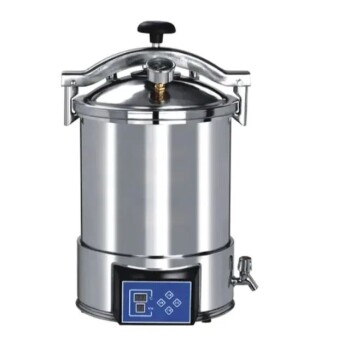
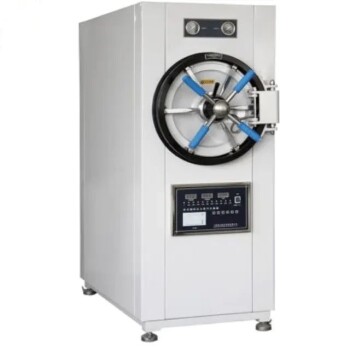
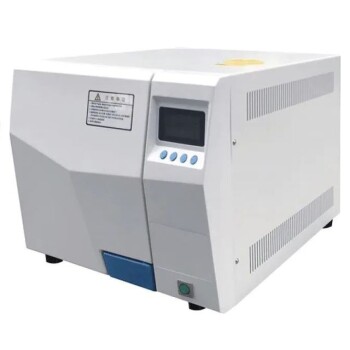
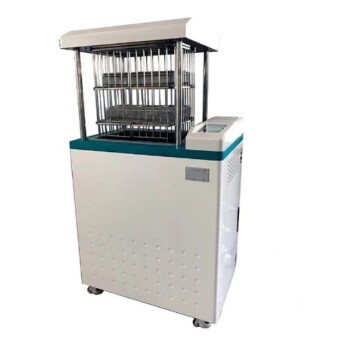
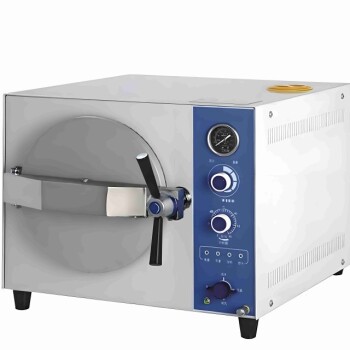
High-pressure reactors (autoclaves) serve as the critical vessel for the hydrothermal synthesis of precursor nanostructures. These reactors provide the controlled, high-temperature, and high-pressure environment necessary for the in-situ growth of metal hydroxides or oxides directly onto conductive substrates. This foundational step creates the high-surface-area, three-dimensional framework required for successful subsequent gas-phase phosphorization into metaphosphates.
The high-pressure reactor acts as a precision engineering tool to anchor active precursor materials onto a support through uniform reaction kinetics. By providing a sealed, subcritical environment, it ensures the resulting catalyst is self-supporting, structurally stable, and morphologically optimized for electrochemical activity.
The Role of In-Situ Precursor Growth
Establishing the 3D Framework
The autoclave facilitates the growth of precursors like nickel-vanadium hydroxides or other metal oxides directly onto skeletons like nickel foam or carbon cloth.
This process creates a three-dimensional array structure that significantly increases the specific surface area available for later chemical reactions.
A high surface area is vital because it determines the density of active sites available once the material is converted into a metaphosphate or phosphide.
Ensuring Structural Integrity and Adhesion
Unlike mechanical coating methods, the high-pressure environment promotes firm attachment of the nanosheets to the conductive substrate.
The pressure inside the reactor forces the precursor ions to nucleate and grow as an integral part of the substrate, making the catalyst self-supporting.
This robust adhesion prevents the active catalyst material from peeling off during the rigorous gas-phase phosphorization process or during long-term electrochemical operation.
Hydrothermal Dynamics and Morphology Control
Regulating Reaction Kinetics
The sealed nature of the reactor allows for temperatures to exceed the boiling point of the solvent, creating subcritical conditions.
These conditions provide uniform reaction kinetics, which are essential for achieving a consistent distribution of nanostructures across the entire substrate.
Uniformity at this stage prevents "dead zones" in the electrocatalyst, ensuring that every part of the 3D structure contributes to the final catalytic performance.
Achieving Oriented Growth and Phase Purity
By regulating the temperature and pressure, researchers can precisely control the crystal phase composition and morphology.
The high-pressure environment encourages oriented growth, leading to vertically aligned nanosheets or specific pore structures that facilitate faster ion transport.
This level of control ensures that the precursor has the correct stoichiometry and porosity to be effectively transformed during the gas-phase phosphorization step.
Understanding the Trade-offs
Equipment and Safety Constraints
While autoclaves offer superior control, they require specialized thick-walled vessels capable of withstanding extreme internal pressures.
The sealed nature of the process means that reaction progress cannot be monitored in real-time, requiring extensive pre-calibration of time and temperature.
Furthermore, safety protocols must be strictly followed to manage the risks associated with high-pressure thermal expansion and potential vessel failure.
Scalability and Processing Time
Hydrothermal synthesis in high-pressure reactors is typically a batch process, which can limit throughput compared to continuous manufacturing methods.
The heating and cooling cycles of the heavy-duty reactors add significant time to the production workflow.
These factors mean that while the quality of the "self-supporting" catalyst is high, the cost and time per unit may be higher than simpler synthesis routes.
How to Apply This to Your Project
Making the Right Choice for Your Goal
To successfully utilize a high-pressure reactor for electrocatalyst preparation, consider your primary objective for the material's architecture.
- If your primary focus is Maximum Surface Area: Utilize the autoclave to promote the growth of ultra-thin, vertically aligned nanosheets by optimizing the concentration of precursor ions in the hydrothermal solution.
- If your primary focus is Long-term Durability: Prioritize the in-situ growth duration to ensure a deep, chemical bond between the precursor and the conductive substrate, preventing catalyst shedding.
- If your primary focus is Phase Purity: Carefully calibrate the temperature-pressure curve within the reactor to ensure the precursor fully hydrolyzes and dissociates into the desired crystalline phase.
By mastering the high-pressure environment of the autoclave, you create the essential morphological foundation required for high-performance metaphosphate electrocatalysts.
Summary Table:
| Feature | Mechanism in Autoclave | Impact on Electrocatalyst |
|---|---|---|
| In-Situ Growth | Direct nucleation on conductive substrates | Ensures a self-supporting, binder-free structure |
| 3D Framework | Formation of vertically aligned nanosheets | Maximizes specific surface area and active sites |
| Reaction Kinetics | Subcritical environment (high T & P) | Achieves uniform morphology and phase purity |
| Structural Integrity | High-pressure chemical bonding | Prevents catalyst shedding during electrochemical use |
Elevate Your Materials Research with KINTEK Precision
Achieving the perfect 3D architecture for self-supporting electrocatalysts requires absolute control over pressure and temperature. KINTEK specializes in advanced laboratory solutions, offering a premium range of high-temperature high-pressure reactors and autoclaves designed to deliver the uniform kinetics your research demands.
Beyond reactors, our comprehensive portfolio supports every stage of your workflow, including:
- Thermal Processing: Muffle, tube, vacuum, and CVD/PECVD furnaces.
- Material Preparation: Crushing, milling, and high-precision hydraulic presses.
- Lab Essentials: Electrolytic cells, battery research tools, and high-durability ceramics/crucibles.
Partner with KINTEK to ensure structural integrity and phase purity in your next synthesis. Contact our technical experts today to find the ideal equipment for your laboratory.
References
- Yuanyuan Zhang, Ping Xu. Recent advances of transition‐metal metaphosphates for efficient electrocatalytic water splitting. DOI: 10.1002/cey2.375
This article is also based on technical information from Kintek Solution Knowledge Base .
Related Products
- Stainless High Pressure Autoclave Reactor Laboratory Pressure Reactor
- Mini SS High Pressure Autoclave Reactor for Laboratory Use
- High Pressure Laboratory Autoclave Reactor for Hydrothermal Synthesis
- Customizable High Pressure Reactors for Advanced Scientific and Industrial Applications
- Desktop Fast High Pressure Laboratory Autoclave Sterilizer 16L 24L for Lab Use
People Also Ask
- Why is a laboratory high-pressure reactor used in the hydrothermal synthesis of hydroxyapatite catalysts?
- What role does a laboratory high-pressure reactor play in the leaching process of spent cathode materials? Optimize Recovery
- Why is a laboratory high-pressure reactor necessary for synthesizing fly ash-based zeolite? Achieve Pure Crystallization
- What conditions do laboratory high-pressure reactors provide for HTC? Optimize Your Biochar Production Processes
- What is the function of a high-pressure reactor autoclave? Enhancing Cu/N Co-Doped Carbon Catalyst Synthesis