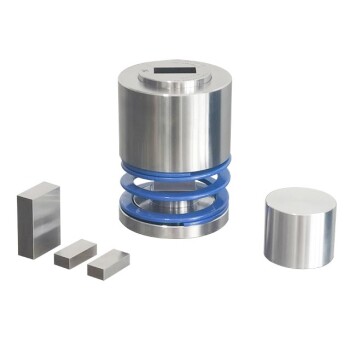
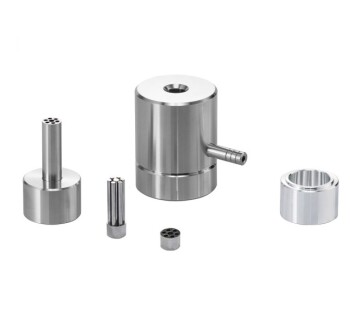
Laboratory high-pressure reactors establish a specialized subcritical water environment. Specifically, they maintain a constant temperature of approximately 180°C within a sealed vessel, which generates autogenous high pressure (typically 2–10 MPa). This environment forces waste mushroom substrates to undergo thermochemical conversion in a liquid phase, eliminating the need for pre-drying.
The reactor's closed system prevents water evaporation, creating a "pressure cooker" effect where water acts as both a solvent and a catalyst. This facilitates deep chemical restructuring—dehydration, decarboxylation, and polymerization—transforming loose biomass into dense, porous biochar with superior adsorption capabilities.
The Mechanics of the Hydrothermal Environment
Maintaining Subcritical Conditions
The primary function of the reactor is to hold the temperature steady at 180°C while preventing the water from boiling away. By sealing the vessel, the reactor harnesses the steam to create autogenous (self-generated) pressure ranging from 2 to 10 MPa. This keeps the water in a liquid, "subcritical" state, which is essential for penetrating the biomass structure.
Driving Essential Chemical Reactions
Under these specific thermal and baric conditions, the mushroom substrate undergoes three critical reactions: dehydration, decarboxylation, and polymerization (or polycondensation). These reactions strip away oxygen and hydrogen, effectively carbonizing the material. The high-pressure environment accelerates this degradation, processing the biomass more efficiently than open-air methods.
Enhancing Biochar Surface Properties
The reactor's conditions directly influence the physical quality of the resulting biochar. The process fosters the formation of rich aromatic groups and oxygen-centered functional groups on the material's surface. Furthermore, the pressure promotes the development of a complex microporous structure, which is critical for chemical interactions.
Optimizing for Contaminant Removal
Because of the enhanced porosity and surface chemistry developed in the reactor, the resulting biochar exhibits a significantly higher capacity for adsorbing heavy metal ions, such as cadmium. The biochar also possesses a lower combustion activation energy compared to the raw substrate, making it a more reactive and effective resource.
Understanding the Equipment Implications
Structural Requirements
Operating at pressures up to 10 MPa requires the reactor to be constructed from robust materials capable of withstanding significant saturated steam pressure. Unlike simple drying ovens, these reactors must be rated for high-pressure safety to maintain the closed environment without failure.
The Wet Biomass Advantage
A distinct operational advantage of this reactor type is its ability to process high-moisture feedstocks. Because the reaction medium is water, the reactor can accept wet mushroom substrate directly. This removes the energy-intensive pre-drying step required by traditional dry pyrolysis methods, lowering overall energy consumption.
Making the Right Choice for Your Goal
- If your primary focus is heavy metal remediation: Prioritize maintaining the pressure seal to ensure the development of the microporous structures and aromatic groups required for high cadmium adsorption.
- If your primary focus is energy efficiency: Leverage the reactor's ability to process moist biomass directly, skipping the drying stage to reduce the overall energy footprint of your conversion process.
- If your primary focus is fuel production: Note that the dehydration and decarboxylation reactions in this reactor significantly lower the combustion activation energy, creating a more efficient solid fuel.
The high-pressure reactor is not just a heating vessel; it is a chemical engineering tool that turns water into a powerful catalyst for upgrading waste into value.
Summary Table:
| Parameter | Typical Value / Condition | Impact on Hydrothermal Carbonization |
|---|---|---|
| Temperature | ~180°C | Maintains subcritical water state and drives thermochemical conversion. |
| Pressure | 2–10 MPa | Autogenous pressure prevents evaporation and forces liquid-phase penetration. |
| Medium | Subcritical Water | Acts as both a solvent and a catalyst for dehydration and polymerization. |
| Feedstock | Wet Biomass | Eliminates energy-intensive pre-drying stages, increasing efficiency. |
| Reaction Type | Closed System | Ensures deep chemical restructuring into dense, microporous biochar. |
Transform Your Research with KINTEK’s High-Pressure Engineering
Are you looking to optimize hydrothermal carbonization (HTC) or biomass conversion? KINTEK specializes in providing the precision-engineered equipment necessary for demanding laboratory environments. Our high-temperature high-pressure reactors and autoclaves are specifically designed to maintain the stable subcritical conditions required to produce superior biochar and advanced materials.
Why Choose KINTEK?
- Robust Performance: Our reactors handle autogenous pressures up to 10 MPa and beyond with industry-leading safety standards.
- Comprehensive Lab Solutions: From crushing and milling systems to high-temperature furnaces (muffle, vacuum, tube) and cooling solutions (ULT freezers), we cover your entire workflow.
- Material Expertise: We provide high-quality PTFE products, ceramics, and crucibles to ensure your reactions remain contaminant-free.
Enhance your lab’s efficiency and achieve deeper chemical insights today. Contact KINTEK experts for a tailored equipment consultation!
References
- Edyta Słupek, Jacek Gębicki. New generation of green sorbents for desulfurization of biogas streams. DOI: 10.21175/rad.abstr.book.2023.17.3
This article is also based on technical information from Kintek Solution Knowledge Base .
Related Products
- Customizable Laboratory High Temperature High Pressure Reactors for Diverse Scientific Applications
- Stainless High Pressure Autoclave Reactor Laboratory Pressure Reactor
- High Pressure Laboratory Autoclave Reactor for Hydrothermal Synthesis
- Mini SS High Pressure Autoclave Reactor for Laboratory Use
- Customizable High Pressure Reactors for Advanced Scientific and Industrial Applications
People Also Ask
- How do high-pressure and high-temperature reactors ensure the effective treatment of lignocellulosic wastewater in WAO?
- What equipment is required for high-pressure high-temperature reactions? Master Extreme Chemistry Safely
- How do you control high pressure in a reactor? A Guide to Safe & Stable Operation
- How does initial oxygen pressure affect the wet oxidation of pharmaceutical sludge? Master Your Oxidation Depth
- Why is argon better than nitrogen for inert atmosphere? Ensure Absolute Reactivity & Stability