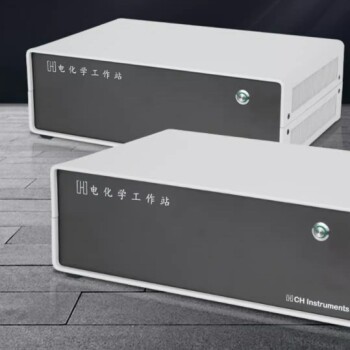
A battery testing system provides the foundational framework for quantifying how hybrid electrode materials perform under real-world electrochemical stress. It serves the primary function of executing galvanostatic charge-discharge (GCD) cycles, allowing researchers to measure specific capacity, evaluate Coulombic efficiency, and track long-term cycling stability with high precision.
A battery testing system is the essential bridge between material synthesis and performance verification, providing the automated control and data acquisition necessary to quantify capacity, rate capability, and the structural durability of hybrid electrodes.
Quantifying Energy Storage Performance
Precise Galvanostatic Control
The system applies constant current densities—often ranging from 100 to 1000 mA/g—to the assembled battery cell. This precise control allows for the measurement of the material’s specific capacity, ensuring that comparisons between different hybrid formulations are accurate and reproducible.
Voltage Profile Monitoring
By recording real-time voltage vs. capacity curves, the system identifies the unique electrochemical signatures of the electrode. For hybrid materials, this is critical for distinguishing between different discharge platforms, such as the high-potential transitions in multi-mechanism systems like wood-derived hybrid batteries.
Coulombic Efficiency Assessment
The system automatically calculates the ratio of discharge capacity to charge capacity, known as Coulombic efficiency. This metric is vital for understanding the reversibility of the ion insertion process and identifying energy losses during the initial cycles (Initial Coulombic Efficiency).
Evaluating Durability and Kinetics
Long-term Cycle Life Analysis
To verify the impact of process improvements, the system performs hundreds or thousands of continuous cycles. It records capacity retention and decay curves, providing a quantitative look at how the hybrid electrode material resists structural degradation over time.
Rate Capability and Power Density
By varying the current density across different stages, the system evaluates rate performance. This reveals how well the hybrid material can handle rapid charging and discharging, which is essential for applications requiring high power output.
Polarization and Resistance Tracking
Modern testing systems monitor polarization characteristics and voltage shifts during operation. These data points help researchers understand the internal resistance and kinetic limitations of new electrode designs, such as those involving fluorine doping or carbon nanotube integration.
Understanding the Trade-offs
Accuracy vs. Testing Throughput
High-precision systems offer superior resolution for detecting subtle voltage plateaus but may require longer sampling intervals. Researchers must balance the need for high-fidelity data with the practical requirement of testing multiple material variants simultaneously.
Simulation vs. Real-world Complexity
While these systems excel at constant current/voltage modes, they may not always perfectly simulate the dynamic load profiles found in complex electronic devices. Standardized lab tests provide a baseline but may overlook environmental variables like temperature fluctuations unless integrated with external climate chambers.
Making the Right Choice for Your Goal
How to Apply This to Your Project
- If your primary focus is material screening: Prioritize a system with high channel density to run multiple current density variations (100–1000 mA/g) in parallel.
- If your primary focus is mechanism validation: Select a high-precision system capable of resolving distinct voltage platforms to identify dual electrochemical reaction mechanisms.
- If your primary focus is commercial viability: Focus on long-term cycling stability modules that can automate the calculation of capacity retention over thousands of cycles.
By leveraging the precise control and automated data logging of a battery testing system, you can transform raw material potential into validated performance benchmarks.
Summary Table:
| Core Function | Key Metrics Measured | Research Significance |
|---|---|---|
| Galvanostatic Control | Specific Capacity (mAh/g) | Establishing baseline energy storage potential |
| Cycle Life Analysis | Capacity Retention (%) | Verifying long-term structural durability |
| Voltage Profiling | Electrochemical Signatures | Identifying complex dual reaction mechanisms |
| Rate Capability | Power Density | Evaluating performance under rapid charging |
| Efficiency Tracking | Coulombic Efficiency | Quantifying reversibility and energy loss |
Accelerate Your Energy Storage Breakthroughs with KINTEK
Precision is the foundation of innovation. At KINTEK, we specialize in providing high-performance battery research tools and consumables designed to meet the rigorous demands of hybrid material development. From our advanced CVD and atmosphere furnaces for material synthesis to specialized electrolytic cells and electrodes, we offer the high-fidelity equipment necessary to transform raw potential into validated benchmarks.
Our comprehensive portfolio also includes hydraulic presses for precise pellet preparation, high-temperature high-pressure reactors, and reliable cooling solutions to ensure your laboratory environment remains stable.
Ready to elevate your testing accuracy and research throughput? Contact us today to consult with our experts on the ideal equipment solutions for your energy storage projects.
References
- Boris V. Malozyomov, А И Карлина. Improvement of Hybrid Electrode Material Synthesis for Energy Accumulators Based on Carbon Nanotubes and Porous Structures. DOI: 10.3390/mi14071288
This article is also based on technical information from Kintek Solution Knowledge Base .
Related Products
- Customizable Swagelok Type Test Cells for Advanced Battery Research Electrochemical Analysis
- Battery Lab Equipment 304 Stainless Steel Strip Foil 20um Thick for Battery Test
- Button Battery Case for Battery Lab Applications
- Cylindrical Battery Steel Case for Battery Lab
- Laboratory Hydraulic Press Lab Pellet Press for Button Battery
People Also Ask
- How does a standardized electrochemical test cell assist in MOx/CNTf electrode screening? Optimize Material Ratios
- Why is a dedicated electrochemical test cell necessary for carbon steel? Ensure Precise Geothermal Corrosion Data
- What is the difference between a voltaic cell and an electrochemical cell? Understand the Two Types of Energy Conversion
- How do the electrochemical cell and three-electrode testing system collaborate? Optimize Zinc Anode Deposition Control
- Why must the electrochemical cell be continuously purged with nitrogen? Ensure Precision in Ni-Cr Corrosion Tests