Polytetrafluoroethylene (PTFE) acts as a high-performance binder that mechanically anchors carbon cryogel particles and conductive additives to the current collector through a process of fibrillation. This creates a robust, flexible, and three-dimensional network that prevents the active material from shedding or peeling during the physical stresses of electrochemical cycling. By maintaining this structural framework, PTFE ensures the electrode retains its integrity and electrical contact over thousands of charge-discharge cycles.
PTFE is the structural backbone of the electrode slurry, transforming loose carbon powders into a cohesive, flexible film that can withstand the rigors of long-term battery or supercapacitor operation without degrading chemically or mechanically.
The Mechanical Role of PTFE in Electrode slurries
Formation of a Fibrous Network
When subjected to shear forces—such as during the rolling or mixing process—PTFE particles undergo fibrillation. This process stretches the polymer into a network of fine, elongated fibers that physically entangle the carbon cryogel and conductive agents like acetylene black.
This fibrous architecture acts like a microscopic "web," holding the active material in place without completely covering the particles. This ensures that the essential microporous structure of the carbon cryogel remains accessible for ion transport and energy storage.
Adhesion to the Current Collector
The primary function of the binder is to securely fix the slurry to the substrate, typically nickel foam or metal foil. PTFE’s superior adhesion properties prevent the "peeling" effect that often occurs when electrodes expand and contract during ion intercalation or surface adsorption.
Enabling Self-Supporting Structures
Beyond simple adhesion, PTFE allows for the creation of self-supporting electrode sheets. Because the fibrillated network is mechanically robust, the material can be processed into flexible films that maintain their shape even when immersed in liquid electrolytes or subjected to high pressure.
Chemical and Environmental Stability
Resistance to Harsh Electrolytes
PTFE is prized for its extreme chemical inertness. It remains stable in highly aggressive environments, such as 6 mol/L KOH (potassium hydroxide) solutions used in alkaline supercapacitors, where other binders might dissolve or lose their adhesive properties.
Thermal and Electrochemical Durability
The polymer’s high thermal stability ensures that the electrode remains functional across a wide range of operating temperatures. Furthermore, its wide electrochemical window means it does not participate in unwanted side reactions, preserving the purity of the charge-discharge process.
Hydrophobic Property Management
PTFE is naturally hydrophobic, which serves a dual purpose. In some applications, it prevents the liquid electrolyte from "flooding" the electrode pores, maintaining a stable three-phase interface where gaseous reactants, liquid electrolytes, and solid catalysts can interact efficiently.
Understanding the Trade-offs
Electrical Insulation Concerns
PTFE is a non-conductive polymer. If the concentration of the binder is too high, it can increase the internal resistance of the electrode by insulating the carbon particles from each other or the current collector, potentially reducing power density.
Hydrophobicity and Wetting
While its water-repelling nature prevents flooding, it can also make it difficult for aqueous electrolytes to "wet" the internal surfaces of the carbon cryogel. This often necessitates the use of a surfactant or specific mixing ratios to ensure the electrolyte can still access the active surface area.
Mechanical Brittleness at High Loads
If the PTFE content is too low, the electrode becomes prone to pulverization (cracking into powder) during cycling. Finding the precise balance between mechanical stability and electrochemical performance is the primary challenge in slurry formulation.
Applying PTFE Strategy to Your Project
When incorporating PTFE into your carbon cryogel slurry, your specific goal determines the optimal concentration and processing method.
- If your primary focus is long-term cycle life: Prioritize a slightly higher PTFE content (5-10%) and utilize shear-mixing to maximize fibrillation, which prevents the active material from shedding over time.
- If your primary focus is high power density: Keep the binder concentration as low as possible (typically 3-5%) to minimize ohmic resistance and ensure the carbon cryogel's pores remain fully accessible.
- If your primary focus is gas diffusion electrodes: Utilize the hydrophobic nature of PTFE to create balanced channels, ensuring gaseous reactants can penetrate the electrode without the structure becoming "waterlogged" by the electrolyte.
Ultimately, PTFE is the essential "glue" that bridges the gap between high-surface-area carbon powders and a functioning, durable electrochemical device.
Summary Table:
| Feature | Function in Slurry | Key Benefit |
|---|---|---|
| Fibrillation | Creates a 3D fibrous network through shear forces | Prevents active material shedding and peeling |
| Chemical Inertness | Resists aggressive electrolytes (e.g., 6M KOH) | Long-term stability in harsh environments |
| Adhesion | Anchors particles to current collectors (Nickel/Foil) | Maintains electrical contact during cycling |
| Hydrophobicity | Manages liquid penetration and gas diffusion | Prevents electrode flooding in gas-diffusion cells |
| Thermal Stability | Withstands wide temperature ranges | Ensures durability under diverse operating conditions |
Elevate Your Battery Research with KINTEK Precision
High-performance electrochemical devices start with high-quality materials and reliable equipment. KINTEK specializes in supporting researchers and manufacturers with a comprehensive range of laboratory solutions tailored for advanced electrode fabrication.
Whether you are optimizing carbon cryogel slurries or developing next-generation supercapacitors, we offer:
- Essential Consumables: High-purity PTFE products, ceramics, and crucibles.
- Electrode Preparation: Advanced hydraulic presses (pellet, hot, isostatic) and crushing/milling systems for perfect slurry consistency.
- Thermal Processing: A full suite of high-temperature furnaces (muffle, tube, vacuum, CVD) for material synthesis.
- Testing & Research: Specialized battery research tools, electrolytic cells, and cooling solutions.
Ready to achieve superior structural integrity and power density in your designs? Contact KINTEK today to discuss your specific requirements and let our experts help you find the perfect equipment for your laboratory.
References
- Rui Lou, Xiao Zhang. Metal–Organic-Framework-Mediated Fast Self-Assembly 3D Interconnected Lignin-Based Cryogels in Deep Eutectic Solvent for Supercapacitor Applications. DOI: 10.3390/polym15081824
This article is also based on technical information from Kintek Solution Knowledge Base .
Related Products
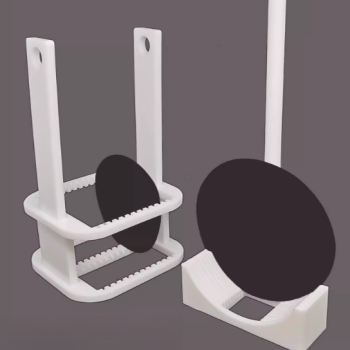
- Customizable PTFE Wafer Carriers for Semiconductor and Lab Applications
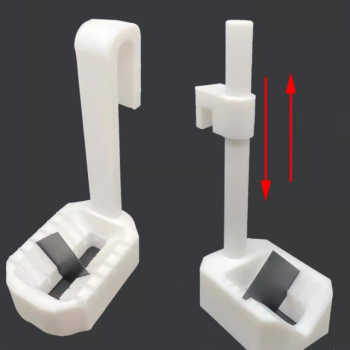
- Custom PTFE Wafer Holders for Lab and Semiconductor Processing
- Conductive Carbon Cloth Carbon Paper Carbon Felt for Electrodes and Batteries
- PTFE Electrolytic Cell Electrochemical Cell Corrosion-Resistant Sealed and Non-Sealed
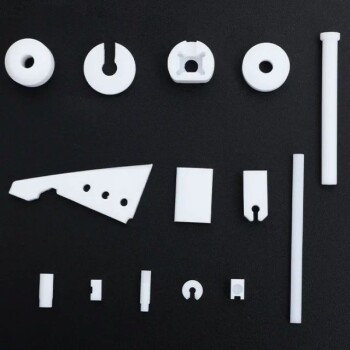
- Custom PTFE Teflon Parts Manufacturer for Non-Standard Insulator Customization
People Also Ask
- How is PTFE utilized for insulation in Alloy 22 corrosion setups? Ensure Signal Purity & Accuracy
- What are the specific applications of PTFE in micro-batch slug flow systems? Enhance Your Microfluidic Reaction Purity
- Is PTFE corrosion resistant? Discover the Ultimate Chemical Resistance for Your Lab
- What is the function of a customized PTFE cap in IL-TEM? Bridge the Gap Between Microscopy and Electrochemistry
- Why are PTFE wafer fixtures used after diamond nucleation? Ensure Purity and Protect Fragile Nucleation Layers