The necessity of a Polytetrafluoroethylene (PTFE) liner in tungsten bronze synthesis is dictated by the aggressive nature of the chemical environment required for the reaction. During the hydrothermal synthesis of $H_xWO_3$ (HWO), $Na_xWO_3$ (NaWO), and $K_xWO_3$ (KWO), a PTFE liner acts as a chemically inert barrier that isolates corrosive reagents from the autoclave's metal shell. This prevents metal ion leaching that would compromise the optical purity of the tungsten bronzes and protects the high-pressure vessel from structural degradation.
The PTFE liner serves as a critical interface that ensures both the chemical purity of the synthesized $A_xWO_3$ products and the physical safety of the laboratory equipment. By providing a stable, non-reactive environment under high heat and pressure, it allows for the precise crystallization of tungsten bronzes without interference from metallic impurities.
Ensuring Chemical Integrity and Purity
Resisting Aggressive Reducing Agents
The synthesis of tungsten bronzes frequently utilizes hydrazine hydrate and tungstic acid, which act as potent reducing and corrosive agents. PTFE possesses exceptional chemical inertness, allowing it to withstand these substances at high temperatures without undergoing chemical breakdown or side reactions.
Preventing Metal Ion Contamination
If the reaction medium were in direct contact with the stainless steel shell of the autoclave, metal ions such as iron, chromium, and nickel would leach into the solution. These impurities would integrate into the $A_xWO_3$ crystal lattice, severely degrading the optical purity and functional performance of the tungsten bronze products.
Maintaining Crystalline Structural Integrity
The hydrothermal process relies on a controlled environment to promote the proper nucleation of precursors. The PTFE liner ensures that the chemical potential of the solution remains focused on the growth of the intended tungsten bronze framework rather than reacting with the vessel walls.
Equipment Protection and Operational Safety
Mitigating High-Pressure Corrosion
Hydrothermal synthesis occurs under autogenous pressure at elevated temperatures, often reaching 200°C. In this pressurized state, acidic or reducing environments become significantly more destructive to the structural integrity of the autoclave's metal exterior.
Thermal Stability under Stress
PTFE remains thermally stable and maintains its protective properties throughout the duration of the hydrothermal reaction. This stability prevents the "bypass" of corrosive liquids, ensuring the metal shell remains shielded from the high-concentration precursor solutions.
Preventing Vessel Degradation
Repeated exposure to corrosive reagents would cause pitting and thinning of the autoclave's metal walls. The PTFE liner serves as a replaceable sacrificial layer that preserves the expensive high-pressure vessel, extending its operational lifespan and preventing catastrophic pressure failure.
Understanding the Trade-offs and Limitations
Temperature Constraints
While PTFE is highly inert, it has a definitive thermal ceiling, typically around 220°C to 250°C. Exceeding these temperatures can cause the liner to soften, deform, or release hazardous fluorinated vapors, which compromises the seal and safety of the autoclave.
Physical Deformation (Creep)
PTFE is a relatively soft polymer compared to the stainless steel that houses it. Under the intense pressure of hydrothermal synthesis, the liner may experience mechanical creep, where it slowly changes shape over time, potentially making it difficult to remove or seat properly.
Heat Transfer Resistance
PTFE is an effective thermal insulator, which means it can slow the rate at which the internal reaction mixture reaches the target temperature. Researchers must account for this "thermal lag" when timing their synthesis cycles to ensure the precursors have spent sufficient time at the required energy level.
How to Apply This to Your Synthesis Project
Best Practices for Hydrothermal Processes
- If your primary focus is maximum product purity: Always inspect the interior of the PTFE liner for scratches, stains, or residual buildup from previous experiments that could seed impurities.
- If your primary focus is equipment longevity: Ensure the liner is perfectly dry on the outside before insertion to prevent trapped moisture from corroding the stainless steel shell from the inside out.
- If your primary focus is laboratory safety: Strictly adhere to the 70%–80% maximum fill volume for the PTFE liner to allow sufficient headspace for liquid expansion and pressure stabilization.
The PTFE liner is the essential component that bridges the gap between aggressive chemical synthesis and the mechanical requirements of high-pressure hydrothermal research.
Summary Table:
| Feature | Role in Tungsten Bronze Synthesis | Key Constraints |
|---|---|---|
| Chemical Inertness | Prevents metal ion leaching and reagent corrosion | Max temperature limit: 220°C - 250°C |
| Corrosion Shield | Protects the autoclave's metal shell from degradation | Susceptible to mechanical creep under pressure |
| Purity Control | Ensures precise crystallization of $A_xWO_3$ | Thermal lag requires adjusted cycle timing |
Secure Your Synthesis Success with KINTEK
Achieve uncompromising results in your hydrothermal research with KINTEK’s precision-engineered equipment. From high-temperature high-pressure reactors and autoclaves to high-quality PTFE liners and ceramics, we provide the tools necessary to prevent contamination and ensure laboratory safety.
Whether you are synthesizing advanced tungsten bronzes or exploring new material frameworks, KINTEK offers a comprehensive range of crushing and milling systems, vacuum furnaces, and PTFE consumables tailored to your specific needs.
Maximize your lab's efficiency and equipment lifespan—contact KINTEK today for expert guidance and premium laboratory solutions!
References
- Zi-Xiang Liu, Jin‐Ku Liu. Rapid Synthesis of A<sub><i>x</i></sub>WO<sub>3</sub> (A = H, Na, K) Tungsten Bronze Materials with Strong Near‐Infrared Absorption and Enhanced Photoelectric Anticorrosion Properties. DOI: 10.1002/adem.202301003
This article is also based on technical information from Kintek Solution Knowledge Base .
Related Products
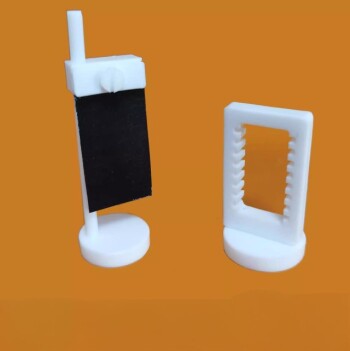
- Custom PTFE Teflon Parts Manufacturer for Hydrothermal Synthesis Reactor Polytetrafluoroethylene Carbon Paper and Carbon Cloth Nano-growth
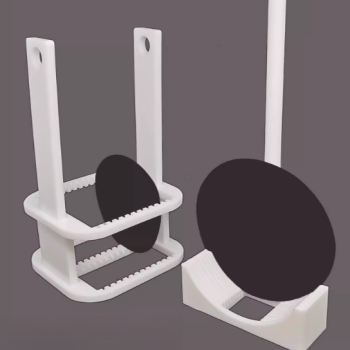
- Customizable PTFE Wafer Carriers for Semiconductor and Lab Applications
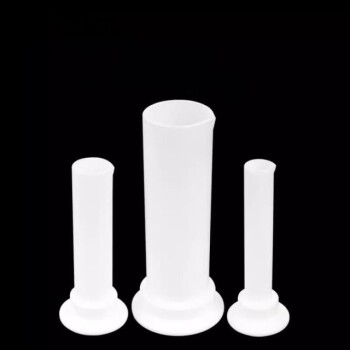
- Custom PTFE Teflon Parts Manufacturer for PTFE Measuring Cylinder 10/50/100ml
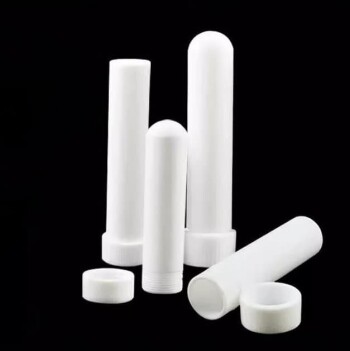
- Custom PTFE Teflon Parts Manufacturer for Centrifuge Tubes
- Custom PTFE Teflon Parts Manufacturer for Non-Standard Insulator Customization
People Also Ask
- What is the function of a PTFE reactor in MXene etching? Ensure Safe, High-Purity MAX Phase Conversion
- Why is a PTFE reactor required for titanium-based nano-ceramic coating solutions? Ensure Chemical Inertness & Purity
- Why must a Polytetrafluoroethylene (PTFE) reactor be used for Ti3C2TX MXene etching? Ensure Safety and Purity
- Why are PTFE reactors preferred for silver phosphate glass testing? Ensure Purity and Kinetic Accuracy
- What are the advantages of using polytetrafluoroethylene (PTFE) liners in hydrothermal synthesis reactors? High Purity