PTFE (polytetrafluoroethylene) wire is the critical standard for specimen suspension in biodiesel corrosion testing due to its exceptional chemical inertness and electrical insulating properties.
Its primary function is to eliminate external variables from the experiment. By using PTFE, researchers ensure that the suspension material does not react with the biodiesel-diesel fuel blends or create an electrical connection with the metal specimen that could skew results.
Core Takeaway The selection of PTFE ensures experimental integrity by totally isolating the metal specimen from the testing apparatus. It guarantees that any observed corrosion is exclusively the result of the interaction between the fuel and the metal, rather than electrochemical artifacts or chemical contamination.
The Principles of Experimental Isolation
To understand why PTFE is required, you must understand the two main failure modes in corrosion testing: chemical contamination and galvanic interference.
Eliminating Chemical Interference
Biodiesel and diesel blends are complex chemical environments.
If the wire used to hang the specimen reacts with the fuel, it introduces new chemical compounds into the solution.
PTFE is chemically inert. It remains stable even when submerged in reactive fuel blends, preventing the leaching of contaminants that could accelerate or inhibit corrosion rates artificially.
Preventing Electrochemical (Galvanic) Corrosion
The most critical role of PTFE is its function as an electrical insulator.
When two different metals touch in the presence of an electrolyte (which fuel can become due to oxidation or water content), a battery is formed.
This leads to galvanic corrosion, where the wire might accelerate the corrosion of the specimen (or vice versa). PTFE breaks this circuit completely, ensuring the metal specimen reacts only with the fluid, not the hanger.
Durability in Long-Duration Testing
Static immersion tests are not brief experiments; they are endurance trials.
Withstanding Extended Exposure
Corrosion protocols often run for extensive periods, specifically ranging from 7,200 to 14,400 hours.
Many standard materials would degrade, swell, or become brittle over this timeframe.
PTFE retains its structural and chemical integrity throughout these long durations, ensuring the specimen remains suspended and the test environment remains stable from start to finish.
Understanding the Trade-offs
While PTFE is the superior choice for chemical compatibility, it is not a structural metal.
Mechanical Strength Limitations
PTFE wire lacks the tensile strength of metallic wires.
For extremely heavy specimens, thin PTFE wire may stretch or break over thousands of hours.
Susceptibility to Creep
Under constant load, PTFE can experience "cold flow" or creep.
You must ensure the gauge of the wire selected is sufficient to hold the weight of the metal coupon without elongating to the point of failure.
Ensuring Accurate Corrosion Data
The choice of suspension wire is as critical as the choice of the fuel itself.
- If your primary focus is data purity: Use PTFE to eliminate all risks of galvanic corrosion and chemical leaching.
- If your primary focus is heavy specimen testing: Verify the tensile rating of the PTFE wire or use a thicker gauge to prevent mechanical failure during long immersions.
By isolating variables, PTFE transforms a simple immersion test into a rigorous scientific evaluation of fuel compatibility.
Summary Table:
| Feature | Benefit in Biodiesel Corrosion Testing | Importance Rating |
|---|---|---|
| Chemical Inertness | Prevents leaching and contamination of fuel blends | High |
| Electrical Insulation | Eliminates galvanic corrosion and electrochemical artifacts | Critical |
| Thermal Stability | Maintains integrity during long-duration (7,200h+) immersion | High |
| Material Purity | Ensures corrosion data is exclusive to the metal-fuel interaction | Critical |
Maximize Your Lab's Experimental Integrity with KINTEK
Ensure precise, repeatable results in your material compatibility studies. KINTEK specializes in high-quality laboratory equipment and consumables designed for the most demanding research environments.
Whether you need specialized PTFE products and crucibles for corrosion testing, high-temperature reactors for fuel analysis, or precision crushing and milling systems, our comprehensive portfolio supports every stage of your workflow. We empower researchers with reliable tools—from battery research consumables to high-pressure autoclaves—to eliminate variables and focus on data.
Ready to upgrade your lab's precision? Contact KINTEK today to consult with our experts on the right consumables and equipment for your specific application.
References
- Jassinnee Milano, M. Mofijur. Experimental Study of the Corrosiveness of Ternary Blends of Biodiesel Fuel. DOI: 10.3389/fenrg.2021.778801
This article is also based on technical information from Kintek Solution Knowledge Base .
Related Products
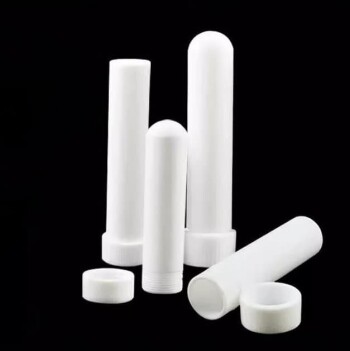
- Custom PTFE Teflon Parts Manufacturer for Centrifuge Tubes
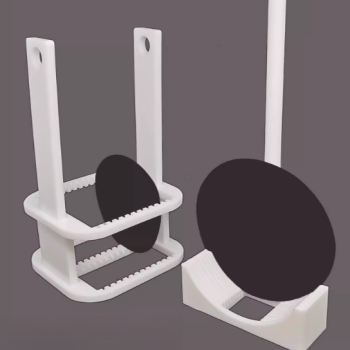
- Customizable PTFE Wafer Carriers for Semiconductor and Lab Applications
- Custom PTFE Teflon Parts Manufacturer for PTFE Bottle Oil Fume Sampling Tube
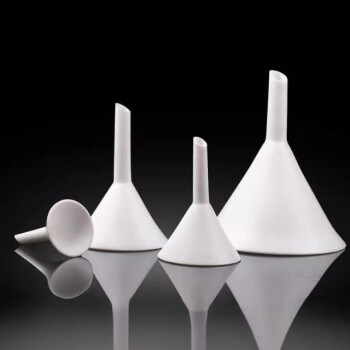
- Custom PTFE Teflon Parts Manufacturer for PTFE Buchner Funnel and Triangular Funnel
- Custom PTFE Teflon Parts Manufacturer for Non-Standard Insulator Customization
People Also Ask
- Why is slender PTFE tubing necessary for flow control in multi-channel catalyst aging? Ensure Equal Gas Distribution
- Is PTFE corrosion resistant? Discover the Ultimate Chemical Resistance for Your Lab
- What are the specific applications of PTFE in micro-batch slug flow systems? Enhance Your Microfluidic Reaction Purity
- How is PTFE utilized for insulation in Alloy 22 corrosion setups? Ensure Signal Purity & Accuracy
- What is the significance of using PTFE gas tubing for HCl? Ensure Pure, Corrosion-Free Salt Formation