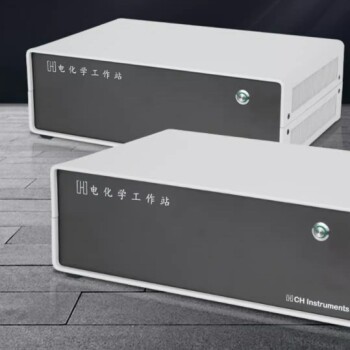
The primary purpose of using a battery testing system for GDC tests on CoSe2@CNF/CNT-S is to quantify the material's specific capacity, voltage platforms, and cycle life under high-precision current control. This process evaluates how effectively the CoSe2 catalytic sites and the carbon framework maintain electrochemical stability and mitigate polarization during actual charge-discharge cycles.
GDC testing serves as the definitive performance benchmark, translating structural innovations like CoSe2 catalytic sites into measurable data. It provides the empirical evidence needed to verify if a material can withstand the chemical and mechanical rigors of long-term energy storage.
Quantifying Electrochemical Performance
Measuring Specific Capacity and Rate Capability
The battery testing system applies various current densities (from 0.1 C up to 30 C) to determine how much charge the CoSe2@CNF/CNT-S can hold. This reveals the rate capability, which is essential for understanding if the material can support fast-charging applications without significant loss of function.
Monitoring Voltage Platforms and Polarization
By recording the voltage curves, the system identifies the voltage platform, which indicates the stability of the electrochemical reaction. It also measures the potential difference ($\Delta E$), a direct metric for the degree of polarization, showing how efficiently ions move through the material.
Determining Coulombic Efficiency
The system automatically tracks the ratio of discharge capacity to charge capacity, known as Coulombic efficiency. This is a critical indicator of the reversibility of the chemical reactions and the overall health of the battery cell over time.
Evaluating Structural and Catalytic Stability
Assessing CoSe2 Catalytic Effectiveness
GDC tests are the primary method for evaluating how CoSe2 catalytic sites maintain electrochemical stability. The testing system monitors whether these sites effectively facilitate reactions and suppress the "shuttle effect" common in sulfur-based cathodes.
Long-Term Cycling and Structural Integrity
By running continuous cycles (often exceeding 1,400 cycles), the system tracks capacity retention. This data verifies if the porous carbon host is successfully fixing selenium and inhibiting structural collapse or excessive SEI film formation.
Quantifying Active Material Utilization
The multi-channel system allows researchers to see how the bead-like nanofiber structure improves the utilization of active materials. It provides a clear picture of how much of the theoretical capacity is actually being accessed during operation.
Understanding the Trade-offs and Pitfalls
Idealized vs. Practical Environments
GDC tests are typically performed on button cells (coin cells) under optimized laboratory conditions. While this provides a baseline, these results may not account for the thermal management and mechanical pressures present in large-scale industrial battery packs.
Masking Complex Degradation
High capacity retention in a GDC test does not always mean the material is unchanged. The test can sometimes mask underlying issues like electrolyte depletion or subtle catalyst poisoning that may only become apparent at extreme scales or temperatures.
Applying GDC Data to Your Development Goals
How to Use This Information for Your Project
Once the GDC data is collected from the battery testing system, it should be applied based on your specific performance targets.
- If your primary focus is high-power delivery: Prioritize the rate capability data at 5C to 30C to ensure the CoSe2 catalyst can handle rapid electron transfer.
- If your primary focus is long-term reliability: Focus on the capacity retention trends over 1,000+ cycles to verify the structural stability of the CNF/CNT framework.
- If your primary focus is energy efficiency: Analyze the potential difference ($\Delta E$) to minimize energy loss due to internal resistance and polarization.
High-precision GDC testing is the essential bridge that transforms material science theory into a validated, high-performance battery technology.
Summary Table:
| Test Metric | Insight Gained | Key Benefit for Development |
|---|---|---|
| Specific Capacity & Rate Capability | Material performance from 0.1C to 30C | Evaluates suitability for fast-charging |
| Voltage Platform & Polarization | Stability of reactions and ion movement | Minimizes energy loss and internal resistance |
| Coulombic Efficiency | Reversibility of chemical reactions | Tracks overall health and cycle stability |
| Capacity Retention | Performance over 1,400+ cycles | Verifies structural integrity of carbon host |
| Catalytic Effectiveness | Suppression of the "shuttle effect" | Confirms efficiency of CoSe2 catalytic sites |
Elevate Your Battery Research with KINTEK
Transform your material science theories into validated, high-performance technology with KINTEK’s precision laboratory solutions. Whether you are synthesizing advanced CoSe2@CNF/CNT-S composites using our high-temperature CVD, vacuum, or atmosphere furnaces, or conducting rigorous GDC analysis with our battery research tools, we provide the accuracy your data demands.
KINTEK specializes in a comprehensive range of equipment designed for the energy storage sector, including:
- High-Temperature Furnaces: Muffle, tube, and rotary systems for material synthesis.
- Sample Preparation: Crushing, milling, and hydraulic pellet presses for electrode fabrication.
- Advanced Reactors: High-pressure reactors and electrolytic cells for deep electrochemical study.
- Consumables: High-purity ceramics, crucibles, and PTFE products to ensure zero contamination.
Ready to achieve superior heat treatment and precise testing results? Contact KINTEK today to discover how our specialized equipment can streamline your path to the next battery breakthrough!
References
- Juan Ao, Xinghui Wang. CoSe2 nanoparticles-decorated carbon nanofibers as a hierarchical self-supported sulfur host for high-energy lithium-sulfur batteries. DOI: 10.1007/s40843-022-2462-x
This article is also based on technical information from Kintek Solution Knowledge Base .
Related Products
- Customizable Swagelok Type Test Cells for Advanced Battery Research Electrochemical Analysis
- Battery Lab Equipment 304 Stainless Steel Strip Foil 20um Thick for Battery Test
- Button Battery Case for Battery Lab Applications
- Cylindrical Battery Steel Case for Battery Lab
- Laboratory Hydraulic Press Lab Pellet Press for Button Battery
People Also Ask
- How does a standardized electrochemical test cell assist in MOx/CNTf electrode screening? Optimize Material Ratios
- Why is a dedicated electrochemical test cell necessary for carbon steel? Ensure Precise Geothermal Corrosion Data
- What is the difference between a voltaic cell and an electrochemical cell? Understand the Two Types of Energy Conversion
- How do the electrochemical cell and three-electrode testing system collaborate? Optimize Zinc Anode Deposition Control
- Why must the electrochemical cell be continuously purged with nitrogen? Ensure Precision in Ni-Cr Corrosion Tests