In the hydrothermal synthesis of rare earth oxycarbonates ($Ln_2O_2CO_3$), the stainless steel Teflon-lined autoclave acts as a pressurized chemical reactor. It provides the controlled, high-temperature, and high-pressure environment required to transform precursors into stable nanorod structures with uniform morphology.
This specialized vessel enables hydrothermal reactions to occur at constant temperatures and autogenous pressures, facilitating the precise crystallization of rare earth oxycarbonates while protecting the reactor from the corrosive effects of strong alkaline solutions.
The Role of the Controlled Reaction Environment
Generating Autogenous Pressure
The sealed nature of the autoclave allows the internal pressure to rise naturally as the solvent is heated beyond its boiling point. This autogenous pressure increases the solubility of precursors, promoting the deep reaction of rare earth nitrates and other reagents.
Facilitating Uniform Nanostructure Growth
By maintaining a constant temperature and high pressure, the autoclave ensures controlled nucleation and growth. This environment is essential for producing nanorod structures that exhibit high crystallinity and stable crystal phases.
Enabling High-Temperature Liquid-Phase Synthesis
The autoclave allows the synthesis to proceed in a liquid phase at temperatures that would otherwise cause the solvent to evaporate. This "sub-critical" environment is critical for the dissolution and recrystallization processes necessary to form complex oxycarbonate structures.
The Function of the Material Dual-Layer
Chemical Inertness of the Teflon Liner
The Teflon (PTFE) lining is critical because it offers extreme corrosion resistance, particularly in the strong alkaline conditions (often pH 12) required for rare earth synthesis. It serves as a sacrificial yet resilient barrier that prevents the reaction liquid from attacking the outer shell.
Prevention of Metallic Contamination
Because the Teflon liner is chemically inert, it prevents metal ion leaching from the stainless steel shell into the reaction mixture. This ensures the high purity of the rare earth oxycarbonate crystals and prevents unwanted catalytic side reactions.
Structural Integrity of the Stainless Steel Shell
While the Teflon provides chemical protection, the stainless steel outer shell provides the mechanical strength needed to withstand high internal pressures. This ensures experimental safety and maintains the structural integrity of the vessel during long heating cycles.
Understanding the Trade-offs and Limits
Thermal Limitations of PTFE
While Teflon is highly resistant to chemicals, it has a functional temperature ceiling, typically around 200°C to 240°C. Exceeding these temperatures can lead to the deformation of the liner, compromising the seal and potentially releasing toxic fumes.
The Criticality of the Filling Ratio
The volume of the precursor solution relative to the autoclave capacity—the filling ratio—is a vital safety factor. An overfilled autoclave can lead to an exponential pressure spike during heating, risking a mechanical failure of the stainless steel shell.
Cooling and Depressurization Rates
Rapid cooling can cause differential contraction between the Teflon liner and the stainless steel shell. This may lead to liner warping or the entrapment of reactants between the layers, which can contaminate future synthesis batches.
How to Apply This to Your Synthesis Project
Making the Right Choice for Your Goal
- If your primary focus is high-purity crystal formation: Ensure the Teflon liner is pristine and free of scratches to prevent the precursor solution from reaching the stainless steel wall.
- If your primary focus is morphology control (Nanorods): Maintain a strict constant temperature throughout the aging process to ensure uniform nucleation across the entire batch.
- If your primary focus is experimental safety: Never exceed a 70-80% filling ratio to allow sufficient headspace for the expansion of vapors under high heat.
By mastering the balance between autogenous pressure and chemical resistance, researchers can reliably synthesize rare earth oxycarbonates with the precise structural properties required for advanced material applications.
Summary Table:
| Component/Feature | Functional Role | Benefit to Synthesis |
|---|---|---|
| Teflon (PTFE) Liner | Chemical inertness & corrosion resistance | Prevents metal contamination and resists strong alkaline pH |
| Stainless Steel Shell | Mechanical strength & pressure vessel | Safely contains high autogenous pressures during heating |
| Autogenous Pressure | Increases precursor solubility | Facilitates deep reactions and uniform nanorod growth |
| Thermal Regulation | Controlled nucleation environment | Ensures high crystallinity and stable crystal phase formation |
Elevate Your Material Synthesis with KINTEK Precision
Achieve uncompromising purity and precise morphology in your rare earth research. KINTEK specializes in high-performance laboratory equipment, offering a premium range of high-temperature high-pressure reactors and autoclaves designed for the most demanding hydrothermal applications.
Beyond synthesis vessels, our comprehensive portfolio includes:
- Thermal Processing: Muffle, tube, vacuum, and atmosphere furnaces.
- Material Preparation: Crushing, milling, and hydraulic pellet presses.
- Lab Essentials: Electrolytic cells, cooling solutions, and high-purity ceramic crucibles.
Whether you are a researcher focused on nanostructure control or a lab manager requiring reliable scale-up tools, KINTEK provides the technical excellence and supply reliability you need.
Contact KINTEK today to find the perfect autoclave for your lab!
References
- Lulu Zhou, Chun‐Hua Yan. Promoting Molecular Exchange on Rare-Earth Oxycarbonate Surfaces to Catalyze the Water–Gas Shift Reaction. DOI: 10.1021/jacs.2c10326
This article is also based on technical information from Kintek Solution Knowledge Base .
Related Products
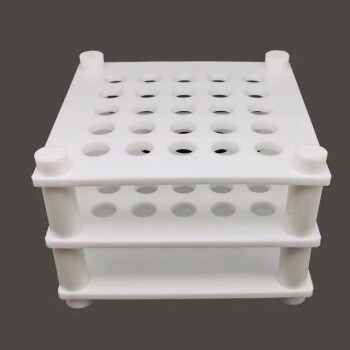
- Custom PTFE Teflon Parts Manufacturer for Centrifuge Tube Racks
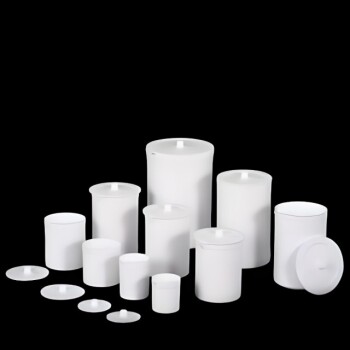
- Custom PTFE Teflon Parts Manufacturer PTFE Beaker and Lids
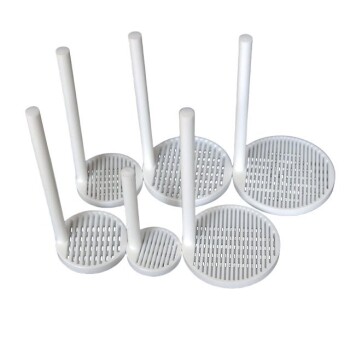
- Custom PTFE Teflon Parts Manufacturer for Cleaning Racks
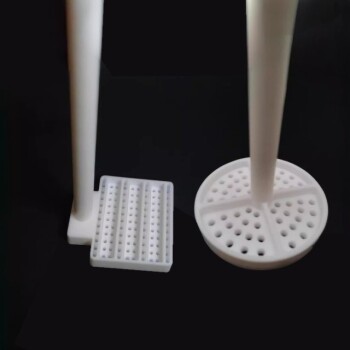
- Custom PTFE Teflon Parts Manufacturer Corrosion Resistant Cleaning Rack Flower Basket
- Custom Machined and Molded PTFE Teflon Parts Manufacturer for Laboratory ITO FTO Conductive Glass Cleaning Flower Basket
People Also Ask
- Why is slender PTFE tubing necessary for flow control in multi-channel catalyst aging? Ensure Equal Gas Distribution
- Why are PTFE containers required for PCT leaching tests? Ensure Chemical Inertness and Analytical Precision
- Why are PTFE containers necessary for selective HF etching of MAX phases? Ensure Safe & Pure MXene Synthesis
- What role do PTFE containers play in trace metal detection? Ensure Analytical Precision in Photocatalysis Studies
- Why is a PTFE container required for acid leaching of silicon nanosheets? Ensure High Purity and Safety