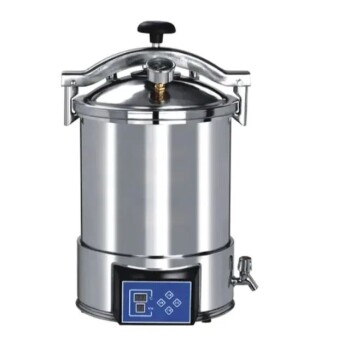
The Teflon-lined autoclave is the primary vessel for the hydrothermal and solvothermal synthesis of molybdenum disulfide (MoS2). It creates a sealed, high-pressure environment that allows chemical reactions to occur at temperatures far exceeding the boiling point of the solvents used, which is essential for transforming chemical precursors into organized nanostructures.
Core Takeaway: A Teflon-lined autoclave provides a pressurized, chemically inert environment that drives the conversion of precursors into specific MoS2 morphologies, such as nanobelts or nanoflowers, while ensuring high material purity.
Creating the Necessary Reaction Environment
Driving High-Pressure Phase Transformations
The autoclave enables hydrothermal synthesis by maintaining precursors under high pressure and temperature, typically between 120°C and 200°C. According to the primary reference, this environment is critical for converting ammonium molybdate into MoO3 nanobelts, which serve as the morphological foundation for MoS2.
Surpassing Solvent Boiling Points
By creating a sealed system, the autoclave allows solvents like water or dimethylformamide (DMF) to remain in a liquid or supercritical state above their normal boiling points. This subcritical condition increases the kinetic energy of the reactants, facilitating chemical reactions that would be impossible at atmospheric pressure.
Morphological Control and Self-Assembly
Facilitating Hierarchical Growth
The high-pressure environment is the core driving force for the self-assembly of MoS2 nanosheets into complex geometries. Supplementary data indicates that this pressure ensures the regularity and uniformity of structures like hollow hierarchical nanoflowers, which are essential for maximizing surface area.
Ensuring Uniform Nucleation
Under the stabilized heat and pressure of an autoclave, reactants achieve uniform nucleation and controlled growth. This allows MoS2 nanostructures to grow directly and evenly on various substrates, such as nickel foam or carbon aerogels, without clumping or irregular distribution.
The Role of the Teflon (PTFE) Liner
Maintaining Chemical Purity
The Polytetrafluoroethylene (PTFE) liner is used because of its exceptional chemical inertness. It prevents highly reactive precursors and solvents from corroding the outer stainless steel walls of the autoclave, which would otherwise introduce metallic impurities into the MoS2.
Enabling Easy Recovery
The non-stick nature of the Teflon lining facilitates the recovery of the synthesized nanostructures after the reaction is complete. It ensures that the MoS2/PVP precursors or other nanohybrid materials do not adhere permanently to the vessel walls, maintaining yield and consistency.
Understanding the Trade-offs
Temperature Limitations
While Teflon is highly inert, it has a functional temperature limit, typically around 250°C. Exceeding this limit can cause the liner to deform or release toxic vapors, which restricts the thermal range of the hydrothermal process compared to metallic or ceramic reactors.
The "Black Box" Constraint
Hydrothermal synthesis in an autoclave is essentially a "black box" process, meaning the reaction cannot be observed in real-time. Researchers must rely on precise pre-calculation of pressure and temperature, as adjustments cannot be made once the vessel is sealed and heated.
Applying This Technology to Your Synthesis
Making the Right Choice for Your Goal
- If your primary focus is high structural purity: Use a high-quality PTFE liner to ensure no metallic ions from the steel shell contaminate the MoS2 nanostructures during the long heating cycle.
- If your primary focus is morphological complexity (e.g., nanoflowers): Prioritize solvothermal methods within the autoclave using solvents like DMF to drive the self-assembly of nanosheets.
- If your primary focus is substrate integration: Utilize the autoclave's ability to facilitate in-situ growth, allowing MoS2 to bond directly to three-dimensional skeletons like nickel foam.
The Teflon-lined autoclave remains the indispensable tool for researchers seeking to master the delicate balance of pressure, temperature, and purity required for high-performance MoS2 nanostructures.
Summary Table:
| Feature/Role | Function in MoS2 Synthesis | Key Benefit for Research |
|---|---|---|
| High-Pressure Environment | Surpasses solvent boiling points (solvothermal) | Enables phase transformations and hierarchical growth |
| Teflon (PTFE) Liner | Provides chemical inertness and non-stick surface | Ensures high material purity and easy product recovery |
| Uniform Nucleation | Stabilizes heat and pressure distribution | Facilitates even growth on substrates like nickel foam |
| Morphological Control | Drives self-assembly of precursors | Produces specific shapes like nanoflowers or nanobelts |
Elevate Your Nanomaterial Synthesis with KINTEK
Precision in MoS2 nanostructure preparation requires equipment that can withstand rigorous hydrothermal conditions without compromising purity. KINTEK specializes in high-performance laboratory solutions, offering a comprehensive range of high-temperature high-pressure reactors and autoclaves designed for superior chemical resistance and thermal stability.
Whether you are focusing on hierarchical growth, uniform nucleation, or substrate integration, our portfolio—including PTFE liners, ceramic crucibles, and advanced heating systems—ensures your research achieves maximum consistency and yield.
Ready to optimize your lab's performance? Contact our technical experts today to discover how KINTEK’s specialized equipment can drive your next material science breakthrough!
References
- Marcela Herrera-Domínguez, Raúl García-Morales. Detection of Acetaminophen in Groundwater by Laccase-Based Amperometric Biosensors Using MoS2 Modified Carbon Paper Electrodes. DOI: 10.3390/s23104633
This article is also based on technical information from Kintek Solution Knowledge Base .
Related Products
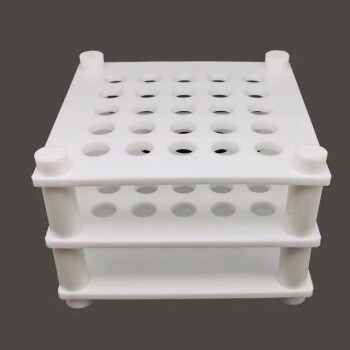
- Custom PTFE Teflon Parts Manufacturer for Centrifuge Tube Racks
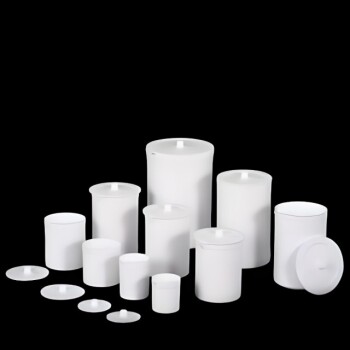
- Custom PTFE Teflon Parts Manufacturer PTFE Beaker and Lids
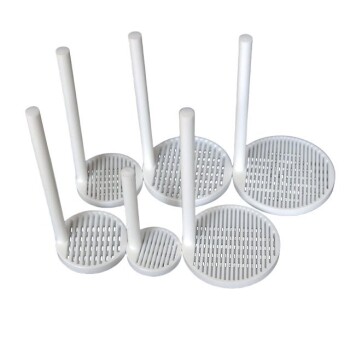
- Custom PTFE Teflon Parts Manufacturer for Cleaning Racks
- Custom PTFE Teflon Parts Manufacturer Corrosion Resistant Cleaning Rack Flower Basket
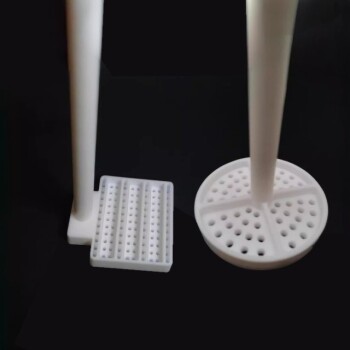
- Custom Machined and Molded PTFE Teflon Parts Manufacturer for Laboratory ITO FTO Conductive Glass Cleaning Flower Basket
People Also Ask
- Why is slender PTFE tubing necessary for flow control in multi-channel catalyst aging? Ensure Equal Gas Distribution
- Why are PTFE containers required for PCT leaching tests? Ensure Chemical Inertness and Analytical Precision
- Why are PTFE containers necessary for selective HF etching of MAX phases? Ensure Safe & Pure MXene Synthesis
- What role do PTFE containers play in trace metal detection? Ensure Analytical Precision in Photocatalysis Studies
- Why is a PTFE container required for acid leaching of silicon nanosheets? Ensure High Purity and Safety