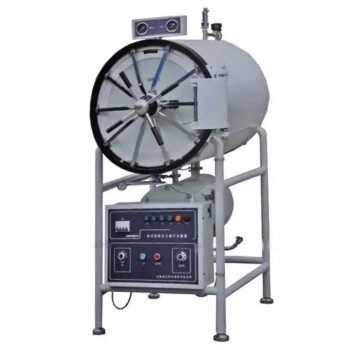
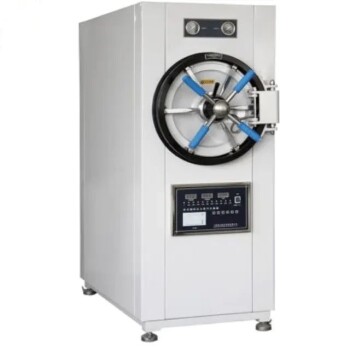
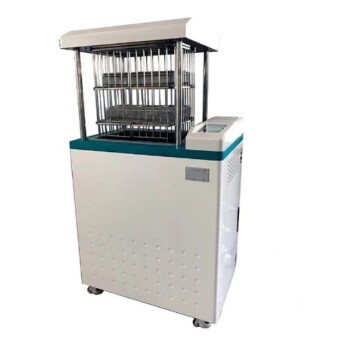
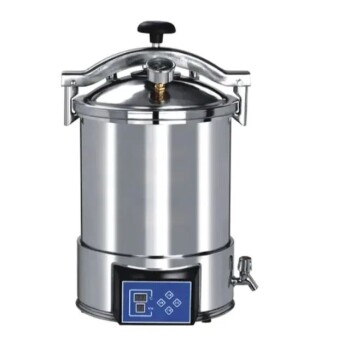
The Teflon-lined autoclave serves as the pressurized reactor that creates the unique subcritical environment necessary for synthesizing CNT@PR composite sponges. This vessel maintains solvents in a liquid state well above their normal boiling points, significantly increasing their ability to penetrate the dense carbon nanotube (CNT) framework. By facilitating high-pressure conditions, the autoclave ensures that phenolic resin precursors are uniformly adsorbed and polymerized directly onto the CNT surfaces, resulting in a highly interconnected and evenly coated composite structure.
The core role of the autoclave is to provide a controlled, high-pressure environment that forces resin precursors into the microscopic pores of the CNT framework while preventing solvent evaporation. This ensures a uniform, in-situ polymerization that is impossible under standard atmospheric conditions.
Facilitating Superheated Solvent Conditions
Maintaining the Liquid Phase
In a solvothermal reaction, the autoclave allows the solvent to reach temperatures far exceeding its standard boiling point without evaporating. This subcritical state alters the physical properties of the solvent, such as reducing surface tension and increasing solubility. These changes are vital for dissolving phenolic resin precursors and keeping them in a reactive state throughout the synthesis.
Enhancing Penetration and Mass Transfer
The high-pressure environment within the vessel drives the solvent and resin precursors deep into the three-dimensional architecture of the CNT framework. Under these conditions, the increased kinetic energy and decreased viscosity of the solvent promote rapid mass transfer. This ensures that the phenolic resin does not just coat the outer surface of the sponge but integrates thoroughly into its internal structure.
Controlling Polymerization and Adsorption
Promoting Uniform In-Situ Growth
The autoclave provides the precise thermal stability required for the controlled polymerization of formaldehyde and phenolic precursors. By maintaining a constant high temperature, it facilitates uniform nucleation and growth of the resin layer. This results in a CNT framework that is evenly encapsulated by the phenolic resin, which is critical for the mechanical and functional properties of the final sponge.
Creating an Interconnected Framework
The sealed environment ensures that the concentration of reactants remains constant throughout the process, preventing the loss of volatile components. This stability allows for the formation of stable chemical bonds between the resin and the carbon nanotubes. The result is a robust, interconnected network where the resin acts as a binder that reinforces the structural integrity of the CNT sponge.
The Vital Role of the Teflon Liner
Chemical Inertness and Corrosion Resistance
The internal Teflon (PTFE) liner is essential for protecting the stainless steel walls of the autoclave from the corrosive nature of the reactants and solvents. Phenolic resin synthesis often involves acidic or basic catalysts that could react with metal surfaces at high temperatures. The liner provides a chemically inert barrier that ensures the longevity of the equipment and the safety of the process.
Preventing Metallic Impurities
Without the Teflon liner, metallic ions from the reactor walls could leach into the reaction mixture and contaminate the composite. These metallic impurities could alter the electrical or chemical properties of the carbon nanotubes. By isolating the reaction, the liner guarantees the high purity of the CNT@PR composite, which is essential for applications in sensing, filtration, or catalysis.
Understanding the Trade-offs
Thermal Lag and Gradient Issues
While autoclaves provide a stable environment, the thickness of the stainless steel shell and the Teflon liner can cause significant thermal lag. The temperature inside the reaction chamber may take considerable time to reach the set point of the external oven. This delay must be accounted for to ensure the polymerization reaction occurs for the intended duration.
Scaling and Batch Limitations
Solvothermal synthesis in autoclaves is primarily a batch process, which limits the volume of composite material that can be produced at one time. Scaling up requires larger, more expensive pressure vessels that present higher safety risks and more complex heat distribution challenges. Furthermore, the pressure inside the vessel is often autogenous (self-generated), meaning it cannot be adjusted independently of the temperature.
How to Apply This to Your Project
Making the Right Choice for Your Goal
- If your primary focus is Structural Uniformity: Prioritize a precise heating rate and a longer reaction time to allow the superheated solvent to fully saturate the CNT framework.
- If your primary focus is Material Purity: Ensure the Teflon liner is thoroughly cleaned with acid and inspect it regularly for cracks or staining to prevent cross-contamination between batches.
- If your primary focus is Mechanical Strength: Optimize the ratio of resin precursors to solvent within the autoclave to ensure the resulting coating is thick enough to provide structural reinforcement without clogging the sponge pores.
By mastering the high-pressure environment of the autoclave, researchers can transform loose carbon nanotubes into sophisticated, high-performance composite sponges.
Summary Table:
| Feature | Role in Solvothermal Reaction | Impact on CNT@PR Composite |
|---|---|---|
| Subcritical Environment | Maintains liquid phase above boiling point | Enables deep solvent penetration into CNT pores |
| High-Pressure Reactor | Drives mass transfer and resin adsorption | Ensures uniform in-situ polymerization on surfaces |
| PTFE (Teflon) Liner | Provides chemical inertness and corrosion resistance | Prevents metallic impurities and ensures high purity |
| Thermal Stability | Maintains constant temperature for nucleation | Creates a robust, interconnected structural network |
| Sealed Environment | Prevents loss of volatile precursors | Maintains consistent reactant concentration for bonding |
Elevate Your Material Synthesis with KINTEK
Precision is the key to groundbreaking research. KINTEK specializes in high-performance laboratory equipment designed to meet the rigorous demands of advanced material science. Whether you are synthesizing CNT@PR composites or developing next-generation catalysts, our range of high-temperature high-pressure reactors and autoclaves provides the controlled environment you need for uniform, high-purity results.
Our extensive portfolio includes:
- Reactors: Muffle, tube, vacuum, and CVD furnaces, plus high-pressure autoclaves.
- Processing: Crushing and milling systems, hydraulic presses, and sieving equipment.
- Lab Essentials: Electrolytic cells, cooling solutions, and premium consumables like PTFE products and crucibles.
Ready to optimize your lab’s efficiency and research outcomes? Contact our experts today to find the perfect equipment tailored to your specific application requirements!
References
- Ziming Ye, Anyuan Cao. Crack‐Induced Superelastic, Strength‐Tunable Carbon Nanotube Sponges. DOI: 10.1002/adfm.202303475
This article is also based on technical information from Kintek Solution Knowledge Base .
Related Products
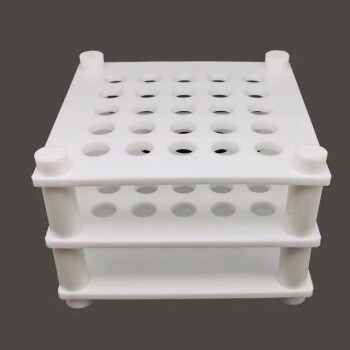
- Custom PTFE Teflon Parts Manufacturer for Centrifuge Tube Racks
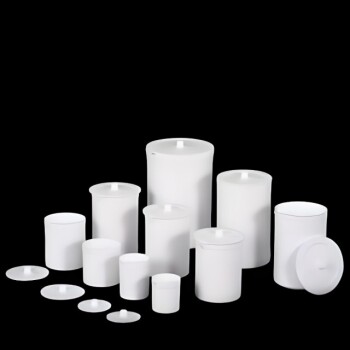
- Custom PTFE Teflon Parts Manufacturer PTFE Beaker and Lids
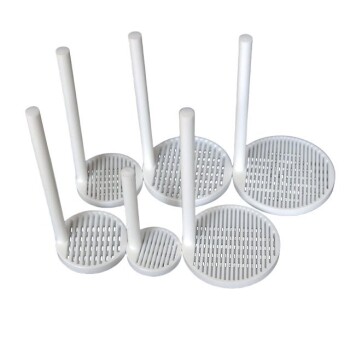
- Custom PTFE Teflon Parts Manufacturer for Cleaning Racks
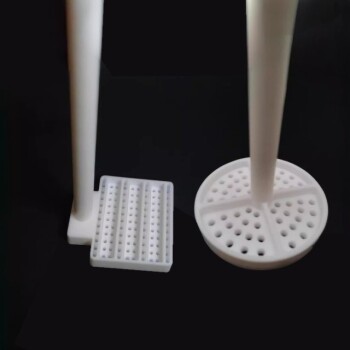
- Custom PTFE Teflon Parts Manufacturer Corrosion Resistant Cleaning Rack Flower Basket
- Custom Machined and Molded PTFE Teflon Parts Manufacturer for Laboratory ITO FTO Conductive Glass Cleaning Flower Basket
People Also Ask
- Why is slender PTFE tubing necessary for flow control in multi-channel catalyst aging? Ensure Equal Gas Distribution
- Why are PTFE containers required for PCT leaching tests? Ensure Chemical Inertness and Analytical Precision
- Why are PTFE containers necessary for selective HF etching of MAX phases? Ensure Safe & Pure MXene Synthesis
- What role do PTFE containers play in trace metal detection? Ensure Analytical Precision in Photocatalysis Studies
- Why is a PTFE container required for acid leaching of silicon nanosheets? Ensure High Purity and Safety