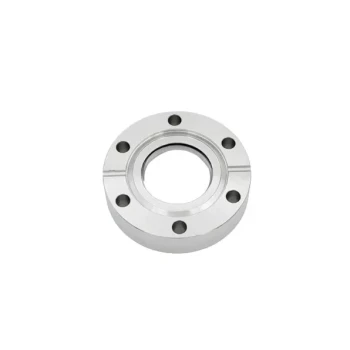
A high-pressure stainless steel reactor equipped with a sapphire window is critical for photothermal catalysis because it enables the safe application of pressures up to 40 bar while maintaining high light transmission. This combination increases hydrogen partial pressure to optimize fuel quality and ensures that intense light energy can penetrate the vessel to drive the reaction efficiently.
The core significance of this setup lies in its ability to manipulate chemical thermodynamics through high pressure while utilizing light as a clean energy source. By combining structural integrity with optical clarity, researchers can selectively produce liquid fuels and high-porosity materials that are impossible to synthesize at atmospheric pressure.
The Role of High Pressure in Product Selectivity
Increasing Hydrogen Partial Pressure
The ability of a stainless steel reactor to withstand up to 40 bar is essential for controlling the concentration of reactive gases. High operating pressures significantly increase the hydrogen partial pressure, which is a primary driver for hydrogenation reactions.
Inhibiting Undesirable By-products
Operating at elevated pressures allows for the suppression of waxy by-products that often plague low-pressure catalytic processes. This environmental control ensures that the reaction remains focused on the desired chemical pathways.
Promoting Liquid Fuel Generation
By shifting the chemical equilibrium, high-pressure environments facilitate the generation of liquid fuels. This makes the process more commercially viable and energy-dense compared to gaseous alternatives.
The Engineering Necessity of Sapphire Windows
Optical Transmittance for Photothermal Activation
Photothermal catalysis requires high-intensity light radiation to drive chemical changes. The sapphire window is chosen for its exceptional light transmittance, allowing the maximum amount of energy to reach the catalyst surface inside the pressurized chamber.
Mechanical Strength Under Load
Standard glass would shatter under the internal stress of a 40-bar environment. Sapphire provides the extreme mechanical strength required to maintain a clear line of sight into the reactor without compromising the safety or integrity of the pressure vessel.
Chemical and Thermal Stability
Beyond mere strength, sapphire is highly resistant to the harsh conditions found in photothermal reactions. It can withstand significant thermal gradients and corrosive environments that might cloud or degrade lesser optical materials.
Impact on Reaction Kinetics and Synthesis
Enhanced Reactant Solubility
High-pressure conditions within the reactor facilitate increased solubility of reactants in mixed solvents. This is particularly vital for coordination reactions where the iron source and organic ligands must interact frequently.
Rapid Crystallization and Porosity
The sealed, high-pressure environment promotes the rapid crystallization of complex frameworks, such as metal-organic frameworks (MOFs). This results in materials with high porosity and superior chemical stability.
Understanding Technical Trade-offs and Constraints
Thermal Gradient Management
While sapphire is strong, the interface between the window and the stainless steel body is a point of thermal stress. Rapid heating or cooling can lead to seal failure if the expansion rates of the different materials are not carefully managed.
Maintenance and Fouling
In a photothermal setup, any buildup on the inner surface of the sapphire window will block incoming light. This optical fouling reduces efficiency over time and requires specialized cleaning protocols to avoid scratching the expensive sapphire surface.
Cost and Complexity
High-pressure reactors with integrated optical ports are significantly more expensive than standard autoclaves. The need for specialized gaskets and high-tolerance machining increases both the initial capital investment and the long-term maintenance requirements.
Strategic Implementation of Reactor Technology
How to Apply This to Your Project
- If your primary focus is maximizing liquid fuel yield: Utilize the full 40-bar capacity of the reactor to shift the equilibrium away from paraffinic waxes and toward higher-value liquids.
- If your primary focus is synthesizing high-porosity MOFs: Leverage the high-pressure hydrothermal environment to accelerate coordination reactions and improve the structural integrity of the framework.
- If your primary focus is energy efficiency: Ensure the sapphire window is kept free of contaminants to maintain maximum light transmittance, reducing the total energy required to drive the photothermal process.
The synergy between the structural resilience of stainless steel and the optical clarity of sapphire creates a unique environment that pushes the boundaries of modern catalytic chemistry.
Summary Table:
| Feature | Primary Benefit | Key Technical Detail |
|---|---|---|
| Stainless Steel Body | High Pressure (up to 40 bar) | Increases hydrogen partial pressure; suppresses waxy by-products. |
| Sapphire Window | High Light Transmittance | Exceptional mechanical strength for safe light penetration at 40 bar. |
| Reaction Control | Product Selectivity | Shifts chemical equilibrium to favor liquid fuels over gaseous alternatives. |
| Synthesis Environment | Enhanced Porosity | Promotes rapid crystallization of high-porosity frameworks (e.g., MOFs). |
Elevate Your Catalytic Research with KINTEK
Maximize the efficiency and selectivity of your photothermal reactions with KINTEK’s precision-engineered laboratory solutions. We specialize in high-performance high-temperature high-pressure reactors and autoclaves designed to meet the rigorous demands of modern chemical synthesis.
Beyond reactors, KINTEK offers a comprehensive range of equipment to support your entire workflow:
- Advanced Thermal Processing: Muffle, tube, vacuum, CVD, and PECVD furnaces.
- Material Preparation: Crushing and milling systems, sieving equipment, and hydraulic presses.
- Electrochemistry & Battery Tools: Electrolytic cells, electrodes, and specialized research consumables.
- Laboratory Essentials: Cooling solutions (ULT freezers), homogenizers, and high-quality ceramic/PTFE crucibles.
Ready to optimize your lab's performance? Contact us today to discover how our specialized equipment can accelerate your next breakthrough.
References
- Yingxuan Miao, Tierui Zhang. Photothermal recycling of waste polyolefin plastics into liquid fuels with high selectivity under solvent-free conditions. DOI: 10.1038/s41467-023-40005-6
This article is also based on technical information from Kintek Solution Knowledge Base .
Related Products
- CF Ultra-High Vacuum Observation Window Stainless Steel Flange Sapphire Glass Sight Glass
- KF Ultra-High Vacuum Observation Window Stainless Steel Flange Sapphire Glass Sight Glass
- Visual High-Pressure Reactor for In-Situ Observation
- Stainless High Pressure Autoclave Reactor Laboratory Pressure Reactor
- Mini SS High Pressure Autoclave Reactor for Laboratory Use
People Also Ask
- What is high vacuum used for? Essential for Particle Beams and Advanced Lab Instruments
- What is Ultra-High Vacuum CVD (UHVCVD)? Achieve Superior Purity in Advanced Material Deposition
- What function do baffle plates serve inside a reaction vessel? Enhance Photovoltaic Backsheet Recycling Efficiency
- Is Sputter Tint good? Premium Heat Rejection & Long-Term Durability Explained
- What is a reducing atmosphere? Key Applications and Benefits for Industrial Processes