The primary function of high-purity Argon (Ar) in the tool steel boriding process is to establish a strictly inert environment by effectively displacing air from the furnace chamber and packing box. This atmosphere is critical for preventing the oxidation of the steel substrate at high temperatures (1000°C) and for protecting the boriding agents from oxidative failure.
High-purity Argon acts as a chemical shield, creating the necessary conditions for a pure metallurgical reaction. By eliminating oxygen, it ensures that boron atoms can diffuse into iron elements without the interference of oxide formation on the tool or degradation of the packing medium.
Preserving Metallurgical Integrity
Preventing Substrate Oxidation
At the elevated processing temperature of 1000°C, tool steel is highly susceptible to rapid oxidation.
Without a protective barrier, oxygen in the furnace atmosphere reacts with the iron, creating scale and surface imperfections. High-purity Argon eliminates this risk by completely excluding oxygen from the environment.
Protecting the Boriding Agent
The boriding process relies on a chemical agent (often a powder) to supply boron atoms.
This agent is also vulnerable to oxidative failure. If the agent oxidizes, it loses its potency, leading to inconsistent case depths or failed treatments. Argon ensures the agent remains active throughout the thermal cycle.
Ensuring Reaction Purity
The Mechanics of Displacement
Argon is introduced to physically displace air from both the general furnace chamber and the specific packing box containing the parts.
Because Argon is heavier than air and chemically inert, it settles around the workload, effectively purging the immediate atmosphere of reactive gases.
Facilitating Pure Diffusion
The ultimate goal of boriding is a precise reaction between boron atoms and iron elements.
By maintaining an inert state, Argon ensures this reaction proceeds in a pure state. There are no competing chemical reactions (such as oxidation) to inhibit the diffusion of boron into the steel matrix.
Understanding the Trade-offs: Inert vs. Active Atmospheres
Inert Protection vs. Chemical Activity
It is important to distinguish Argon from other common protective atmospheres.
Techniques such as endothermic generators or nitrogen-methanol injection produce atmospheres containing Carbon Monoxide (CO) and Hydrogen (H2). These are "active" atmospheres that can influence the carbon potential of the steel.
Simplicity vs. Complexity
Argon provides a strictly neutral environment.
While CO/H2 atmospheres are effective for standard hardening and carburizing, they introduce additional chemical variables. High-purity Argon is preferable when the sole objective is boriding without altering the carbon balance or risking hydrogen embrittlement.
Making the Right Choice for Your Process
To determine if a high-purity Argon atmosphere is required for your specific application, consider your quality requirements.
- If your primary focus is surface cleanliness and reaction purity: Prioritize high-purity Argon to eliminate all risks of oxidation scaling and agent degradation.
- If your primary focus is eliminating chemical variables: Use Argon rather than endothermic or nitrogen-methanol mixtures to avoid introducing carbon or hydrogen into the process equation.
By isolating the workpiece in an inert Argon shield, you guarantee that the metallurgical properties of the boride layer are defined solely by the diffusion process, not by environmental contaminants.
Summary Table:
| Feature | Benefit of Argon (Ar) Atmosphere |
|---|---|
| Environment Type | Strictly inert and chemically neutral |
| Oxygen Level | Displaced to prevent surface scale and oxidation |
| Temperature Stability | Maintains integrity at high processing heats (1000°C) |
| Agent Protection | Prevents oxidative failure of the boron packing medium |
| Reaction Quality | Ensures pure boron diffusion into the iron elements |
| Chemical Balance | Eliminates risk of carbon potential change or hydrogen embrittlement |
Elevate Your Surface Engineering Precision with KINTEK
Maximize the durability and performance of your tool steel components with KINTEK’s industry-leading thermal processing solutions. We specialize in providing high-precision high-temperature furnaces (muffle, tube, and vacuum) and high-purity environment controls designed to ensure perfect metallurgical reactions.
Whether you are conducting advanced boriding, sintering, or heat treatment, our comprehensive portfolio—including crushing and milling systems, high-temperature high-pressure reactors, and specialized PTFE and ceramic consumables—is engineered to meet the rigorous demands of your laboratory or production line.
Ready to eliminate oxidation and achieve superior surface hardness? Contact our technical experts today to discover how KINTEK’s advanced laboratory equipment can optimize your metallurgical workflows.
References
- Jakub Jopek, W. Głuchowski. The Influence of Industrial-Scale Pack-Boroding Process Time on Thickness and Phase Composition of Selected Cold-Work Tool Steels. DOI: 10.21062/mft.2023.069
This article is also based on technical information from Kintek Solution Knowledge Base .
Related Products
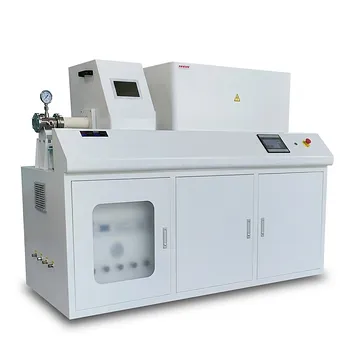
- 1700℃ Controlled Atmosphere Furnace Nitrogen Inert Atmosphere Furnace
- 1200℃ Controlled Atmosphere Furnace Nitrogen Inert Atmosphere Furnace
- 1400℃ Controlled Atmosphere Furnace with Nitrogen and Inert Atmosphere
- Controlled Nitrogen Inert Hydrogen Atmosphere Furnace
- Li-Air Battery Case for Battery Lab Applications
People Also Ask
- What is a controlled atmosphere furnace for heat treatment? Master Surface Chemistry and Metallurgy
- What is the necessity of a controlled atmosphere furnace for corrosion research? Replicating Realistic Industrial Risks
- What are the two primary purposes of using a controlled atmosphere? Master Protection vs. Material Modification
- What is the necessity of controlled atmosphere furnaces for gas corrosion? Ensure Precise Material Failure Modeling
- How is oxygen (O2) used in controlled furnace atmospheres? Mastering Surface Engineering for Metals