In Flash Sintering experiments, the Boron Nitride (BN) inner liner functions primarily as a high-temperature electrical insulator. By placing this non-conductive barrier between the conductive graphite mold and the powder sample, the liner physically blocks electricity from passing through the mold walls, forcing the entire current load to flow directly through the sample itself.
Core Takeaway In a graphite setup, electricity naturally seeks the path of least resistance, which is typically the mold. The BN liner prevents this "shunting" effect, channeling current exclusively into the sample to generate the critical current density required for the rapid densification and "current avalanche" specific to Flash Sintering.
The Physics of Current Control
Preventing Current Shunting
Graphite molds are excellent electrical conductors. Without an insulating layer, the applied current would largely bypass the resistive powder sample and flow through the mold walls instead.
The BN liner effectively "plugs" this easier path. It ensures the mold acts only as a physical container for pressure, not as part of the electrical circuit.
Triggering the "Flash" Event
Flash Sintering relies on a phenomenon known as a current avalanche. This occurs when the sample's internal temperature rises enough to lower its electrical resistivity, causing a sudden surge in current flow.
This effect is impossible if the current is split between the mold and the sample. The BN liner ensures the necessary current density is concentrated solely within the powder, facilitating the rapid heating and instantaneous densification that characterizes the process.
Secondary Functions: Protection and Release
Chemical Isolation
Beyond electrical insulation, the BN liner serves as a chemical barrier. At high temperatures, reaction diffusion can occur between the sample and the carbon-rich graphite mold.
The liner prevents these reactions, such as carburization, which would otherwise alter the chemical composition of the sample surface.
Mold Release Mechanism
Boron Nitride possesses excellent lubricity and chemical stability. It acts as a release agent, preventing the sample from physically bonding to the mold walls under high heat and pressure.
This ensures the final sintered sample has a smooth surface finish and allows for easy demolding without damaging the graphite tooling.
Understanding the Trade-offs
The Risk of Liner Failure
The success of a Flash Sintering experiment is binary: it works, or it doesn't. If the BN liner cracks or is applied unevenly, the current will arc to the graphite mold.
This immediately stops the "Flash" process, causing the system to revert to conventional heating (radiation from the mold), potentially ruining the experiment's data regarding current effects.
Thermal vs. Electrical Insulation
While BN is a great electrical insulator, it introduces a thermal interface. In some sintering contexts (like specific Spark Plasma Sintering setups), BN is used to block current to force indirect heating.
However, in Flash Sintering, the goal is direct heating. You must acknowledge that while you are trapping current in the sample, the liner may slightly impede conductive heat transfer out to the mold, altering thermal gradients compared to unlined setups.
Making the Right Choice for Your Goal
To ensure valid experimental results, verify your setup against these objectives:
- If your primary focus is achieving Flash Sintering: Ensure the BN liner is continuous and thick enough to prevent any electrical leakage to the mold, forcing 100% of current through the sample.
- If your primary focus is Sample Purity: Prioritize the BN liner's role as a chemical barrier to prevent carbon diffusion and surface carburization.
- If your primary focus is Mold Longevity: Apply BN uniformly to act as a lubricant, reducing wear during the ejection of the sintered pellet.
The integrity of your BN liner determines whether you are testing the physics of the sample or merely heating the mold.
Summary Table:
| Function Type | Role of BN Liner | Key Benefit |
|---|---|---|
| Electrical | High-temperature insulator | Prevents shunting; forces current through sample to trigger "Flash" |
| Chemical | Diffusion barrier | Prevents carburization and reactions between graphite and sample |
| Mechanical | Solid lubricant | Facilitates easy demolding and protects graphite mold longevity |
| Process | Flow director | Concentrates current density for rapid, instantaneous densification |
Precision in Flash Sintering starts with the right materials. KINTEK provides high-performance graphite molds, specialized Boron Nitride (BN) liners, and advanced laboratory equipment designed to withstand the rigors of rapid densification. Whether you need reliable hydraulic presses, high-temperature furnaces, or essential ceramics and crucibles, our experts are ready to help you optimize your experimental setup for consistent, high-purity results. Contact KINTEK today to discover how our comprehensive range of lab consumables and sintering solutions can elevate your research!
Related Products
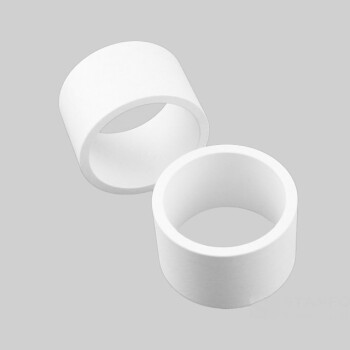
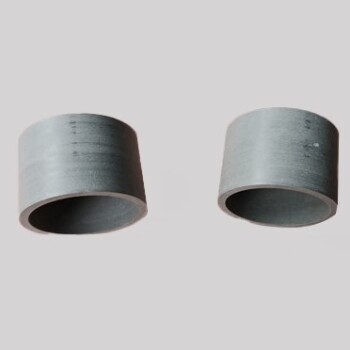
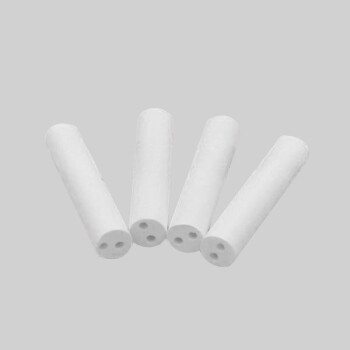
- Boron Nitride (BN) Ceramic Tube
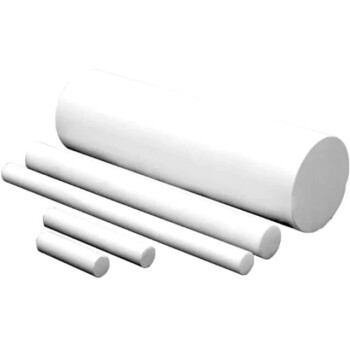
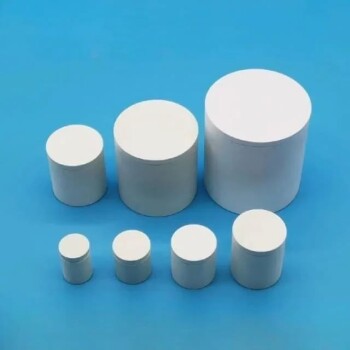
- Boron Nitride (BN) Ceramic Rod for High Temperature Applications
- Boron Nitride (BN) Ceramic Plate
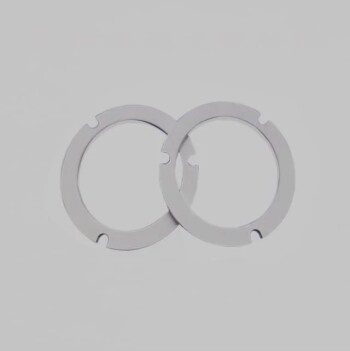
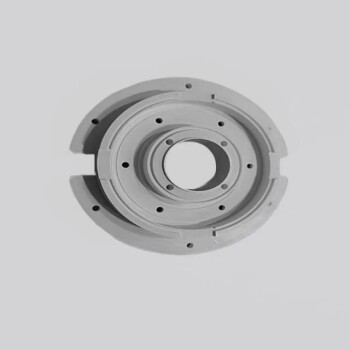
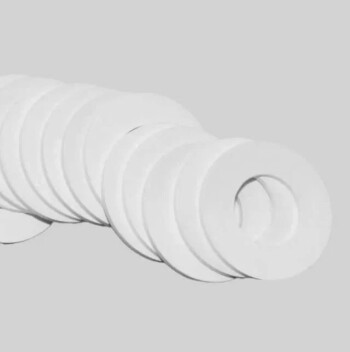
- Hexagonal Boron Nitride HBN Ceramic Ring
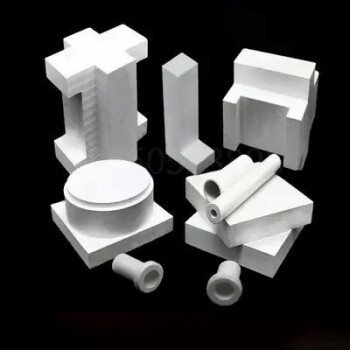
- Advanced Engineering Fine Ceramics Boron Nitride (BN) Ceramic Parts
People Also Ask
- Why are Boron Nitride Tubes selected as reaction vessels for Na3SbS4? Ensure Purity in High-Temp Synthesis
- What is the maximum temperature for a ceramic tube? Find the Right Material for Your High-Temp Needs
- What is the temperature resistance of a ceramic tube? It Depends on the Material—Find the Right Fit
- What is the temperature range of a ceramic tube? Select the Right Material for Your High-Temp Needs
- What are ceramic tubes used for? Essential Components for Extreme Heat & Electrical Insulation