Knowledge Why is Boron Nitride utilized as a coating for graphite molds? Protect Your Mo-Na Powder During Sintering
Author avatar

Tech Team · Kintek Solution

Updated 1 day ago

Why is Boron Nitride utilized as a coating for graphite molds? Protect Your Mo-Na Powder During Sintering


Boron Nitride functions as a vital protective barrier. When preparing Molybdenum-Sodium (Mo-Na) powders, this material is applied to the inner surfaces of graphite molds to prevent the metal powder from chemically reacting with or physically sticking to the carbon-based mold. This coating is essential for ensuring the final alloy can be removed from the mold without damage during high-temperature processing.

The primary role of Boron Nitride is to act as an inert mold release agent that withstands high-pressure sintering, effectively decoupling the Mo-Na alloy from the graphite mold to preserve the sample’s surface integrity and chemical purity.

The Mechanics of Mold Protection

Preventing Chemical Reactions

During the sintering process, materials are subjected to extreme heat. Under these conditions, the Molybdenum-Sodium powder is prone to reacting chemically with the carbon in the graphite mold.

A coating of Boron Nitride creates an inert shield between these two materials. This prevents the metal and the mold from bonding chemically, which would otherwise alter the composition of the alloy.

Eliminating Physical Adhesion

Beyond chemical changes, high temperatures and pressures can cause metal powders to physically fuse to container walls.

Boron Nitride acts as a lubricating release agent. It ensures that the Mo-Na mixture does not adhere to the graphite, allowing for a clean separation once the process is complete.

The Role of Hot-Press Sintering Conditions

Withstanding High Pressure and Heat

The preparation of Mo-Na targets involves hot-press sintering, a method that combines thermal energy with mechanical pressure.

Standard release agents often fail under these rigorous conditions. Boron Nitride is utilized specifically because it maintains its stability and barrier properties even when subjected to this intense environment.

Preserving Surface Quality

The goal of this process is to create a high-quality metal target. If the powder adheres to the mold, removing it often results in surface damage or fracture.

By eliminating adhesion, Boron Nitride ensures the integrity of the sample surface is maintained. This results in a finished product that is smooth and free from defects caused by forceful demolding.

Risks of Inadequate Coating

The Consequence of Reaction

If the Boron Nitride layer is missing or insufficient, the Mo-Na powder will likely interact with the graphite.

This leads to a permanent bond between the mold and the metal. This reaction not only destroys the mold but often renders the expensive alloy sample unusable due to contamination and structural damage.

Demolding Failures

Without a functional release agent, the physics of high-pressure sintering work against the operator.

The lack of a barrier leads to catastrophic demolding failures, where the sample cannot be ejected. This wastes processing time and requires aggressive mechanical intervention that compromises the final product.

Ensuring Process Success

To maximize the yield and quality of your Molybdenum-Sodium alloy preparation, consider the following applications of Boron Nitride:

  • If your primary focus is Chemical Purity: Ensure a continuous, uniform coating of Boron Nitride to completely isolate the reactive metal powder from the carbon mold.
  • If your primary focus is Manufacturing Yield: Prioritize the use of Boron Nitride to guarantee easy, non-destructive demolding of the sintered targets.

The correct application of this coating is the single most important step in transitioning from loose powder to a solid, high-integrity metal target.

Summary Table:

Feature Role of Boron Nitride in Mo-Na Processing
Function Inert protective barrier and mold release agent
Chemical Impact Prevents carbon contamination and unwanted alloying
Physical Impact Eliminates adhesion for clean, non-destructive demolding
Stability Withstands extreme heat and pressure during hot-press sintering
Outcome Preserves sample surface integrity and chemical purity

Elevate Your Material Research with KINTEK

Don't let chemical contamination or demolding failures compromise your high-performance alloys. KINTEK provides the specialized laboratory equipment and high-purity consumables you need for successful material synthesis. Whether you are utilizing our hot-press sintering systems, high-temperature furnaces, or premium ceramic and boron nitride consumables, our solutions are designed to ensure maximum yield and chemical integrity.

From advanced battery research tools to precision crushing and milling systems, KINTEK is your partner in laboratory excellence. Contact us today to discover how our comprehensive range of equipment and expert support can optimize your Molybdenum-Sodium powder preparation and sintering workflows!

Related Products

People Also Ask

Related Products

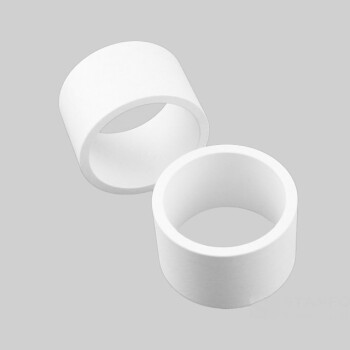
Hexagonal Boron Nitride HBN Ceramic Ring

Hexagonal Boron Nitride HBN Ceramic Ring

Boron nitride ceramic (BN) rings are commonly used in high temperature applications such as furnace fixtures, heat exchangers and semiconductor processing.

Advanced Engineering Fine Ceramics Boron Nitride (BN) Ceramic Parts

Advanced Engineering Fine Ceramics Boron Nitride (BN) Ceramic Parts

Boron nitride ((BN) is a compound with high melting point, high hardness, high thermal conductivity and high electrical resistivity. Its crystal structure is similar to graphene and harder than diamond.

Electron Beam Evaporation Coating Conductive Boron Nitride Crucible BN Crucible

Electron Beam Evaporation Coating Conductive Boron Nitride Crucible BN Crucible

High-purity and smooth conductive boron nitride crucible for electron beam evaporation coating, with high temperature and thermal cycling performance.

Molybdenum Disilicide (MoSi2) Thermal Elements Electric Furnace Heating Element

Molybdenum Disilicide (MoSi2) Thermal Elements Electric Furnace Heating Element

Discover the power of Molybdenum Disilicide (MoSi2) Heating Element for high-temperature resistance. Unique oxidation resistance with stable resistance value. Learn more about its benefits now!

Horizontal High Temperature Graphite Vacuum Graphitization Furnace

Horizontal High Temperature Graphite Vacuum Graphitization Furnace

Horizontal Graphitization Furnace: This type of furnace is designed with the heating elements placed horizontally, allowing for uniform heating of the sample. It's well-suited for graphitizing large or bulky samples that require precise temperature control and uniformity.

Ultra-High Temperature Graphite Vacuum Graphitization Furnace

Ultra-High Temperature Graphite Vacuum Graphitization Furnace

The ultra-high temperature graphitization furnace utilizes medium frequency induction heating in a vacuum or inert gas environment. The induction coil generates an alternating magnetic field, inducing eddy currents in the graphite crucible, which heats up and radiates heat to the workpiece, bringing it to the desired temperature. This furnace is primarily used for graphitization and sintering of carbon materials, carbon fiber materials, and other composite materials.

Graphite Vacuum Continuous Graphitization Furnace

Graphite Vacuum Continuous Graphitization Furnace

High-temperature graphitization furnace is a professional equipment for graphitization treatment of carbon materials. It is a key equipment for the production of high-quality graphite products. It has high temperature, high efficiency and uniform heating. It is suitable for various high-temperature treatments and graphitization treatments. It is widely used in metallurgy, electronics, aerospace, etc. industry.

Custom PTFE Teflon Parts Manufacturer Laboratory High Temperature Mixing Paddle Mixer

Custom PTFE Teflon Parts Manufacturer Laboratory High Temperature Mixing Paddle Mixer

The PTFE mixing paddle mixer is a versatile and robust tool designed for laboratory use, particularly in environments requiring high resistance to chemicals and extreme temperatures. Crafted from high-quality PTFE, this mixer boasts several key features that enhance its functionality and durability.

1400℃ Controlled Atmosphere Furnace with Nitrogen and Inert Atmosphere

1400℃ Controlled Atmosphere Furnace with Nitrogen and Inert Atmosphere

Achieve precise heat treatment with KT-14A controlled atmosphere furnace. Vacuum sealed with a smart controller, it's ideal for lab and industrial use up to 1400℃.

Custom CVD Diamond Coating for Lab Applications

Custom CVD Diamond Coating for Lab Applications

CVD Diamond Coating: Superior Thermal Conductivity, Crystal Quality, and Adhesion for Cutting Tools, Friction, and Acoustic Applications

1400℃ Laboratory High Temperature Tube Furnace with Alumina Tube

1400℃ Laboratory High Temperature Tube Furnace with Alumina Tube

Looking for a tube furnace for high-temperature applications? Our 1400℃ Tube Furnace with Alumina Tube is perfect for research and industrial use.

Vertical High Temperature Graphite Vacuum Graphitization Furnace

Vertical High Temperature Graphite Vacuum Graphitization Furnace

Vertical high temperature graphitization furnace for carbonization and graphitization of carbon materials up to 3100℃.Suitable for shaped graphitization of carbon fiber filaments and other materials sintered in a carbon environment.Applications in metallurgy, electronics, and aerospace for producing high-quality graphite products like electrodes and crucibles.

400-700nm Wavelength Anti Reflective AR Coating Glass

400-700nm Wavelength Anti Reflective AR Coating Glass

AR coatings are applied on optical surfaces to reduce reflection. They can be a single layer or multiple layers that are designed to minimize reflected light through destructive interference.

Graphite Vacuum Furnace Negative Material Graphitization Furnace

Graphite Vacuum Furnace Negative Material Graphitization Furnace

Graphitization furnace for battery production has uniform temperature and low energy consumption. Graphitization furnace for negative electrode materials: an efficient graphitization solution for battery production and advanced functions to enhance battery performance.

High Temperature Alumina (Al2O3) Furnace Tube for Engineering Advanced Fine Ceramics

High Temperature Alumina (Al2O3) Furnace Tube for Engineering Advanced Fine Ceramics

High temperature alumina furnace tube combines the advantages of high hardness of alumina, good chemical inertness and steel, and has excellent wear resistance, thermal shock resistance and mechanical shock resistance.

Twin Screw Extruder Plastic Granulation Machine

Twin Screw Extruder Plastic Granulation Machine

Twin screw extruder plastic granulation machine is designed for the mixing and processing experiments of engineering plastics, modified plastics, waste plastics and masterbatches.

Engineering Advanced Fine Ceramics Alumina Crucibles (Al2O3) for Thermal Analysis TGA DTA

Engineering Advanced Fine Ceramics Alumina Crucibles (Al2O3) for Thermal Analysis TGA DTA

TGA/DTA thermal analysis vessels are made of aluminum oxide (corundum or aluminum oxide). It can withstand high temperature and is suitable for analyzing materials that require high temperature testing.

Desktop Fast Laboratory Autoclave Sterilizer 35L 50L 90L for Lab Use

Desktop Fast Laboratory Autoclave Sterilizer 35L 50L 90L for Lab Use

The desktop fast steam sterilizer is a compact and reliable device used for rapid sterilization of medical, pharmaceutical, and research items. It efficiently sterilizes surgical instruments, glassware, medicines, and resistant materials, making it suitable for various applications.

Engineering Advanced Fine Ceramics Head Tweezers with Pointed Elbow Zirconia Ceramic Tip

Engineering Advanced Fine Ceramics Head Tweezers with Pointed Elbow Zirconia Ceramic Tip

Zirconia ceramic tweezers are a high-precision tool made of advanced ceramic materials, especially suitable for operating environments that require high precision and corrosion resistance. This type of tweezers not only has excellent physical properties, but is also popular in the medical and laboratory fields because of its biocompatibility.

Electrolytic Electrochemical Cell for Coating Evaluation

Electrolytic Electrochemical Cell for Coating Evaluation

Looking for corrosion-resistant coating evaluation electrolytic cells for electrochemical experiments? Our cells boast complete specifications, good sealing, high-quality materials, safety, and durability. Plus, they're easily customizable to meet your needs.


Leave Your Message