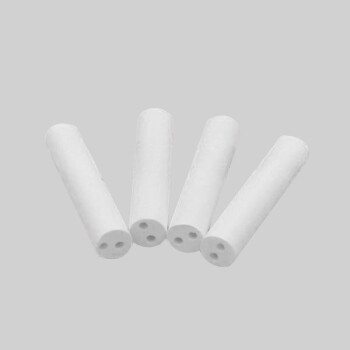
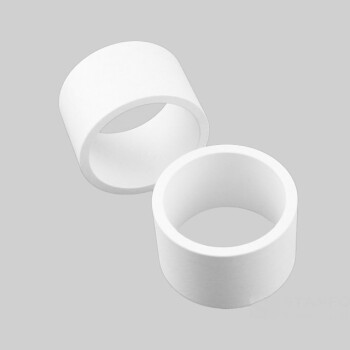
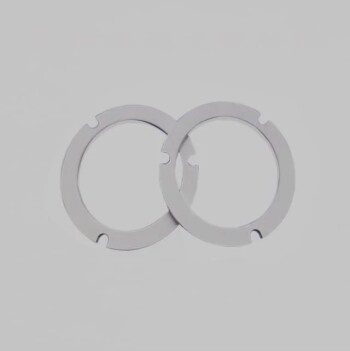
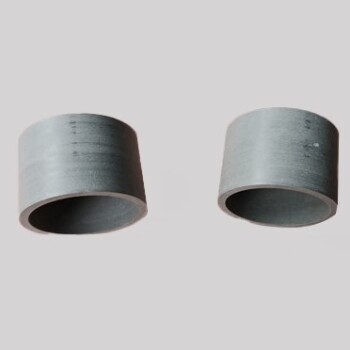
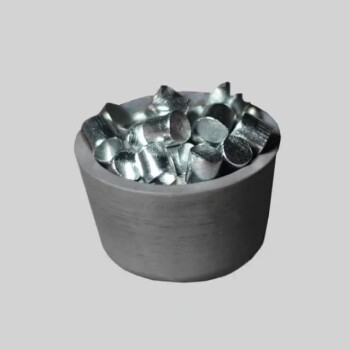
The primary role of a Boron Nitride (BN) sleeve is to act as an electrical insulator within the mold assembly. Positioned between the punch and the inner wall of the mold, this component prevents electrical current from bypassing the sintering sample. By blocking current flow to the conductive mold body, the sleeve ensures that all test signals pass directly through the material being processed.
Core Takeaway: In cold sintering, the metal mold creates a path of least resistance that can short-circuit monitoring equipment; the BN sleeve blocks this path, forcing the signal through the sample to ensure Electrochemical Impedance Spectroscopy (EIS) data accurately reflects densification.
The Challenge of In-Situ Monitoring
The Conductivity Conflict
Cold sintering molds are typically constructed from metal to withstand high mechanical pressures. However, metal is highly conductive.
Without intervention, the mold body creates an unintentional electrical pathway. This poses a significant challenge when trying to monitor the electrical properties of a sample inside the mold.
The Short-Circuit Risk
If the electrical current finds a path through the mold walls rather than the sample, the result is a short circuit.
This bypass prevents the monitoring equipment from interacting with the sample itself. The resulting data would reflect the properties of the metal mold, rendering the analysis useless.
How the BN Sleeve Solves the Problem
Strategic Placement
The BN sleeve is inserted specifically between the punch and the inner wall of the mold.
This creates a physical and electrical separation between the moving parts of the assembly and the static mold body.
Directing the Signal
By acting as an insulator, the BN sleeve effectively "walls off" the conductive metal of the mold.
This constrains the electrical current, forcing it to travel exclusively through the sintering sample.
Enabling Accurate EIS
The ultimate goal of using the sleeve is to facilitate Electrochemical Impedance Spectroscopy (EIS).
Because the sleeve ensures the test signals pass entirely through the sample, researchers can accurately monitor impedance evolution. This allows for precise tracking of the densification process in real-time.
The Risks of Signal Leakage (Trade-offs)
Data Integrity Dependence
The system's reliability is entirely dependent on the integrity of the BN sleeve.
If the sleeve is absent or damaged, the isolation fails, and the signal will leak into the mold body. This makes the sleeve a single point of failure for data accuracy.
The Limitation of Metal Molds
While metal molds are necessary for structural integrity, they introduce complexity to electrical monitoring.
The use of a BN sleeve is a necessary adaptation to force a conductive tool (the mold) to function in an electrical testing environment. It highlights the trade-off between mechanical strength and electrical isolation.
Ensuring Process Success
To effectively utilize a BN sleeve for in-situ monitoring, consider the following recommendations:
- If your primary focus is Data Accuracy: Ensure the BN sleeve fully isolates the punch from the wall to force 100% of the EIS signal through the sample.
- If your primary focus is Mold Assembly: Verify that the sleeve is positioned correctly to prevent any contact between the punch and the conductive mold body.
The BN sleeve transforms a standard mechanical mold into a precision instrument capable of capturing accurate, real-time densification data.
Summary Table:
| Feature | Role/Function |
|---|---|
| Component | Boron Nitride (BN) Sleeve |
| Positioning | Between punch and inner mold wall |
| Primary Role | Electrical insulator/isolation |
| Key Benefit | Prevents signal bypass (short circuits) |
| Primary Goal | Enables accurate EIS & real-time densification data |
| Compatibility | Metal molds requiring high-pressure durability |
Optimize Your Materials Research with KINTEK Precision Solutions
Don't let signal leakage compromise your research data. KINTEK provides high-performance Boron Nitride components and specialized laboratory equipment designed to meet the rigorous demands of cold sintering and advanced material analysis. From precision-engineered hydraulic pellet presses and high-temperature furnaces to specialized ceramics and crucibles, our solutions ensure your in-situ monitoring is accurate and reliable.
Enhance your lab's capabilities today:
- Precision Tools: High-quality BN sleeves and electrical isolation components.
- Comprehensive Range: Sintering systems, crushing/milling equipment, and battery research tools.
- Expert Support: Tailored solutions for specific densification and impedance monitoring workflows.
Contact KINTEK today for a consultation and custom quote!
Related Products
- Hexagonal Boron Nitride HBN Thermocouple Protection Tube
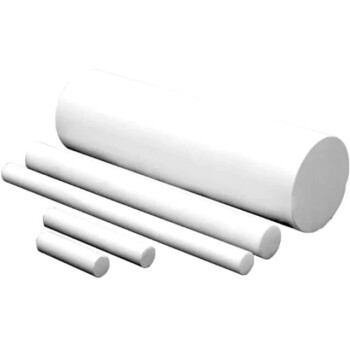
- Boron Nitride (BN) Ceramic Tube
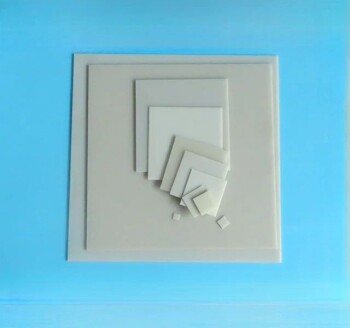
- Boron Nitride (BN) Ceramic Plate
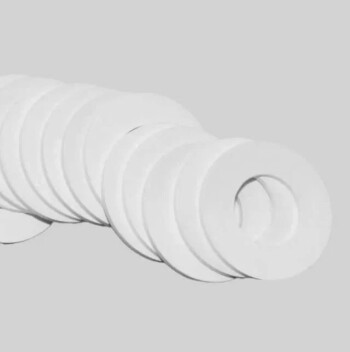
- Hexagonal Boron Nitride HBN Ceramic Ring
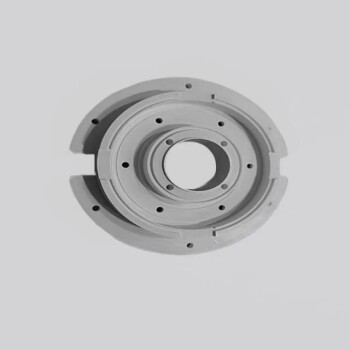
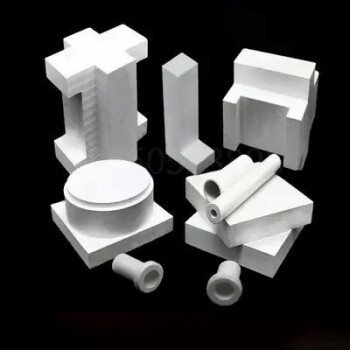
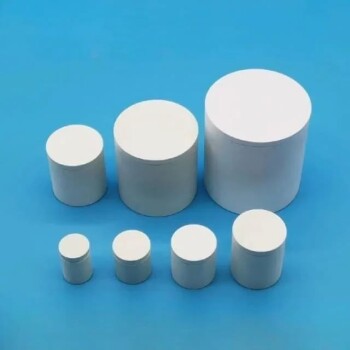
- Custom Boron Nitride (BN) Ceramic Parts
People Also Ask
- Why are Boron Nitride Tubes selected as reaction vessels for Na3SbS4? Ensure Purity in High-Temp Synthesis
- What are the symptoms of a bad thermocouple? Diagnose a Pilot Light That Won't Stay Lit
- What information does a thermocouple at the substrate bottom provide in LCVD? Master Precise Temperature Control
- What are the specific temperature control requirements for high-precision thermocouples? Achieve ±0.3°C Precision
- What is the most common type of temperature sensor? The Unmatched Versatility of Thermocouples