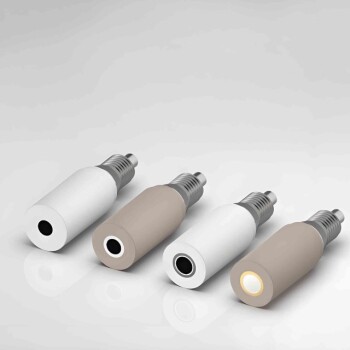
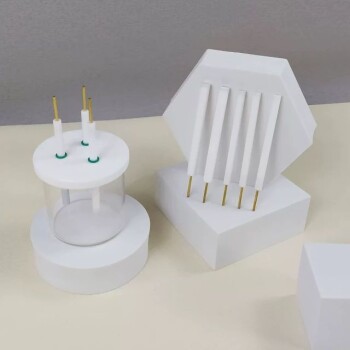
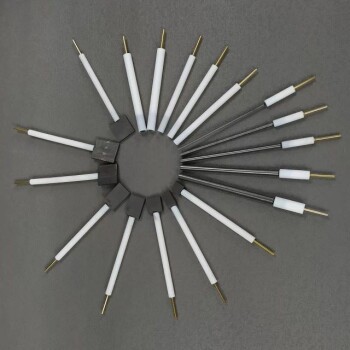
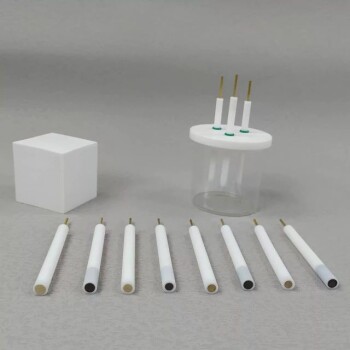
Boron Nitride is the material of choice for insulating Rotating Ring-Disk Electrodes (RRDE) due to its unique combination of high electrical resistivity, chemical inertness, and thermal stability. It serves as a critical barrier that electrically isolates the ring from the disk while physically shielding sensitive internal components from harsh electrochemical environments.
By functioning as both a gap insulator and a protective sheath, Boron Nitride prevents current leakage and protects internal conductive elements from corrosion. This ensures that electrochemical measurements remain accurate and that the device maintains long-term durability even in high-temperature or corrosive electrolytes.
Ensuring Measurement Accuracy and Durability
The reliability of an RRDE depends heavily on the materials used to construct it. Boron Nitride is selected not merely as a structural component, but as an active safeguard for the electrode's integrity.
Superior Chemical Inertness
Electrochemical cells often utilize aggressive electrolytes that can rapidly degrade standard materials. Boron Nitride remains chemically inert in these corrosive environments.
This inertness is vital for acting as a protective sheath. It shields internal conductive components, specifically molybdenum rods, which would otherwise succumb to corrosion upon contact with the electrolyte.
High Electrical Resistivity
In an RRDE setup, the ring and the disk must function independently to collect and analyze species correctly. Boron Nitride serves as an effective gap insulator between these two components.
Its high resistivity prevents current leakage between the ring and the disk. This isolation is non-negotiable for obtaining precise data, as even minor leakage can distort the electrochemical signal and invalidate the analysis.
Exceptional Thermal Stability
Many electrochemical experiments require elevated temperatures to simulate real-world operating conditions. Boron Nitride maintains its structural and electrical properties under high thermal stress.
This stability ensures that the electrode's geometry does not warp or degrade during high-temperature operations, preserving the hydrodynamic consistency required for accurate rotating electrode equations.
Common Challenges in Electrode Design
When selecting materials for electrochemical analysis, it is crucial to understand the risks associated with inadequate insulation. Failure to address these operational hazards often leads to compromised data.
The Risk of Signal Corruption
Without a material possessing the high resistivity of Boron Nitride, current leakage becomes a significant failure mode.
If current bypasses the intended path between the working electrode and the counter electrode (or leaks between the ring and disk), the resulting data will reflect system artifacts rather than the actual chemical reaction rates.
The Threat of Internal Corrosion
The longevity of an RRDE is determined by how well its internal architecture is sealed from the test solution.
If the protective sheath fails or reacts with the electrolyte, internal components like molybdenum rods are exposed. This leads to irreversible device failure and potential contamination of the electrolyte solution, forcing costly replacements and experiment restarts.
Making the Right Choice for Your Research
Selecting an electrode configuration often requires balancing material properties with your specific experimental conditions.
- If your primary focus is high-precision quantitative analysis: Prioritize Boron Nitride for its electrical resistivity to ensure zero cross-talk between the ring and disk currents.
- If your primary focus is durability in aggressive media: Rely on Boron Nitride's chemical inertness to extend the lifespan of internal metallic components like molybdenum.
- If your primary focus is high-temperature kinetics: Leverage Boron Nitride's thermal stability to maintain geometric integrity during heat-intensive cycles.
Ultimately, Boron Nitride provides the essential isolation and protection required to turn volatile electrochemical environments into sources of reliable data.
Summary Table:
| Feature | Benefit for RRDE | Operational Value |
|---|---|---|
| High Electrical Resistivity | Prevents current leakage between ring and disk | Ensures measurement accuracy and signal integrity |
| Chemical Inertness | Shields internal components (e.g., molybdenum) | Prevents corrosion and extends electrode lifespan |
| Thermal Stability | Maintains geometry at high temperatures | Preserves hydrodynamic consistency during experiments |
| Structural Durability | Acts as a robust gap insulator and sheath | Reduces risk of device failure in aggressive media |
Elevate Your Electrochemical Precision with KINTEK
Maximize the reliability of your research with high-performance materials. At KINTEK, we understand that the integrity of your Rotating Ring-Disk Electrodes (RRDE) depends on superior insulation and protection. Beyond our advanced electrolytic cells and electrodes, we offer a comprehensive suite of laboratory solutions—from high-temperature furnaces and vacuum systems to high-pressure reactors and battery research tools.
Our Boron Nitride-insulated components ensure zero signal cross-talk and long-term durability in the most aggressive electrolytes. Don't let current leakage or internal corrosion compromise your data.
Contact KINTEK today to discuss your custom laboratory equipment needs!
References
- Musaab K. Rashed, Manal Ismail. Rotating Disk Apparatus: Types, Developments and Future Applications. DOI: 10.5539/mas.v10n8p198
This article is also based on technical information from Kintek Solution Knowledge Base .
Related Products
- RRDE rotating disk (ring disk) electrode / compatible with PINE, Japanese ALS, Swiss Metrohm glassy carbon platinum
- Rotating Platinum Disk Electrode for Electrochemical Applications
- Graphite Disc Rod and Sheet Electrode Electrochemical Graphite Electrode
- Metal Disc Electrode Electrochemical Electrode
- Gold Disc Electrode
People Also Ask
- What is the rotating ring disk electrode method? Unlock Real-Time Reaction Analysis
- Role of RRDE & Workstations in Aerogel Catalysis: Master Precise Kinetic Analysis & Electron Transfer Pathways
- What role does the RRDE play in catalyst evaluation for H2O2 synthesis? Enhance Selectivity and Kinetic Precision
- What is the RRDE in electrochemistry? Unlock Detailed Reaction Pathways with Dual-Electrode Analysis
- What is the application of RRDE? Unlock Quantitative Catalyst and Reaction Insights