The primary purpose of applying a boron nitride (BN) coating is to serve as a high-temperature release agent and chemical barrier. When uniformly applied to the inner walls of graphite molds, this coating creates an inert interface that prevents the Tungsten Carbide/Copper (WC/Cu) powder from physically adhering to or chemically reacting with the carbon-based mold during sintering. This ensures the final component can be removed easily without surface damage while protecting the mold itself.
Core Insight: Without a barrier like boron nitride, the high heat and pressure of sintering force metal and graphite to bond chemically and mechanically; the coating effectively "decouples" the part from the tool, preserving the integrity of both.
The Mechanics of Protection
The interaction between metal powders and graphite molds under high heat is complex. Boron nitride addresses three specific challenges in this environment.
Preventing Chemical Reactions
Graphite is highly reactive with certain metals at sintering temperatures (often exceeding 950°C). Without a barrier, the metal powder can react with the carbon in the mold.
Boron nitride is chemically inert. By coating the mold, you stop carbon diffusion into the metal, preventing the formation of unwanted carbides or chemical bonds that fuse the part to the mold walls.
Eliminating Physical Adhesion
Graphite is naturally porous. Under the immense pressure of hot-pressing, softened metal or liquid phases (like molten copper) can be forced into these microscopic pores.
The BN coating acts as a sealant and lubricant. It blocks the metal from penetrating the graphite pores, eliminating the "mechanical interlocking" that makes demolding impossible without destroying the part.
Preserving Surface Finish
The quality of the sintered part's surface is directly related to the ease of removal.
Because BN acts as a lubricant, it facilitates a smooth, low-friction release. This ensures the WC/Cu sample maintains a smooth surface finish and precise geometry upon ejection, reducing the need for post-process machining.
Operational Trade-offs and Considerations
While boron nitride is essential, its application requires precision to be effective.
The Necessity of Uniformity
The coating functions only as well as its application. The layer must be completely uniform across the inner walls of the mold.
If the coating is too thin or uneven, gaps in protection will occur. These "bald spots" become localized points of adhesion where the metal will stick, potentially causing the part to crack during removal or leading to rapid erosion of the mold at that specific point.
Mold Maintenance
Applying the coating is not a "set it and forget it" process. Graphite molds are consumables.
While BN significantly extends the service life of the mold by reducing erosion, the coating must be reapplied or checked between cycles to ensure continuous protection against the harsh thermal and mechanical stresses of vacuum hot-pressing.
Making the Right Choice for Your Goal
When integrating boron nitride coatings into your sintering workflow, focus on your specific production priorities.
- If your primary focus is Component Quality: Ensure the BN spray is applied evenly to guarantee a smooth surface finish and prevent surface contamination from carbon diffusion.
- If your primary focus is Equipment Longevity: Prioritize the coating's sealing properties to prevent metal infiltration into the graphite pores, which degrades the mold structure over time.
Ultimately, the BN coating is the critical isolation layer that transforms a destructive metal-carbon interaction into a repeatable, high-precision manufacturing process.
Summary Table:
| Function | Mechanism | Benefit |
|---|---|---|
| Chemical Barrier | Prevents carbon diffusion and reaction | High material purity; no unwanted carbides |
| Physical Separation | Blocks metal penetration into graphite pores | Easy demolding; prevents mechanical interlocking |
| Lubrication | Provides a low-friction interface layer | Smooth surface finish; reduced post-processing |
| Mold Protection | Reduces thermal and mechanical erosion | Extended service life for graphite molds |
Maximize Your Material Integrity with KINTEK Solutions
Precision in hot-press sintering requires more than just high temperatures; it demands the right consumables and equipment. KINTEK provides industry-leading laboratory equipment and consumables, including high-performance vacuum hot-presses, precision graphite molds, and essential protective coatings.
Our expertise extends to a comprehensive range of hydraulic presses, high-temperature furnaces, and specialized ceramic crucibles designed to withstand the most rigorous sintering environments. Whether you are working on WC/Cu composites or advanced battery research, our solutions ensure repeatable, high-quality results while protecting your investment in tooling.
Ready to optimize your sintering workflow? Contact our technical experts today to find the perfect equipment and consumable match for your lab.
Related Products
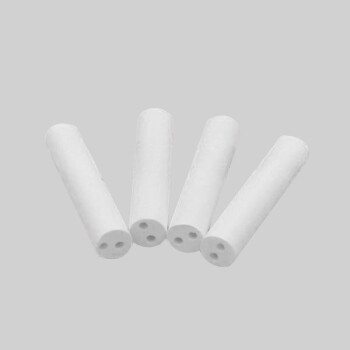
- Hexagonal Boron Nitride HBN Thermocouple Protection Tube
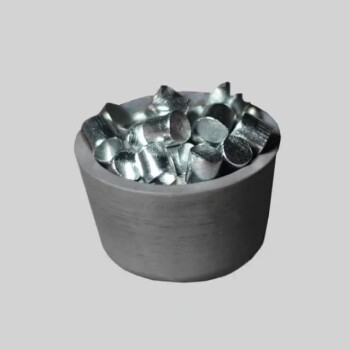
- Electron Beam Evaporation Coating Conductive Boron Nitride Crucible BN Crucible
- Boron Nitride (BN) Ceramic Plate
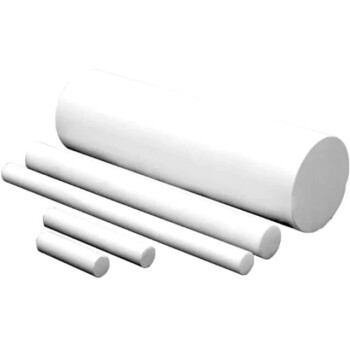
- Boron Nitride (BN) Ceramic Rod for High Temperature Applications
- Conductive Boron Nitride BN Ceramics Composite for Advanced Applications
People Also Ask
- Why are Boron Nitride Tubes selected as reaction vessels for Na3SbS4? Ensure Purity in High-Temp Synthesis
- What are the symptoms of a bad thermocouple? Diagnose a Pilot Light That Won't Stay Lit
- What information does a thermocouple at the substrate bottom provide in LCVD? Master Precise Temperature Control
- What are the specific temperature control requirements for high-precision thermocouples? Achieve ±0.3°C Precision
- What is the most common type of temperature sensor? The Unmatched Versatility of Thermocouples